


General Escobedo air quality map
Live air pollution map of General Escobedo • 6.7K Followers • 05:00, Aug 27 Local time


Stations
Clean Air Facilities
Contributors

Government
1
Diplomatic
0
Non-profit
1
Education
0
Corporate
0
Healthcare
0
Hospitality
0
Individual
3Top contributors in General Escobedo
Who is sharing outdoor air quality data in General Escobedo?
Featured station
Discover some of the best station installation in General Escobedo


Station gallery

Monterrey CENDI3 JM, General Escobedo
49
Newest stations deployed in General Escobedo
AQI⁺ station ranking




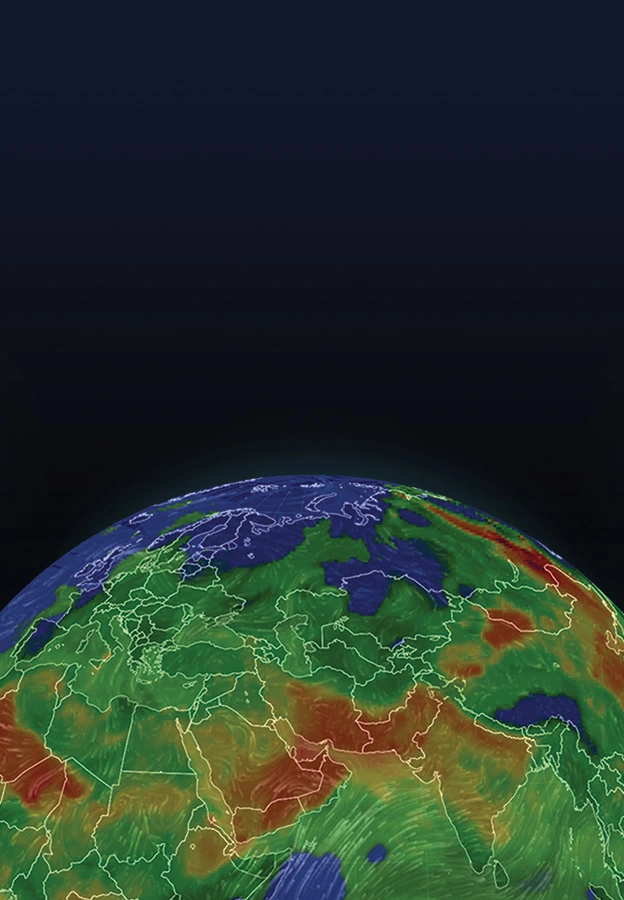

Learn more about global air quality


Learn more about air pollution in General Escobedo
Is General Escobedo City currently very polluted?
General Escobedo, or simply Escobedo, is a city and municipality in Nuevo León, Mexico that is part of the Monterrey Metropolitan area. According to a census conducted in 2005, General Escobedo had an estimated population of approximately 295,000 people living in the city and another 300,000 in the entire municipality. It is also the home of the Mexican Army's 7th Military Zone Army Base.
At the end of 2020, General Escobedo was experiencing a period of air quality classed as being “Unhealthy for sensitive groups” with a US AQI reading of 114. This United States Air Quality Index figure is calculated by collating the recorded levels of six of the most prolific air pollutants. These can include, both diameters of PM (PM10, PM2.5), nitrogen dioxide, sulphur dioxide, ozone and carbon monoxide.
If figures are not available for all six, a level can still be calculated by using what information there is. It can then be used as a metric when comparing one city with another, anywhere in the world. For Escobedo, the only pollutant measured was that of PM2.5 which was 37 µg/m³. This level of PM2.5 is over three and a half times the recommended safe level of 10 µg/m³ as suggested by the World Health Organisation (WHO) as being an acceptable level. Although no amount of air pollution is considered to be safe.When air quality is classified as being “Unhealthy for sensitive groups” the given advice is to remain indoors and close all doors and windows to prevent more dirty air from getting inside. It would be beneficial to operate an air purifier if one is available but ensure it is set to recirculate the existing air and not import more polluted air from outside. Those of a sensitive disposition should avoid all contact with outdoor air until the situation improves. If this is unavoidable, then a good quality face mask should be worn when venturing out. Everyone is discouraged from outdoor exercise until the quality improves. There is a free app from AirVisual.com which gives the latest information as to the state of the air. Knowing this information will help you make the right decision.
Does the level of air pollution vary throughout the year in General Escobedo?
Looking back at the figures released by IQAir.com for 2020, it can be seen that the month of June provided the best air quality with a reading of 11.1 µg/m³ which was classified as being “Good”. The remaining months of the year fell into the “Moderate” group with figures between 12.1 and 35.4 µg/m³. Figures for the months of August and September were unavailable for some unknown reason. The month with the cleanest air was May with a reading of 16.1 µg/m³, the dirtiest was December with a 26.3 µg/m³ figure.
Records for air quality were first held in 2019 when a figure of 20.9 µg/m³ was recorded. The following year of 2020 saw an improvement when that figure was noted to be 18.9 µg/m³. This lower figure was to be expected because it may have been affected by the COVID-19 pandemic as many vehicles were no longer in daily use because the offices were closed, in an attempt to halt the spread of the virus. Many factories and non-essential production units were also required to close which removed their emissions from the atmosphere, albeit on a temporary basis. Elsewhere cities reported a much better quality of air due to the general lack of traffic pollution due to the pandemic.
Is there a main source of air pollution in General Escobedo?
Major air pollutants, those emitted directly into the environment largely as a result of the combustion of fossil and biomass fuels, include gaseous pollutants (such as sulphur dioxide, nitrogen dioxide, carbon monoxide, and volatile organic compounds) and particulate matter (PM) (including aerosol particles, such as black soot).
Although carbon monoxide levels are often low outdoors in the developed world today (because of the use of emission controls such as catalytic converters on automobiles), high levels can be experienced near biomass burning sources, including wildfires. In addition, secondary air pollutants are formed in the atmosphere from primary pollutants and include gaseous ozone, a major component of photochemical smog, formed in the atmosphere when nitrogen oxides and hydrocarbons such as VOCs react in the presence of sunlight.
What can be done to improve air quality in General Escobedo?
As a pioneer municipality in carrying out actions to improve air quality and reduce pollution rates, the local authority headed the planting of 500 native trees of the region in Colonia San Miguel Residencial. With this plantation, which is part of the “Siembra Vida” program that the Federal Electricity Commission started with its workers and their families, about 30,000 inhabitants of Escobedo will benefit.
The city of the future must be a green city. Scientific studies associate green spaces - urban parks, gardens, tree-lined streets or forests, among others - with numerous health benefits in adults, such as reducing stress, living longer or a better general state of health and mental.
Cities should be designed to encourage physical activity through active transport, that is, urban design facilitates travel on foot or by bicycle.
Half of the car trips within the city cover journeys of less than 5 km. It is a distance that can be travelled by active transport with a great impact on public health: physical activity increases and air and noise pollution levels are reduced.
What are the detrimental effects from breathing in polluted air?
Air pollution affects children's brains. ISGlobal research concludes that daily exposure to nitrogen dioxide and soot (or black carbon), two of the pollutants associated with traffic, affect children's cognitive development.
Air pollution is a global problem, but it does not affect everyone equally. In highly urbanized areas there are groups with greater vulnerability, for example all those who suffer from cardiovascular and respiratory diseases, the population sensitive and reactive to allergies that affect the respiratory tract, new-borns and the elderly.
Some PM10s are visible as a cloud, and like PM2.5 they affect visibility by scattering and absorbing light, but it takes a microscope to see PM2.5 and an electron microscope to detect ultrafine particles. The smaller the particle, the deeper it can go into the lungs, along with the chemicals it is made of. This type of air pollution arises from the incomplete combustion of wood and plants, as well as fossil fuel, dust, and combinations of other pollutants from various sources.