


 Add
AddAir quality in Livermore
Air quality index (AQI⁺) and PM2.5 air pollution in Livermore • 43.4K Followers • 01:00, Oct 22

54
US AQI⁺Moderate

Main pollutant:
PM2.5
10.6 µg/m³

15°

3 km/h

87 %
Hourly forecast
Livermore air quality index (AQI⁺) forecast


Daily forecast
Livermore air quality index (AQI⁺) forecast
| Today | 52 |  90% | 16° 14° |  16 km/h | 89% |
| Fri | 57 |  | 19° 11° | 13 km/h | 72% |
| Sat | 54 |  | 22° 11° | 10 km/h | 38% |
Air pollutants
What is the current air quality in Livermore?

PM2.5 concentration is currently 2.1 times the World Health Organization annual PM2.5 guideline value.
Health recommendations
 Sensitive groups should reduce outdoor exercise |
 Close your windows to avoid dirty outdoor air Get a monitor |
 Sensitive groups should wear a mask outdoors Get a mask |
 Sensitive groups should run an air purifier Get an air purifier |
Clean Air Facilities
Pollen
What is the pollen count in Livermore today?
Index

Low
 Tree None | 0% |
 Grass None | 0% |
 Weed Low | 25% |
Source:
wetter.comHealth recommendations
Sensitive groups should reduce outdoor exercise |
Close your windows to avoid dirty outdoor air Get a monitor |
Sensitive groups should wear a mask outdoors Get a mask |
Sensitive groups should run an air purifier Get an air purifier |
Pollen
What is the pollen count in Livermore today?
Index
Low
Tree None | 0% |
Grass None | 0% |
Weed Low | 25% |
Source:
wetter.comMost polluted locations near Livermore
Worldwide AQI⁺ ranking
Station ranking
Real-time AQI⁺ station ranking for stations in Livermore

City ranking
Real-time USA AQI⁺ city ranking
Historic air quality near Livermore
History
Historic air quality graph for Livermore
Historic air quality near Livermore
History
Historic air quality graph for Livermore
Clean Air Facilities
Most polluted locations near Livermore
Worldwide AQI⁺ rankingStation ranking
Real-time AQI⁺ station ranking for stations in Livermore
City ranking
Real-time USA AQI⁺ city ranking



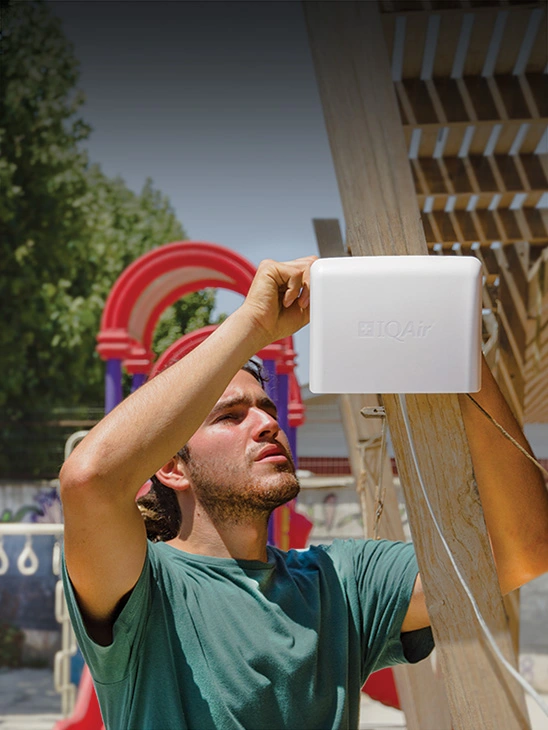
Measure your own air quality
Get a monitor and contribute air quality data in your city.
Learn more about global air quality


Learn more about air pollution in Livermore
What is the current air quality in Livermore?
The current air quality in Livermore is considered moderate. Air quality is acceptable for most people, though sensitive individuals may experience mild symptoms such as coughing or shortness of breath.
What is the air quality index in Livermore?
When public records began in 2000, Livermore’s air quality index (AQI) averaged “moderate” according to the United States Air Quality Index (AQI).1 Since then, air quality levels in Livermore have steadily improved as a result of collective efforts on a federal, state, and local level that have increased air quality monitoring, emissions control, and enforcement. In 2019, Livermore’s average AQI was 28 (“good”), a 55 percent improvement from two decades earlier.
Livermore air quality is slightly better than the air quality of its close neighbor nearer to the San Francisco Bay Area, Fremont, which averaged an AQI of 31 “good” during the same 2019 monitoring period. Livermore’s improved air quality, compared to Fremont’s air quality, is in part attributable to Livermore’s lower population density. Less density often translates to less traffic congestion and reduced emissions from human activity. Livermore is also further removed from the San Francisco Bay and its port activity as well as from major cities in the Bay Area that produce much of the region’s localized air pollution, including Oakland, San Francisco, and San Jose.
While Livermore air quality is mostly rated “good” according to the US AQI, based on standards developed by the Environmental Protection Agency (EPA), higher AQI ratings do occur. Traditionally, the AQI scale ranges from 0–500, where higher values indicate greater pollution concentrations and increased health risks. Since this formula is linear, it is possible to reach levels beyond 500. Although this is rare, such hazardous levels (deemed “above index”) have been recorded as recently as 2020 during California’s record-breaking wildfire season in that year from August to October.
Livermore’s real-time AQI level is presented at the top of this page. Green indicates that levels are currently “good,” while yellow, orange, red, purple, and maroon represent increasingly higher health risks due to air pollution. When air pollution levels are high, follow advised health recommendations to reduce your pollution exposure.
Does air quality in Livermore meet US EPA standards?
Although Livermore’s average AQI levels are mostly deemed “good,” the city does experience short-term pollution events when air quality reaches “unhealthy” levels or worse. Typically, PM2.5 and ozone pollution are responsible for high pollution days.
Ozone
Ground-level ozone is a harmful pollutant and significant component of smog. Unlike atmospheric ozone that shields Earth from UV radiation, ground-level (tropospheric) ozone does not provide any environmental benefits. Rather, when inhaled, ground-level ozone irritates the eyes and throat, causing chest pain and coughing. Long-term exposure can lead to permanent lung damage and limited lung function.
Ozone is known as a secondary pollutant, produced when a mix of precursor pollutants like nitrogen dioxide (NO2) and volatile organic compounds (VOCs) from car exhaust and factories react in sunlight, largely at temperatures above 84 degrees Fahrenheit (°F). For this reason, ozone is more problematic in the summer and early fall seasons when temperatures are highest. Traffic congestion in the Bay Area, combined with warm summertime weather, is a primary contributor to ozone in Livermore.
The Environmental Protection Agency (EPA) allows a maximum of 3.2 high ozone days per year for a “passing” air quality grade. Livermore has failed to meet this standard consistently since 1996. Between 2016–2018, Livermore averaged 8.8 high ozone days per year.
PM2.5
PM2.5 refers to fine particle pollution measuring 2.5 microns or smaller in diameter. PM2.5 is so small that particles can penetrate the bloodstream upon inhalation, causing far-reaching health effects. PM2.5 is often described as the most dangerous pollutant to human health for its abundance and relatively high risk of health effects.
PM2.5 pollution in California is relatively severe, with numerous cities and counties breaching short-term and annual PM2.5 targets. Common sources include:
- wildfires
- winter wood burning
- arid agricultural fields (wind-blown dust)
- motor vehicles
- construction
Marine inversions and temperature inversions resulting from weather patterns and geographical barriers, such as mountain valleys like Tri-Valley area where Livermore is located, can further exacerbate measured PM2.5 levels by preventing air pollution from dispersing into the upper atmosphere.
Livermore experiences more “unhealthy” PM2.5 days than unhealthy ozone days. Between 2016 and 2018, Livermore experienced 11.2 days of high particle pollution per year, significantly above the EPA’s passing grade of 3.2 days.
In 2020, Livermore averaged an annual PM2.5 level of 11.5 µg/m3. While this level just barely met the EPA’s “good” AQI threshold at 12 µg/m3, it failed to meet the more stringent World Health Organization (WHO) target of 10 µg/m3.
The months of August, September, October, and December all averaged “moderate” PM2.5 levels. September (33.1 µg/m3) and August (26.2 µg/m3) were Livermore’s most polluted months, with AQI exceeding the WHO target for annual PM2.5 exposure by 2-3 times. During these months, wildfires contributed significantly to ambient particle pollution in Livermore.
What are the main sources of Livermore air pollution?
As with numerous US cities, a majority of Livermore air pollution stems from vehicle traffic. Fossil fuel combustion in motor vehicles produces PM2.5 as well as nitrogen dioxide (NO2) and volatile organic compounds (VOCs), both ozone precursor pollutants. Other sources of air pollution include:2,3
- seasonal wildfires
- winter wood burning
- new construction
- agricultural dust
- industry
- energy consumption and production
- active oil wells (7) south of the city
Since the 1990s, cleaner and more efficient motor vehicles as well as stricter industrial emission limits have contributed to improved air quality in Livermore. But Livermore air quality may worsen in the future as a result of increased wildfire activity and population growth, which can result in increased construction, traffic, and emissions from human activity.
Warming climate trends are also likely to adversely affect Livermore air quality by way of elevated ozone levels. According to a NOAA Global Climate Summary, combined land and ocean temperatures have increased by an average rate of 0.13°F per decade since 1880.4 Alarmingly, the average rate of increase has more than doubled to 0.32°F per decade since 1980 – this means more days above 84 degrees Fahrenheit and more ozone-related smog.
In the short term, wind and rain can both offer reprieve from Livermore’s high air pollution levels. Rain and humidity can increase particle density by coagulation, causing particles to fall to the ground faster due to gravity. While mild rain barely reduces PM2.5 levels, heavy rain is more effective.5
In the long term, several systemic changes bode well for Livermore air quality. The state of California has called for all new car sales to be zero-emissions by 2035, aiming for total carbon neutrality by 2045.6 To take advantage of the large California market, auto manufacturers must also abide by strict California emissions standards. In this way, California sets the bar for national emission standards and impacts the entire automotive industry. Thanks to these statewide emission mandates and the increasing prevalence of electric cars on the road, new vehicles will likely emit less air pollution on average year after year, dramatically reducing one of Livermore’s largest sources of air pollution.
Livermore and surrounding cities in California are also witnessing a surge of new solar and wind power.7 As these clean energy sources decrease in cost and increase in efficiency, renewable energy will likely become more prevalent.
Moreover, numerous firms with local offices restructured for telecommuting to help meet social distancing requirements during the COVID-19 pandemic. This means that working from home may become a permanent benefit for some office workers and decrease overall levels of daily commuting.8
California’s pollution-conscious vehicle standards and growing commitment to renewable energy efficiency are both contributing to mitigation of air pollution in Livermore and its negative health consequences.
When is air quality in Livermore the worst?
Livermore air quality varies seasonally. While ozone is more common during the summer months when warmer temperatures encourage ozone formation, PM2.5 is more common in the fall and winter due to wildfires and winter wood-burning practices.
Livermore air quality levels are also influenced by weather conditions. Temperature inversions, for example, contribute to rising pollution levels. During temperature inversions, a layer of warm air higher in the atmosphere prevents cooler ground-level air from dispersing normally. Trapped emissions begin accumulating and air pollution levels rise until weather conditions change. Coastal areas like Livermore can experience inversions when cool ocean air blows inland beneath the warmer air above it.
Why is it smoky in Livermore, CA?
Seasonal wildfires significantly impact Livermore air quality. In 2020, smoke from West Coast wildfires enveloped the state, traveling as far as the Eastern Seaboard via the polar jet stream.9 Some smoke even made it across the Atlantic as far away as Europe.
Climate change has also altered seasonal wildfires. As warming trends continue, the fire season is expected to start earlier and last longer while also increasing fire intensity.10 This will have a negative impact on Livermore AQI, which is often correlated with the regional wildfire season.
The air quality impact of West Coast fires could be mitigated by more aggressive forest management. The threat of future wildfires has driven officials to encourage prescribed burns, which are deliberate, controlled fires that reduce forest underbrush and help mitigate the risk of megafires.11
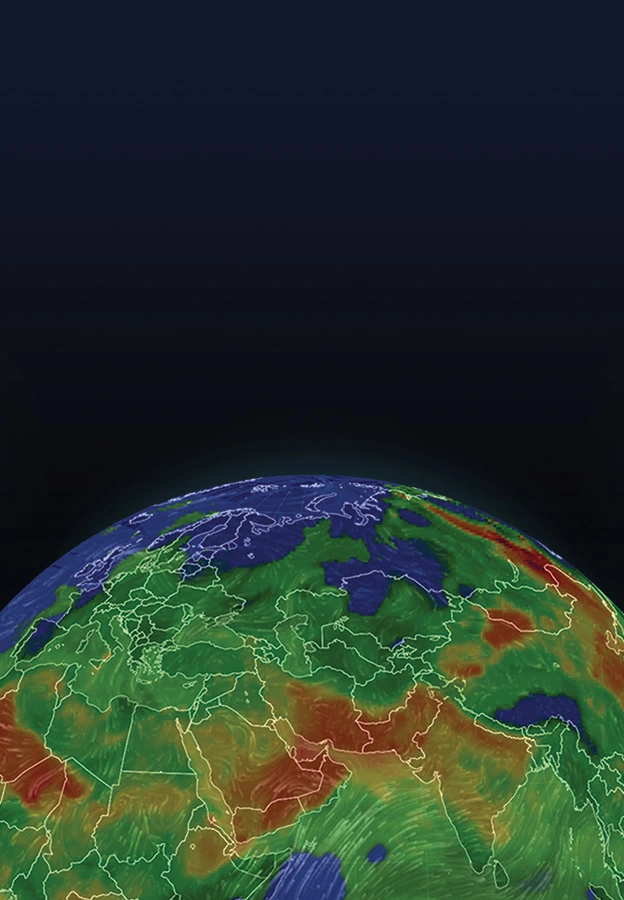
While dense wildfire smoke is often highly concerning, not all air pollution is visible. Use the Livermore air pollution heat map to find active fires, identify wind patterns, and learn how local air quality is affected in real time. Follow live air quality in Livermore to stay up to date even when pollution is invisible. Taking action when air pollution levels are high can greatly reduce one’s risk of adverse health effects.
+ Article Resources
[1] American Lung Association (ALA). (2020). State of the Air: Alameda.
[2] California Air Resources Board (CARB). (n.d.). Sources of air pollution.
[3] California oil well map 2020. (2020).
[4] Lindsey R, et al. (2020, August 14). Climate change: Global temperature. National Oceanic and Atmospheric Administration.
[5] Feng X, et al. (2011). Influence of different weather events on concentrations of particulate matter with different sizes in Lanzhou, China. Journal of Environmental Sciences. DOI: 10.1016/S1001-0742(11)60807-3.
[6] Office of Governor Gavin Newsom. (2020, September 23). Governor Newsom announces California will phase out gasoline-powered cars & drastically reduce demand for fossil fuel in California’s fight against climate change.
[7] Kasler D. (2020, August 23). California is rushing to add solar power. Did recent blackouts just shade our green future? The Sacramento Bee.
[8] Dwoskin, E. (2020, October 1). Americans might never come back to the office, and Twitter is leading the charge. The Washington Post.
[9] Money L, et al. (2020, September 15). Smoke from California wildfires reaches the East Coast and Europe. Los Angeles Times
[10] Climate Science Special Report. (2020). Chapter 8: Droughts, floods, and wildfires.
[11] Helvarg D. (2019, December 20). How will California prevent more mega-wildfire disasters? National Geographic.