


 Add
AddAir quality in San Mateo
Air quality index (AQI⁺) and PM2.5 air pollution in San Mateo • 53K Followers • 14:00, Sep 30
40
US AQI⁺Good

Main pollutant:
PM2.5
7.3 µg/m³

26°

8 km/h

33 %
Hourly forecast
San Mateo air quality index (AQI⁺) forecast


Daily forecast
San Mateo air quality index (AQI⁺) forecast
| Today | 39 | | 29° 16° |  12 km/h | 51% |
| Thu | 33 |  | 27° 14° | 9 km/h | 56% |
| Fri | 35 |  | 27° 14° | 11 km/h | 64% |
Air pollutants
What is the current air quality in San Mateo?

PM2.5 concentration is currently 1.5 times the World Health Organization annual PM2.5 guideline value.
Health recommendations
 Enjoy outdoor activities |
 Open your windows to bring clean, fresh air indoors Get a monitor |
Clean Air Facilities

Pollen
What is the pollen count in San Mateo today?
Index

Moderate
 Tree None | 0% |
 Grass None | 0% |
 Weed Moderate | 50% |
Source:
wetter.comHealth recommendations
Enjoy outdoor activities |
Open your windows to bring clean, fresh air indoors Get a monitor |
Pollen
What is the pollen count in San Mateo today?
Index
Moderate
Tree None | 0% |
Grass None | 0% |
Weed Moderate | 50% |
Source:
wetter.comMost polluted locations near San Mateo
Worldwide AQI⁺ ranking
Station ranking
Real-time AQI⁺ station ranking for stations in San Mateo

Historic air quality near San Mateo
History
Historic air quality graph for San Mateo
Historic air quality near San Mateo
History
Historic air quality graph for San Mateo
Clean Air Facilities
Most polluted locations near San Mateo
Worldwide AQI⁺ rankingStation ranking
Real-time AQI⁺ station ranking for stations in San Mateo



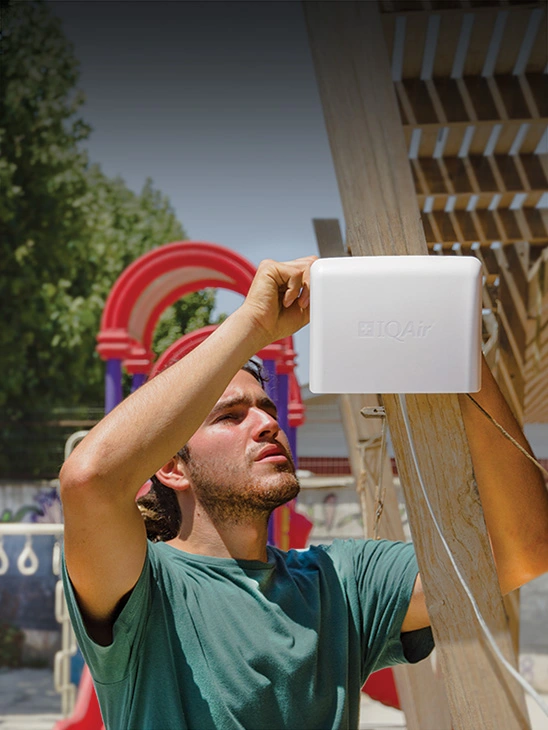
Measure your own air quality
Get a monitor and contribute air quality data in your city.


Learn more about air pollution in San Mateo
What is the current air quality in San Mateo?
The current air quality in San Mateo is considered good. Air pollution levels are low and there are no expected health risks, making it a good time to enjoy normal outdoor activities.
How bad is the air quality in San Mateo?
San Mateo is located in Northern California, just over 21 miles south of San Francisco and roughly 31 miles north of San Jose. The city is adjacent to San Francisco Bay’s southwestern shoreline and approximately 13 miles east of the Pacific Ocean. San Mateo County, which includes the city of San Mateo, is one of the nine counties that comprise the San Francisco Bay Area.
Several factors influence the air quality in San Mateo, including:
- the adjacent bay
- the nearby ocean
- the dense population centers to the north (San Francisco) and south (Silicon Valley)
- the busy airport (San Francisco International, or SFO)
- The presence of a heavily trafficked highway (101 freeway) running directly through San Mateo
While San Mateo benefits from having two adjacent bodies of water that moderate temperatures and provide regular infusions of fresh marine air, its proximity to San Francisco, Silicon Valley, SFO, and Highway 101 expose the city to significant emission sources.
San Mateo has received mixed grades according to the American Lung Association’s (ALA) State of the Air (SOTA) report, which presents air quality averages, grades, and rankings over a series of rolling three-year periods for three key measures of airborne pollutants: high ozone days, 24-hour particle pollution, and annual particle pollution).1 The most recent report revealed that San Mateo county’s air quality received acceptable grades for ozone and annual for year-round particle pollution, but failed in short-term particle pollution.
In the most recent three-year period, from 2016 to 2018, San Mateo County received a B grade for ozone. The Bay Area Air Quality Management District (BAAQMD) has provided a similar assessment, stating that ozone levels in San Mateo County rarely rise to unhealthy levels.2 San Mateo County also received a “Pass” for year-round particle pollution, with an annual average concentration of 9.3 μg/m3 for PM2.5 (particle pollutants with a diameter less than 2.5 microns). While 9.3 μg/m3 meets the standard of < 12 μg/m3 used by the ALA, this measurement approaches the upper threshold of the World Health Organization standard for annual PM2.5 (< 10 μg/m3), highlighting room for further improvement.
Though the county passes standards for ozone and annual PM2.5, San Mateo County received an F grade for short-term particle pollution (24-hour PM2.5). In the 2016-2018 period, the county’s annual weighted average number of high particle (unhealthy air) days was 8.3, well above the pass/fail cutoff of 3.2 days. The increasing incidence of Bay Area wildfires in recent years is one factor that contributes greatly to this failing grade – smoke from these fires has repeatedly caused spikes in the levels of PM2.5 air pollution in San Mateo.
Also troubling is the rapid rise in this measure seen during the two most recent measurement periods. After reaching a low of 0 high-particle days during the 2014-2016 period, San Mateo County experienced 2.3 days in 2015-2017, then rose sharply in 2016-2018 to 8.3 days, its highest recorded level during the 21st century so far.
In addition, while San Mateo County’s annual particle pollution level of 9.3 μg/m3 was good enough to receive a passing grade (below the pass/fail cutoff of 12 μg/m3), the average concentration has jumped during the two most recent measurement periods, mirroring the jump in short-term particle pollution. After reaching a low of 7 μg/m3 during the 2014-2016 period, this number shot up 10 percent during 2015-2017 then 20 percent) during 2016-2018.
To learn more about San Mateo air quality, look for the San Mateo air quality index (AQI) measurement overview for today and the forecast for the next week on this page.
Is today a Spare the Air day in San Mateo?
Bay Area Spare the Air alerts are triggered when the amount of unhealthy PM2.5 in the air rises to dangerously high levels – typically, at an AQI greater than 100.3
Several factors can lead to elevated amounts of PM2.5, such as when one or more wildfires occur nearby or there is excessive woodburning in area homes.4 In addition, thermal inversions driven by cool offshore winds can cause particle pollution levels to increase by trapping pollutants in cool air close to the ground under warm air higher in the atmosphere, disrupting the normal process in which air rises and pollutants disperse.
When San Mateo or other Bay Area cities experience a sharp rise in PM2.5 to a level that might endanger public health, the BAAQMD issues a Spare the Air alert for the following day – typically no later than 2 p.m. on the current day.5 A Spare the Air alert may be issued up to three days before an expected unhealthy air event.
Sometimes, when woodburning is suspected to be a primary cause of elevated PM2.5 levels, a Burn Ban will be implemented.
Spare the Air alerts can sometimes last for several days, such as when the air quality in San Mateo is expected to remain unhealthy for an extended period of time.
When will smoke clear out in San Mateo?
Wildfire smoke has increasingly become a problem for the air quality in San Mateo as well as other areas of California. A 2021 study revealed that increasingly warmer temperatures associated with climate change are leading to more damaging fires in recent years. Nearly half of all unhealthy fine particle air pollution in the western United States results from smoke caused by wildfires.6
When determining how quickly smoke will clear out of the San Mateo area, weather conditions are a primary factor. Since summer months are hotter, with fewer strong winds and less rain, a greater number of wildfires tend to arise, and the smoke they cause tends to take longer to clear out. When the weather turns colder in wintertime, wildfires are not as likely, and the smoke from any fires that do occur tends to clear out faster due to higher moisture levels and a greater amount of rainfall.
Smoke can still linger even after a nearby wildfire has been contained. A portion of the wildfire may still be burning and generating smoke that is dangerous to breathe, especially for groups sensitive to airborne pollutants. In general, wildfire smoke can remain over a region for a much longer period than the original fire – sometimes for days, weeks, or months. Often, the smoke only fully clears when a wildfire has been completely extinguished and weather patterns bring increased wind and rain to the affected region.7
In general, rain helps clear out smoke. Rain causes coagulation of harmful particles as falling raindrop attract hundreds or even thousands of airborne particulates and gas particles and removing them from the air. Thus, the arrival of rain tends to clear out smoke and improve air quality. This coagulation effect is more pronounced with larger particulates like PM10 than with smaller PM2.5 particles.8 Since rain in the Bay Area tends to occur with greater frequency during the colder months of the year, wildfires and smoke tends to be less of a problem for San Mateo air quality during winter and early spring.
Increased winds, especially those that move over San Mateo from the San Francisco Bay and the Pacific Ocean, can also help clear out smoke particles. However, the relationship between winds and wildfire smoke is complicated. While strong winds can help reduce smoke by bringing fresh air into the region, these same winds can cause more wildfires to arise and help spread them. This potentially causes more fires and resultant smoke.
Geography also plays a major role in determining how quickly smoke disperses from San Mateo. The city’s position adjacent to the San Francisco Bay and proximity to the Pacific Ocean helps bring cool, fresh marine air into the region on a fairly consistent basis, helping disperse harmful smoke particles when they arise.
What is causing air pollution in San Mateo?
Several factors can cause poor air quality in San Mateo. The city of San Mateo is located between San Francisco to the north and Silicon Valley to the south, two of the densest population centers in California. This region also has a heavily trafficked transit corridor centered around Highway 101, one of the country’s busiest highways. Harmful emissions from vehicles using Highway 101, coupled with pollution caused by airplane traffic at San Francisco International Airport just north of San Mateo are two contributing factors to the county’s failing grade for 24-hour particle pollution.
The increasing incidence of wildfires in or near San Mateo County fueled by hotter summers due in part to climate change also negatively impact San Mateo air quality. Wildfires can cause a sudden and rapid rise in unhealthy particle pollution in San Mateo.
San Mateo also experiences a steep drop in precipitation during the summer months, averaging close to zero inches of rain from late June to early September.9 This lack of rainfall means that any smoke polluting the air may not be cleared quickly. Hence, any smoke pollution in San Mateo during the summer tends to linger for longer periods of time.
In addition, the hotter temperatures around burn areas can cause smoke pollutants to react with heat and create ozone. This combination of smoke and elevated ground-level ozone leads to air that is unhealthy to breathe. When this occurs, those who are sensitive to pollution should either remain indoors or reduce outdoor activities.
While wildfires are among the most prominent causes of elevated pollution levels in San Mateo, woodburning also plays a prominent role. As many homes burn wood for heat during winter and early spring, smoke levels rise. The BAAQMD has stated that 1.4 million fireplaces and wood stoves in San Mateo County and eight other counties in the Bay Area produce the largest sources of unhealthy particulate pollution during colder months.
However, a regular influx of Pacific Ocean air passing over the county’s coast as well as fresh marine air from the adjacent San Francisco Bay often help improve air quality naturally. This may be one reason that San Mateo ozone pollution is less severe in San Mateo as it is in other Bay Area cities, especially considering the high volume of vehicular traffic in and around San Mateo.
Rain during colder months also helps mitigate air pollution. While average rainfall in San Mateo is reduced during summer months, it tends to rise sharply in winter, matching the U.S. average of around 3 inches by November and exceeding this average from approximately December to March. This elevated level of rain helps clear out smoke and other airborne pollutants.
Is air quality in San Mateo getting worse?
Air pollution in San Mateo County was recently given a failing grade for 24-hour particle pollution.
For every three-year period from 2001-2003 to 2015-2017, San Mateo County had a passing grade for 24-hour particle pollution. From 2002 until 2017, the annual weighted average number of high particle days remained between 0 and 1.3. That number dramatically increased over the next two measurement periods, rising during the 2015-2017 period to 2.3 high particle days, and up to 8.3 days during the 2016-2018 period. The latter increase is especially concerning, the equivalent of adding almost a week of additional unhealthy air to an average year.
Just as 24-hour particle pollution rose during the two most recent measurement periods, so did annual particle pollution. During the 2000s, the annual average concentration of particle pollution in San Mateo County trended steadily downwards from a high of 11.2 μg/m3 in 2000-2002 down to 8.7 μg/m3 by 2010. The following decade brought even further declines, as the average decreased from 9.3 μg/m3 during 2011-2013 to a multi-decade low of 7 μg/m3 during the 2014-2016 period. Annual average concentration then rose to 7.7 μg/m3 during 2015-2017, then up to 9.3 μg/m3 during the 2016-2018 period.
While particle pollution levels have worsened in recent years, ozone levels have remained well below pass/fail line during the 21st century. The annual weighted average number of high ozone days has been measured at either 0 or 0.3 for the majority of measurement periods since 2000 – well below the pass/fail cutoff of 3.2 days. There was a brief increase during the early 2000s up to 1.3 high ozone days for two measurements periods, and another slight increase during 2013-2015 (rising to 0.7 days) and 2015-2017 (bumping up to 1.2 days), nut these increases were short-lived and still below the pass/fail cutoff. Moreover, ozone levels in San Mateo County appear to be trending downward. Measurement periods from 2015-2018 showed a reduction in high ozone day averages, from 1.2 days in 2015-2017 to 0.8 in 2016-2018.
A strong recent trend towards eliminating gasoline-powered vehicles may help improve air quality in the long term. General Motors has promised that, by 2035, the company will end sales of cars and light trucks powered by fossil fuels, and other automakers are likely to follow GM’s lead.10 Furthermore, California currently plans to transition to zero-carbon energy sources for the state's electricity by 2045, including a phasing out of gas-powered automobiles. A large reduction in the number of polluting vehicles as they travel Highway 101 should help improve air quality in San Mateo and surrounding areas in the coming decades.
+ Article Resources
[1] American Lung Association. (2020). San Mateo - State of the Air report.
[2] Bay Area Air Quality Management District. (2021). San Mateo County.
[3] Bay Area Air Quality Management District. (2021). Air Quality Forecast.
[4] Thadani T. (2020, September 29). Bay Area choked by wildfire smoke: Spare the Air runs through Friday. San Francisco Chronicle.
[5] Bay Area Air Quality Management District. (2020). An overview of the Wood Burning Rule in the Bay Area.
[6] Brown M. (2021, January 11). Wildfire smoke accounted for up to half of air pollution in the West in recent years. The Colorado Sun.
[7] Echeverria D. (2020, September 2). Smoke could linger over Bay Area for months, even after fires are contained. San Francisco Chronicle.
[8] Becerra LCB, et al. (2015, December). Influence of precipitation scavenging on the PM2.5/PM10 ratio at the Kennedy locality of Bogotá, Colombia. Revista Facultad de Ingeniería. DOI: 10.17533/udea.redin.n76a07.
[9] San Mateo, California (CA 94401, 94403) – profile. (2021). City Data.
[10] Rosane O. (2021, January 29). GM pledges to eliminate gas-powered vehicles by 2035. EcoWatch.
Where is the cleanest air quality in San Mateo?
- Park Lane1
- CuriOdyssey at Coyote Point13
- San Mateo Park19
- 13th Avenue24
- Idaho St. San Mateo26
- Edison Street28
- Occidental Avenue29
- Central San Mateo31
- Durand Drive33
- East Poplar Avenue33
- North Claremont St33
- BV.SM Upper34
- Sugarloaf34
- North Central-Ellsworth Court37
- Iowa Drive38
- Leafwood Court38
- 10th Ave and Palm39
- Noe Avenue39
- Saint Matthew's Avenue40
- Beresford Park41
- Pinewood Court41
- 113 West 40th Avenue42
- Arroyo Ct42
- Mid Hillsdale Blvd42
- North Central-3rd Ave and S Grant St43
- Queens Lane / Lakewood Circle43
- Sylvan Avenue44
- North Quebec Street45
- Hayward Park on El Camino46
- Meowchi Heaven - Park Place - San Mateo47
- Monterey Trailhead47
- West Capistrano Way47
- 37th Avenue48
- Stratford Way49
- 238 41st Avenue51
- 213-201 Irving St52
- Lola53