


 Add
AddAir quality in Denver
Air quality index (AQI⁺) and PM2.5 air pollution in Denver • 2M Followers • 02:00, Oct 22 Local time
26
US AQI⁺Good

Main pollutant:
O₃
56 µg/m³

17°

21 km/h

56 %
Hourly forecast
Denver air quality index (AQI⁺) forecast


Daily forecast
Denver air quality index (AQI⁺) forecast
| Today | 17 |  | 22° 15° |  19 km/h | 46% |
| Fri | 25 |  | 25° 15° | 22 km/h | 36% |
| Sat | 16 |  | 17° 10° | 23 km/h | 39% |
Air pollutants
What is the current air quality in Denver?

PM2.5 concentration currently meets the WHO annual PM2.5 guideline.
Health recommendations
 Enjoy outdoor activities |
 Open your windows to bring clean, fresh air indoors Get a monitor |
Pollen
What is the pollen count in Denver today?
Index

Moderate
 Tree None | 0% |
 Grass None | 0% |
 Weed Moderate | 50% |
Source:
wetter.comHealth recommendations
Enjoy outdoor activities |
Open your windows to bring clean, fresh air indoors Get a monitor |
Pollen
What is the pollen count in Denver today?
Index
Moderate
Tree None | 0% |
Grass None | 0% |
Weed Moderate | 50% |
Source:
wetter.comMost polluted locations near Denver
Worldwide AQI⁺ ranking
Station ranking
Real-time AQI⁺ station ranking for stations in Denver

City ranking
Real-time USA AQI⁺ city ranking
Historic air quality near Denver
History
Historic air quality graph for Denver
Historic air quality near Denver
History
Historic air quality graph for Denver
Most polluted locations near Denver
Worldwide AQI⁺ rankingStation ranking
Real-time AQI⁺ station ranking for stations in Denver
City ranking
Real-time USA AQI⁺ city ranking



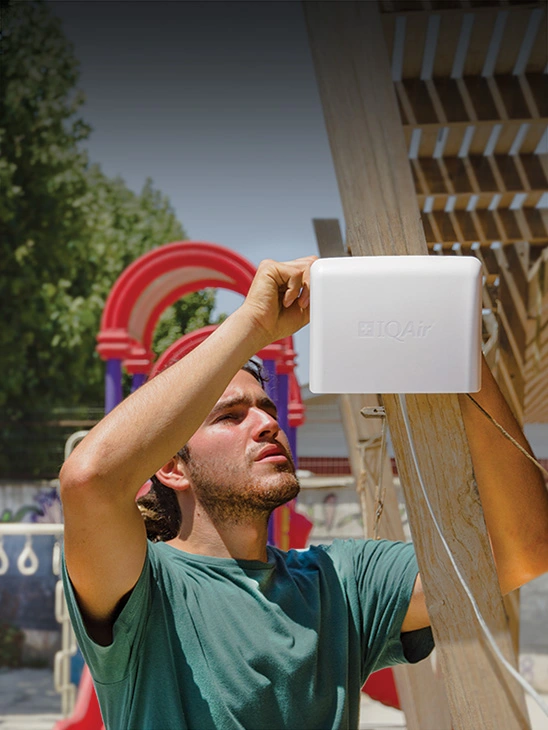
Measure your own air quality
Get a monitor and contribute air quality data in your city.
Learn more about global air quality


Learn more about air pollution in Denver
What is the current air quality in Denver?
The current air quality in Denver is considered good. Air pollution levels are low and there are no expected health risks, making it a good time to enjoy normal outdoor activities.
What is the air quality index of Denver?
Denver, officially the City and County of Denver, is the capital and most populous city of the US State of Colorado. It is located in the South Platte River Valley on the western edge of the Rocky Mountains. In 2019 the estimated population was just over 7.25 million people. This ranked it as the 19th most populous city in the US. It carries the affectionate nickname of the “Mile High” City because its elevation above sea-level is exactly that; 5280 feet or 1609.344 meters above sea-level.
At the beginning of 2021, Denver was experiencing a period of “Moderate” air quality with a US AQI reading of 56. This is according to recommended levels from the World Health Organisation (WHO). The concentration of the PM2.5 pollutant was 14.6 µg/m³. At this level, it is advisable to close doors and windows to prevent the ingress of dirty air into the house. Those people of a sensitive disposition should avoid venturing outside until the quality of air improves.
A federal tally revealed that Denver residents breathed air exceeding government standards for more than 260 days from 2018 to 2019. Air in excess of government standards can affect everyone, though it tends to disproportionately hurt sensitive groups, such as children, the elderly, and those with heart or lung disease.
According to the State of the Air report, released annually by the American Lung Association, Denver was rated an ‘F’ for experiencing too many unhealthy ozone days (in excess of the federal standard of 3.2 days). Breathing ozone can cause breathing troubles, chest pain, coughing and airway inflammation. It can be particularly troublesome to those with asthma or other respiratory illnesses, at times requiring medical care.
Normally, pollution levels in Denver are higher during the winter months than in the summer months as a result of temperature inversion. Temperature inversions are weather events in which cold, polluted air near the ground is unable to escape into the atmosphere and disperse because of a layer of hotter air above, which creates a trapping effect. In the winter, weakened sunlight and a frozen ground combine to create temperature inversions, sometimes lasting days at a time.
Despite Denver’s challenges with air pollution, the city is not the most polluted in Colorado. In 2019, Silverton was Colorado’s most polluted city (affected by wildfires in that year), followed by Greeley (a city known for its meatpacking industry).
Air pollution is dynamic, changing with seasons, weather, and pollution events. Follow Denver live air quality data at the top of this page and on the IQAir app for real-time readings. Denver forecast air quality data provides a guideline for planning ahead to reduce pollution exposure.
What are the main sources of air pollution in Denver?
As with many other cities in the US, the main source of air pollution in Denver is from its power generation units. The largest offender is the Comanche Generating Station which produces more than 1,400 megawatts of energy from its 3 coal-fired generators. Between them, they emit more than 9 million tons of carbon dioxide into the atmosphere on an annual basis. Additionally, it also emits nitrogen oxides (NOx) and sulphur dioxide (SO2) which are the main source of ozone (O3).
The biggest threat to the environment is their release of greenhouse gases. The ten biggest sources in Colorado are all coal-fired power plants. It is now a top priority of local governments to start to phase out these sources of pollution. Out of the three units operated at the Comanche site, it has been stated that two of the units are to be phased out in 2022 and 2025.
Another major contributor is the refining facility just a few miles north of Denver City. Most of the crude oil extracted in Colorado ends up at the refinery to be refined into gasoline and other products. Hydrogen cyanide is a particularly dangerous pollutant and almost 15 tons are released into the atmosphere every year.
It is also the state’s second-largest stationary source of fine particulate matter (PM2.5 and PM10), a type of pollution consisting of microscopic airborne particles that poses a wide variety of risks to human health. It’s the fourth-largest source of volatile organic compounds (VOCs), which lead to ozone formation and some of which are known to cause cancer.
There is one remaining active coal mine in Somerset County, Colorado. This is the state’s largest emitter of methane gas. It is getting less and less each year, but methane is eighty times worse for the atmosphere than carbon dioxide when considering its capacity of trapping heat.
Another highly pollutive site is the waste disposal site in Arapahoe, even though it uses a gas-to-energy collection system for methane gas which is emitted through the natural decomposition of the garbage. It is the single largest stationary source of fine-particle pollution across the entire state.
There is also the Colorado Fuel and Iron Company which consumes a huge amount of power generated by its neighbour, the Comanche Generating Station. It is the largest producer of airborne lead.
Large industrial emitters do harm the state's air quality, but just as important are the collective impacts of consumer-level energy use, most notably in the transportation sector and the use of personal vehicles such as cars and motorbikes. Addressing air pollution in Denver will require more than the abolition of a few industrial chimneys, but the millions of exhaust pipes that use the streets on a daily basis.
What is the pollution level in Denver?
Air pollution levels in Denver have improved since the 1980s when the city was reputed for its “brown cloud”1. In the last two decades, progress has slowed significantly, only meandering towards progress with numerous off-trend years as well.
Looking back at the data released by IQAir for 2020, it can be seen that throughout most of the year, Denver achieved the World Health Organisation’s (WHO) target figure of 10 µg/m³ or less. The annual average was 8.7 µg/m³. The months of August, September and October returned “Moderate” reading with figures between 12.1 and 35.4 µg/m³. This would coincide with the wildfires which often occur at that time of year.
Having studied the data from previous years, the air quality in Denver is slightly declining. In 2017 it was 7.4 µg/m³ followed by a slight rise to 8 µg/m³ in the following year. 2019 saw yet another small increase to 8.2 µg/m³ and 2020 saw another small increase to 8.7 µg/m³.
Is air pollution in Denver getting better or worse?
2020 brought the highest levels of air pollution the Denver metro area has seen in a decade. The cause has been attributed to the raging wildfires across the state. There has been a huge increase in the alerts warning of higher levels of PM2.5. This type of exposure to wildfire smoke can increase the risk for conditions like dementia, cancer and even things like Alzheimer’s disease.
Overall, air pollution in the Denver metro area has been decreasing over the past decade because of "new regulations and the cleaner cars we have on the roads." However, because of the wildfire smoke this year, the levels of PM2.5 are much higher than usual.
While increased public transportation, a greater share of electric vehicles on the road, and further regulations on the oil and gas industry present opportunities for reducing air pollution levels in Denver, global warming is expected to intensify the problem. Heat increases the formation of ozone by providing longer periods of ideal conditions. Rising temperatures may also contribute to the increased frequency and severity of wildfires which have historically given rise to some of Denver’s most polluted months. Wildfires are a major source of fine airborne particulate matter (PM2.5) as well as ozone precursors and can have far-reaching implications on air quality.
What causes smog in Denver?
Denver’s air quality is primarily challenged by ozone pollution formed from precursor pollutants emitted by motor vehicles (mobile sources) and the oil and gas industry (stationary sources). Studies have shown that these two sources play an almost equal role in polluting Denver’s air.
Transportation, or mobile, emissions from trucks, trains, aeroplanes and all other motor vehicles comprise the largest single contributor to Denver’s air pollution. In April 2020, the city and county of Denver released a new electric vehicle action plan aiming to further encourage electric vehicle ownership in order to grow their share of vehicle registrations to 15 per cent by 2025 and 30 per cent by 2030.2 Ongoing projects to expand public transportation and cycle lanes to make these facilities more attractive offer additional avenues for reducing mobile emission sources in the future.
The oil and gas industries are frequently grouped into the ‘stationary sources’ of pollution category, which additionally includes emissions from power plants, industrial facilities, and factories. The Suncor Energy Oil Refinery in Commerce City, just miles outside of Denver, is the state’s second-largest stationary source of PM2.5 and the fourth-largest source of volatile organic compounds (a precursor pollutant in the formation of ozone), thought to significantly contribute to Denver’s poor air quality.3
New oil drilling near Denver, meanwhile, is on the rise, with new fracking projects currently underway in nearby Thornton, Commerce City and Aurora, and nearly 1,000 new projects pending approval.4 These projects have the potential to further worsen Denver’s air quality, as they are known to emit significant amounts of ozone and PM2.5 precursor pollutants.
Operations at the Denver International Airport (DIA) are another stationary source of Denver air pollution. Emissions here are primarily the result of ground operations rather than aeroplanes. According to data from the Environmental Protection Agency (EPA), DIA is one of the main contributors to Denver’s ozone precursor pollutants, volatile organic compounds, and nitrogen oxides.
Wildfires, though unpredictable and temporary, are another common source of air pollution in Denver, frequently contributing to Denver’s highest pollution days. A combination of dry air, abundant forest land, increasingly hot summers, and steep mountains combine to make Western Colorado particularly prone to these severe pollution events.
What effect do PM2.5 particles have on the health of the residents of Denver?
Particles in the PM2.5 size range are able to penetrate deeply into the respiratory tract, reaching the lungs and eventually, the alveoli. Exposure to fine particles can cause short-term health effects such as eye, nose, throat and skin irritation, coughing, sneezing, runny nose and shortness of breath. Exposure to fine particles can also affect lung function and worsen medical conditions such as asthma and heart disease.
When outdoor levels of PM2.5 are very high, it may be safer to remain indoors. However, that does not guarantee good air quality as PM2.5 particles can easily be produced inside.
Burning candles and other decorative items are a source of these microscopic particles.
They can also leak inside when doors and windows are opened.
The terms atmospheric particulate matter or particulate matter refer to those suspended particles present in the air that we breathe every day and which are usually called fine dust.
The acronym PM derives from the initials of the two words Particulate Matter, while the number 10 indicates the size of the particle diameter which can vary up to 10 microns or micrometres (1 micron = 1 millionth of a meter). PM10 is also called the thoracic fractions, passing through the nose, it is able to reach the throat and trachea (located in the first part of the respiratory system). Smaller particles (less than 2.5 microns in diameter) called PM2.5 or respirable fraction can instead travel even deeper into the lungs. There are also particles with a very small diameter, called ultrafine particulate matter (UFPs), which can penetrate to the pulmonary alveoli at the base of the bronchial tubes.
PM10 is present in the air as a result of:
- natural events, such as wind-induced erosion of rocks and other surfaces, the formation of marine aerosols, dust storms, fires or gas leaks from volcanoes.
- human activities that use fossil fuels or biomass, such as industrial processes (for example in thermoelectric plants, refineries, in the chemical, cement and steel industries)
- daily activities such as cooking, heating, transporting goods or using motor vehicles. PM10 is in fact one of the main components of the exhaust gases of motor vehicles, industrial plants and port emissions.
+ Article Resources
[1] Brooke J. (1998, April 21). Denver Seeing the Light Past Its 'Brown Cloud'.
[2] Denver Climate Action, Sustainability and Resiliency. (2020). Denver electric vehicle (EV) action plan.
[3] Woodruff C. (2019, May 29). What are Colorado’s biggest sources of air pollution?
[4] Woodruff C. (2019, March 11). Why Denver’s brown cloud Is back — and why it might get worse
Where is the cleanest air quality in Denver?
- BroadwayStation_BNSF0
- DeBoer Park0
- Hilltop - S Forest0
- Observatory Park0
- Sloane’s Lake 3930
- South Gaylord St, Denver, CO0
- South Gaylord Street0
- 1000 Speer1
- Baker, Denver1
- DENVER GVR2
- SouthDenver23
- Denver - NJH - 14th Ave. & Albion St.6
- Globeville6
- 400 Hudson Street13
- 4499-4401 Quitman St13
- Cranmer Park13
- Perry St. Sensor13
- Spruce Street13
- 4529 E 18th Ave14
- Conservatory Green at Stapleton14
- Highland14
- Utica Street15
- 2261-2211 Blake St16
- South High Street16
- South Washington Street16
- West Denver16
- 1224-1298 Garfield St17
- 2698-2640 S Milwaukee St17
- 4510-4542 Paris St17
- 849-801 E Colorado Ave17
- Cheesman Park 217
- Platt Park - Clarkson St17
- I-25 Denver18
- South Lafayette Street23
- Denver - CAMP - 2105 Broadway24
- La Casa NCORE - 4545 Navajo St.28