

 Add
AddAir quality in Fort Worth
Air quality index (AQI⁺) and PM2.5 air pollution in Fort Worth • 15.5K Followers • 15:00, Sep 08 Local time
37
US AQI⁺Good

Main pollutant:
PM2.5
6.7 µg/m³

39°

12 km/h

32 %
Hourly forecast
Fort Worth air quality index (AQI⁺) forecast


Daily forecast
Fort Worth air quality index (AQI⁺) forecast
| Today | 36 |  | 39° 30° |  19 km/h | 46% |
| Wed | 37 | | 38° 28° | 19 km/h | 51% |
| Thu | 37 | | 38° 27° | 31 km/h | 57% |
Air pollutants
What is the current air quality in Fort Worth?

PM2.5 concentration is currently 1.3 times the World Health Organization annual PM2.5 guideline value.
Health recommendations
 Enjoy outdoor activities |
 Open your windows to bring clean, fresh air indoors Get a monitor |
Clean Air Facilities
Pollen
What is the pollen count in Fort Worth today?
Index

Low
 Tree None | 0% |
 Grass None | 0% |
 Weed Low | 25% |
Source:
wetter.comHealth recommendations
Enjoy outdoor activities |
Open your windows to bring clean, fresh air indoors Get a monitor |
Pollen
What is the pollen count in Fort Worth today?
Index
Low
Tree None | 0% |
Grass None | 0% |
Weed Low | 25% |
Source:
wetter.comMost polluted locations near Fort Worth
Worldwide AQI⁺ ranking
Station ranking
Real-time AQI⁺ station ranking for stations in Fort Worth

Historic air quality near Fort Worth
History
Historic air quality graph for Fort Worth
Historic air quality near Fort Worth
History
Historic air quality graph for Fort Worth
Clean Air Facilities
Most polluted locations near Fort Worth
Worldwide AQI⁺ rankingStation ranking
Real-time AQI⁺ station ranking for stations in Fort Worth


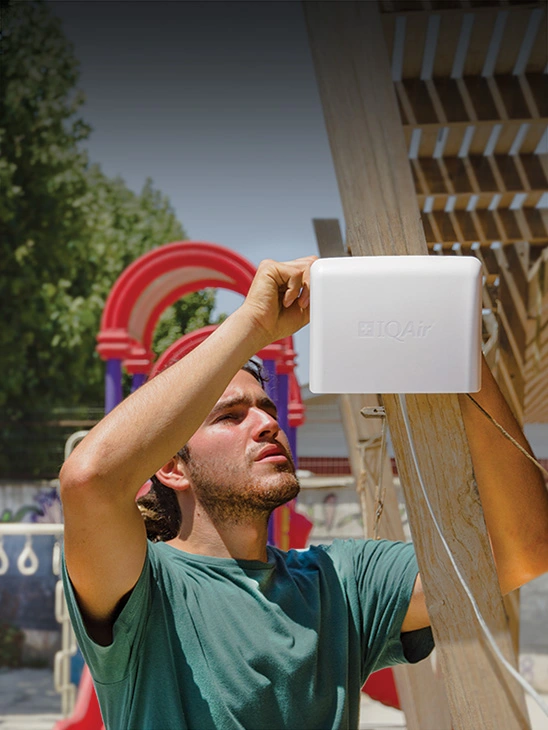
Measure your own air quality
Get a monitor and contribute air quality data in your city.


Learn more about air pollution in Fort Worth
What is the current air quality in Fort Worth?
The current air quality in Fort Worth is considered good. Air pollution levels are low and there are no expected health risks, making it a good time to enjoy normal outdoor activities.
What is the air quality level in Fort Worth?
Fort Worth’s air quality is primarily challenged by ozone pollution. Tarrant County, of which Fort Worth is the county seat, has not met US Environmental Protection Agency (EPA) “attainment” levels for ozone since at least 1996.
Ozone is gas formed in the atmosphere when sunlight causes precursor pollutants, such as nitrogen oxides and reactive organic substances, to react. In Fort Worth, the chemicals necessary to form ozone most commonly originate from motor vehicle exhaust and oil refining. Since abundant sunshine and heat are required to initiate the chemical reaction, and increased heat produces more ozone pollution, warm urban climates more commonly experience unhealthy ozone levels. Texas cities such as Dallas, Houston, and San Antonio all exceeded ozone standards set by the EPA in 2019. Most, like Fort Worth, have never met attainment levels.
From 2016-2018, Tarrant county had a weighted average of 13.3 unhealthy ozone days, far exceeding the 3.2-day EPA standard.1 The American Lung Association rated the region's ozone status an “F” in the 2019 State of the Air report. Out of the 229 cities included in this report, the Dallas-Fort Worth area ranked 21st for worst ozone levels.
Fort Worth’s air quality fares better, on the other hand, for fine particle pollution (PM2.5). According to the 2019 State of the Air report, the city has met daily and annual PM2.5 targets since 2004.
Fort Worth’s annual air quality index (AQI) for the last three years (2017, 2018, and 2019) has been (AQI) 34, 42, and 35, respectively. Air pollution in Fort Worth tends to be more severe in the summer, with June and July traditionally the most polluted months.
Is Fort Worth a polluted city?
Since 2004 Fort Worth has seen a steep drop in PM2.5 and ozone pollution levels, with unhealthy ozone days dropping by 79.6% and annual average PM2.5 levels dropping by 32.8%. 2018 and 2019, however, experienced increases in air pollution, with similar trends noted in other Texas cities.
Recent pollution level gains are likely attributable to the city’s growing population and traffic congestion as well as to increased emissions from nearby industry, particularly from petroleum-related extraction and refining.
Fort Worth, now the fifth-largest city in the state of Texas and the 13th-largest city in the United States, has seen tremendous growth in the last twenty years.2 Since 1997, transportation emissions have risen 27%.3 To combat the effects of this growing population on city-wide air quality, a move towards electric or hybrid vehicles and increased public transportation is important.
Fort Worth has a large oil and gas industry, primarily revolving around the Barnett Shale. While the industry has been stable in recent years, there has been an uptick in illegal emissions from petroleum companies across Texas. Facilities in the North Texas area were responsible for releasing nearly 80,000 pounds of non-authorized air pollution in 2017, up 27 percent from 2016.4
The COVID-19 pandemic of 2020 resulted in city-wide lockdown measures in order to reduce the spread of the virus. These measures led to reduced traffic and industry and are expected to have contributed to a drop in Fort Worth’s AQI. The data regarding air quality recorded over 2020 is now available, as shown below in the article. Experts warned that any improvements linked to COVID-19 lockdowns may only short-term, and sustainable solutions are needed to combat worsening Fort Worth air pollution levels in the long term.
What causes polluted air in Fort Worth?
Fort Worth, which is located only 30 miles from Dallas, is similarly challenged by transport and industrial emissions, primarily from petroleum activity. According to a report from Frontier Group and the Environment America Research and Policy Center, 52% of all PM2.5 and ozone pollution in Texas is estimated to come from vehicle exhaust, while petroleum-related industry accounts for roughly 21 percent.5
Fort Worth has experienced tremendous growth in the last twenty years. From 2000 to 2010, it was the fastest growing city of more than 500,000 residents.6 Likewise, transportation emissions have been on the rise. Per capita transport emissions in the Dallas Fort Worth (DFW) area have increased by 27% since 1997. This is likely owed to more traffic and longer commutes resulting from the region's growing population. 76% of cars on the road on any given day are estimated to contain just one person.
Currently, Fort Worth has fewer electric vehicles than nearby Plano, Texas, a city with less than a third of the population of Fort Worth.7 Incentivizing residents to transition to greener transport has the potential to significantly improve Fort Worth’s air quality levels.
Fort Worth has over 1,000 natural gas wells that tap into the Barnett Shale.8 This petroleum extracting and refining activity, in addition to other state-wide facilities, is another significant contributor to Fort Worth’s air pollution problem. The Bridgeport Gas plant in Wise is among the top 10 polluters in North Texas, in close proximity to Fort Worth, along with the more distant Owens Corning Insulating Systems plant in Waxahachie, Tamko Building Product facility in Dallas, and Conecsus facility in Kaufman County.9
The Environment Texas Research and Policy Center found that facilities in North Texas were responsible for emitting 78,737 pounds of illegal air pollution in 2017, a 27% jump from the year before. The rise in illegal emissions likely owes to the feeble enforcement of fines, making it more profitable to break the law than to abide by it. In 2018, Texas facilities only paid $2 million in penalties for illegal emissions — a small fraction of the $297 million that could have been levied. Closing legislative loopholes and enforcing penalties to their highest degree presents an opportunity to greatly reduce illegal emissions and thereby significantly improve Fort Worth’s air quality.
Much of Texas experienced an isolated pollution event in June of 2020 in which trade winds carried a sand cloud over 2 miles wide across the Atlantic Ocean for over 5,000 miles to North Texas. The sandstorm resulted in the North Texas region’s thickest dust in roughly 20 years, sending Fort Worth’s air quality levels to “unhealthy” levels.10 While unique in its severity, these kinds of sandstorms do occasionally occur in the area. As deforestation becomes a growing problem as a result of the warming global climate, such international air quality events could become more prominent.
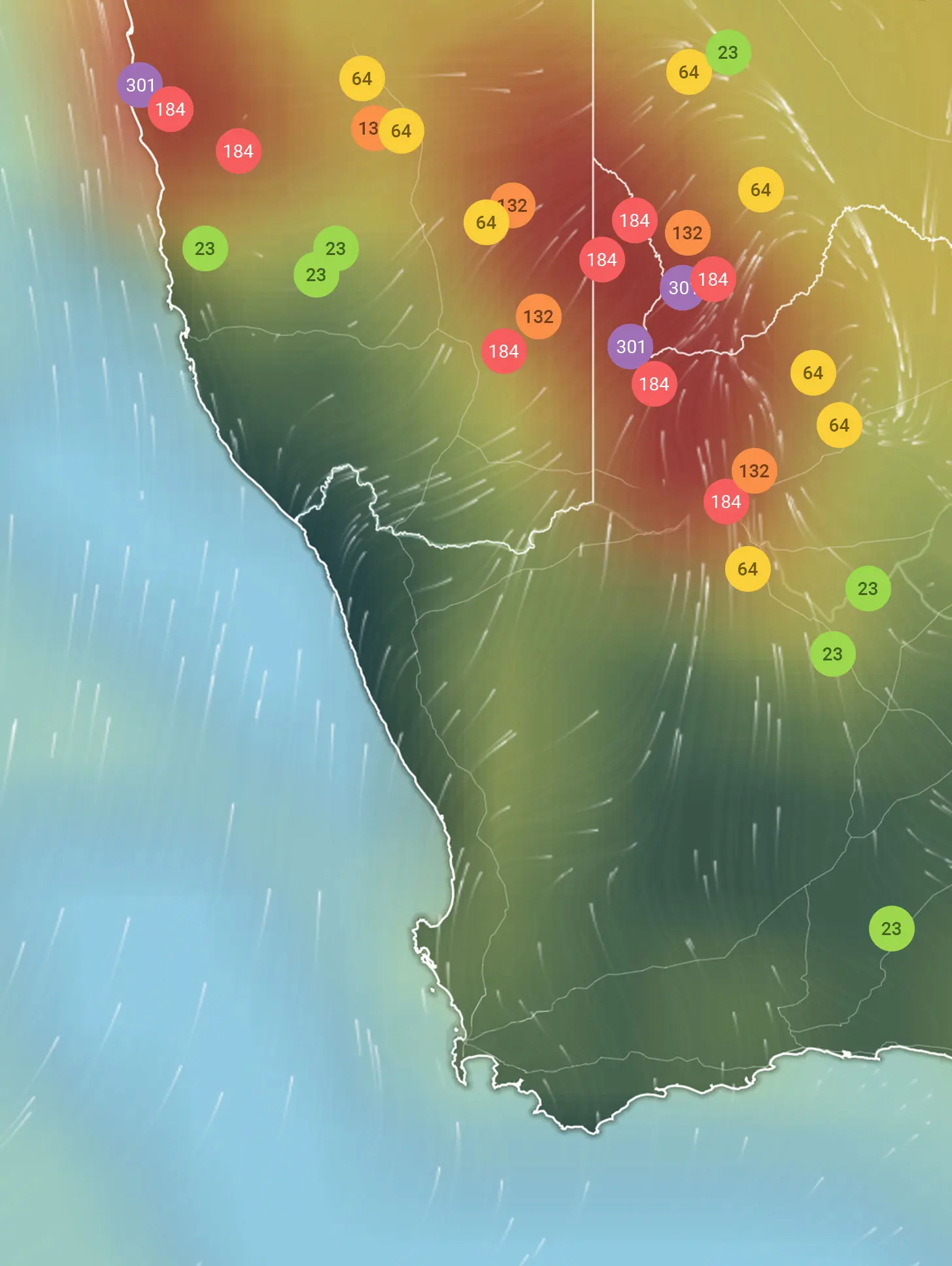
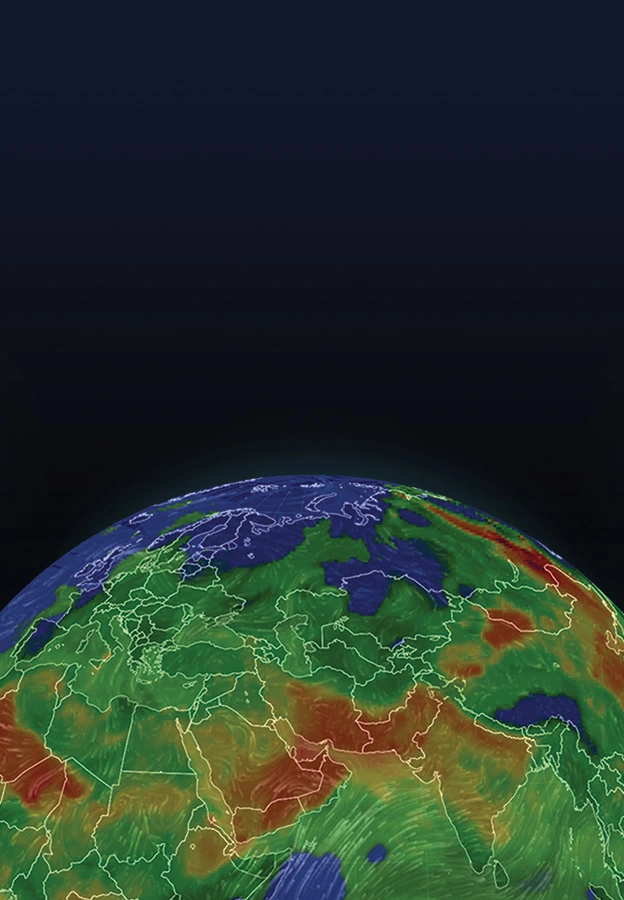
Discover the influences may be affecting Fort Worth’s AQI in real-time by using Fort Worth’s air pollution map to observe the impact of wind on ambient PM2.5, also available on the AirVisual app.
What are the air pollution levels taken over 2020?
With the new data available taken over the course of 2020, it can be seen that Fort Worth came in with a different level of PM2.5 when compared to the previous reading taken in 2019. It is shown that the air quality actually worsened over 2020, something that would of great surprise to many people due to the fact that Covid-19 caused much of the year to be brought to a halt, in terms of the mass movement of people as well as other related anthropogenic activities.
The PM2.5 reading taken over 2020 was 9.3 μg/m³, a reading that placed it once again within the World Health Organizations (WHO's) target goal of 10 μg/m³ or less, for the most optimal quality of air. Whilst Fort Worth fell into the best air quality rating bracket, it still stands to reason that there were several months in which the PM2.5 count rose significantly higher, going up by several ratings. This indicates that Fort Worth still suffered from some pollutive issues despite the epidemic, which many people estimated to actually bring the pollution levels down (which did occur in many other cities across America, but for a number of reasons some cities remained the same, and in the case of Fort Worth, the air quality actually worsened).
This reading of 9.3 μg/m³ placed Fort Worth into 2958th place out of all cities ranked worldwide, a fairly respectable position, however one that could certainly be improved upon in the future. Past readings of air quality in Fort Worth show that the city is fluctuating between similar readings, with 2017 coming in with a reading of 8.1 μg/m³, 2018 with a reading of 10 μg/m³ (just making the WHO's target by the finest amount), and 2019 with a reading of 8.4 μg/m³. It may take extensive and concentrated efforts to truly reduce the levels of air pollution present in the city, so that Fort Worth is not caught in a continuous loop of rising and falling PM2.5 levels.
When are the air quality levels at their most polluted in Fort Worth?
Observing the data collected over the course of 2020 once again, it can be seen that there were distinct periods of time in which the PM2.5 levels were significantly higher than the rest of the year. PM2.5 refers to particulate matter that is 2.5 micrometers or less in diameter, on occasion going down to sizes as small as 0.01 microns and beyond. Due to this, it is of great harm to human health when respired, and as such is used as one of the major components of calculating the overall AQI, or air quality index.
Looking at the data, it can be seen that nine months out of the year came in with readings that fell within the WHO's target goal of 10 μg/m³ or less. However, the months of June through to August saw considerable spikes in the PM2.5 readings. To cite an example, the previous month of May, which was considerably cleaner, came in with a PM2.5 reading of 8.5 μg/m³, which was then followed by a prominent jump up to 12.3 μg/m³ in June, 13.2 μg/m³ in July and 10.2 μg/m³ in August, before returning back to WHO standards in September with a reading of 8.8 μg/m³.
This shows that these three months were the most polluted over the entire year of 2020, indicating that the air would contain larger amounts of hazardous particulate matter and other contaminating elements. Both June and July came in within the ‘moderate’ pollution bracket, which requires a PM2.5 reading of anywhere between 12.1 to 35.4 μg/m³ to be classified as such. August came in with a rating of ‘good’, which requires a reading between 10 to 12 μg/m³. These months are largely related to the previously mentioned phenomenon regarding the sand clouds being blown over large areas of land in Texas.
In closing, to quickly mention some of the cleaner months of the year, January, February and December all came in with the best readings, which were 7.7 μg/m³, 6.5 μg/m³ and 7.9 μg/m³ respectively, making February the cleanest month of 2020 with its reading of 6.5 μg/m³.
What are the main types of air pollution found in Fort Worth?
Whilst some of the more prominent pollutants have been touched on several times already (ozone and finely ground sand or gravel particles), it still stands to reason that there are many more air pollutants present in the atmosphere in Fort Worth, particularly in highly polluted areas or hotspots, such as near industrial zones, busy roads, or when forest fires occur and their clouds of smoke and haze drift over the city.
Some of the main pollutants found would be ones such as nitrogen dioxide (NO2) as well as sulfur dioxide (SO2), both of which find a large amount of release from vehicles, with nitrogen dioxide being the chief offender here, usually being found in large amounts over areas that see a high volume of traffic, so much so to the point that there is usually a direct correlation between nitrogen dioxide (as well as the various oxides of nitrogen, or NOx) and a large number of cars in the area around or below where such readings are taken.
Other pollutants include ones such as carbon monoxide (CO), methane (CH4), as well as various different types of hazardous particulate matter such as finely ground silica dust and black carbon, the main component of soot. Both of these materials are extremely carcinogenic when inhaled and should be avoided whenever possible. Black carbon finds its creation from the combustion of both fossil fuels and organic material, which also creates other pollutants such as volatile organic compounds (VOCs), some of which include chemicals such as toluene, methylene chloride, formaldehyde and benzene.
+ Article Resources
[1] American Lung Association. (2019). State of the air – 2019.
[2] Fort Worth Business Press. (2019, May 23). Fort Worth grows again, now the 13th largest city in U.S.
[3] Green Dallas. (2020). What is the city doing?
[4] Pabst E. (2020). Illegal air pollution in Texas: Air pollution from startups, shutdowns, malfunctions and maintenance at industrial facilities in Texas in 2018.
[5] Ridlington E. (2020). Trouble in the air: millions of Americans breathed polluted air in 2018.
[6] Fort Worth Census. (2020). Population.
[7] Dallas Fort Worth Clean Cities. (2020). Electric vehicles North Texas.
[8] Fort Worth. (2020). Gas well drilling.
[9] Jimenez J. (2019, December 18). Report lists top 10 polluters in North Texas.
[10] Ray J. (2020, June 27). Saharan dust cloud causes North Texas air to be deemed ‘unhealthy’.