


 Add
AddAir quality in Shangqiu
Air quality index (AQI⁺) and PM2.5 air pollution in Shangqiu • 26.1K Followers • 19:00, Aug 20 Local time
68
US AQI⁺Moderate

Main pollutant:
PM2.5
18 µg/m³

26°

11 km/h

92 %
Hourly forecast
Shangqiu air quality index (AQI⁺) forecast


Daily forecast
Shangqiu air quality index (AQI⁺) forecast
| Today | 75 | | 31° 24° |  13 km/h | 86% |
| Fri | 76 |  | 31° 24° | 15 km/h | 84% |
| Sat | 69 | | 31° 24° | 18 km/h | 86% |
Air pollutants
What is the current air quality in Shangqiu?

PM2.5 concentration is currently 3.6 times the World Health Organization annual PM2.5 guideline value.
Health recommendations
 Sensitive groups should reduce outdoor exercise |
 Close your windows to avoid dirty outdoor air Get a monitor |
 Sensitive groups should wear a mask outdoors Get a mask |
 Sensitive groups should run an air purifier Get an air purifier |
Pollen forecast
Today

低
Less likely to trigger allergic reactions
Source:
weather.com.cnHealth recommendations
Sensitive groups should reduce outdoor exercise |
Close your windows to avoid dirty outdoor air Get a monitor |
Sensitive groups should wear a mask outdoors Get a mask |
Sensitive groups should run an air purifier Get an air purifier |
Pollen forecast
Today
低
Less likely to trigger allergic reactions
Source:
weather.com.cnMost polluted locations near Shangqiu
Worldwide AQI⁺ ranking
Station ranking
Real-time AQI⁺ station ranking for stations in Shangqiu
Historic air quality near Shangqiu
History
Historic air quality graph for Shangqiu
Historic air quality near Shangqiu
History
Historic air quality graph for Shangqiu
Most polluted locations near Shangqiu
Worldwide AQI⁺ rankingStation ranking
Real-time AQI⁺ station ranking for stations in Shangqiu


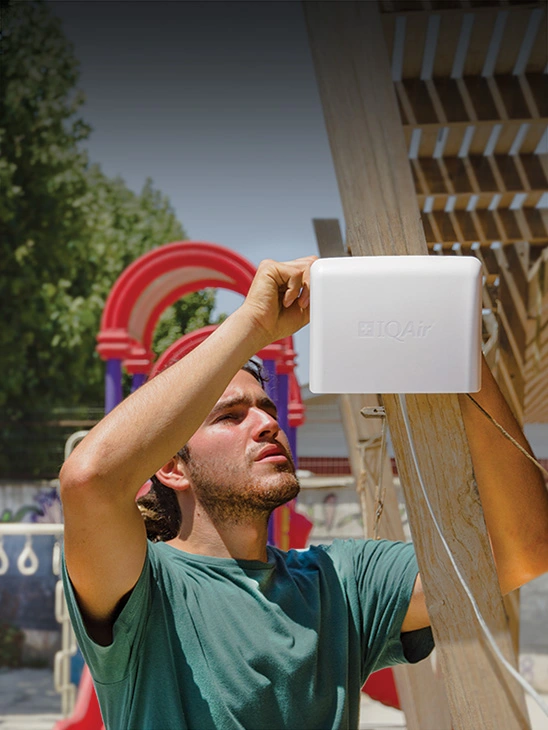
Measure your own air quality
Get a monitor and contribute air quality data in your city.


Learn more about air pollution in Shangqiu
What is the current air quality in Shangqiu?
The current air quality in Shangqiu is considered moderate. Air quality is acceptable for most people, though sensitive individuals may experience mild symptoms such as coughing or shortness of breath.
What is the level of air pollution in Shangqiu?
Shangqiu is a city in eastern Henan province, Central China. It is geographically important because it lies at a junction of several major railway lines, making its train station a major regional transportation hub. A census was conducted in 2010 which estimated the population to be almost 7.5 million inhabitants and 1.5 million of those lived in the metropolitan area which consists of the Suiyang and the Liangyuan districts.
At the start of the second quarter of 2021, Shangqiu was experiencing a period of “Moderate” quality air with a US AQI reading of 74. This classification is in accordance with the recommendations suggested by the World Health Organisation (WHO). Usually, there are six pollutants that are measured and these act as a benchmark internationally. The concentrations of the six pollutants in Shangqiu were as follows: PM2.5 - 23 µg/m³, PM10 - 17 µg/m³, ozone (O3) - 53.5 µg/m³, nitrogen dioxide (NO2) - 16.5 µg/m³, sulphur dioxide (SO2) - 2 µg/m³ and carbon monoxide (CO) - 600 µg/m³. The measurements are quoted as microns/micrograms per cubic metre.
You can protect yourself against the worst air quality by closing doors and windows so as to keep out any more dirty air. Those groups of people who are sensitive to poor air quality should avoid going outside until there is an improvement. You can check the table at the top of this page for the latest information regarding air quality.
Is the level of air pollution constant throughout the year in Shangqiu?
Air pollution can be extremely volatile and can change very quickly because it is affected by many situations. It can and does often change in the space of a day.
Looking back at the recently released figures for 2021 on the IQAir website it can easily be seen that the air quality seems dependant on the seasons of the year. Shangqiu had the best quality air during the summer months of May until the end of September when the recorded figures were between 12.1 and 35.4 µg/m³. The months immediately preceding and following saw worse quality when they fell into the “Unhealthy for sensitive groups” class with readings between 35.5 and 55.4 µg/m³. The remaining 4 months over winter which is the coldest time of the year witnessed a fall in quality again into the “Unhealthy” bracket. The figures here are between 55.5 and 150.4 µg/m³.
Historically the annual figures follow no pattern. In 2017 when records were first kept, the annual average was 61.8 µg/m³ followed by a similar figure in 2018 of 61.9 µg/m³. The following year, 2019 saw a sharp increase to 72.6 µg/m³ before a very sharp fall in 2020 to 52.7 µg/m³. This unexpected fall could be due to the COVID-19 restrictions and the lockdown that followed when most vehicles were banned from use and many industrial units ceased operating for several months. Time will tell what 2021 will bring!
What are the sources of the poor quality air in Shangqiu?
The majority of air pollution comes from the use of coal both as a source of heat and also for industrial power. The other main contributor is the emissions from vehicles together with soot, fugitive dust, secondary aerosols, and volatile organic compounds.
Particulate pollution is the most prominent problem. The annual average concentration of PM10 in the main urban area continues to increase, and it has become the primary pollutant recently. The impact of ozone and nitrogen dioxide has gradually increased as well. Due to the continuous increase of motor vehicles, motor vehicle pollutant emissions are still one of the hold-ups in improving air quality. Nitrogen oxides emitted from motor vehicle exhaust and organic volatiles in the air undergo a photochemical reaction under sunlight, causing the problem of excessive ozone.
The average PM10 concentration in Shangqiu City was 151 µg/m³, a year-on-year increase of 21.8 per cent; the average PM2.5 concentration was 90 µg/m³, a year-on-year increase of 12.5 per cent.
Many cities are at the mercy of the weather with high humidity and low wind speed exacerbating smog.
What can be done to alleviate the air pollution in Shangqiu?
China is restricting industrial output, traffic and coal consumption in the smoggy north again in a bid to cut pollution during the winter heating period when thousands of mainly coal-burning boilers are switched on. There are about 95 million inhabitants in nine cities in Henan province which reported an increase in the levels of PM2.5 pollutants. The figure recorded was 82 µg/m³ which was an increase of 12 per cent over the corresponding month from the previous year.
Emissions in the cities which include several large steel, aluminium and coal-producing areas have risen by 107 per cent. Realising the seriousness of this situation, 79 cities in Henan have drawn up plans to reduce the levels of PM2.5 by 3 per cent over the next year. China’s national standard for PM2.5 is 35 µg/m³ whereas the level in most of these participating cities is in the region of 66 µg/m³.
Since 2013, Shangqiu City has proposed the goal of creating a national forest city and building a beautiful Shangqiu. The city has now completed 302,600 mu of afforestation, the forest coverage rate reached 30.57 per cent, and the urban green coverage rate has now reached 40.51 per cent.
What are the effects on health through breathing Shangqiu’s polluted air?
The impact of air pollution on health depends on many factors. In addition to the concentration and chemical characteristics of pollutants in the air, the age and general health of the person concerned, the length of time they have been exposed to the pollutant, the climate, and the distance between the source of emission and the contact, etc., will all have different effects on health.
Air pollution has many potential health effects, ranging from subtle physiological changes in the body to obvious symptoms such as itchy nose and throat, wheezing, coughing, chest pain or chest tightness. Patients with asthma or chronic respiratory diseases will get worse if they are exposed to air pollutants. Although the degree to which different people are affected by air pollution depends on different factors, people of different ages are all affected by poor air quality, and air pollution has a greater impact on children and the elderly.
The most common air pollutants include carbon monoxide, nitrogen dioxide, ozone, suspended particulates, sulphur dioxide and lead.