Add
AddAir quality in Shenyang
Air quality index (AQI⁺) and PM2.5 air pollution in Shenyang • 342.4K Followers • 06:00, Jun 03 Local time
152
US AQI⁺Unhealthy

Main pollutant:
PM2.5
57 µg/m³

20°

6 km/h

78 %
Hourly forecast
Shenyang air quality index (AQI⁺) forecast


Daily forecast
Shenyang air quality index (AQI⁺) forecast
| Today | 149 |  | 31° 22° |  20 km/h | 45% |
| Thu | 85 |  90% | 22° 18° | 7 km/h | 79% |
| Fri | 83 | 90% | 21° 16° | 9 km/h | 66% |
Air pollutants
What is the current air quality in Shenyang?

PM2.5 concentration is currently 11.4 times the World Health Organization annual PM2.5 guideline value.
Health recommendations
 Avoid outdoor exercise |
 Close your windows to avoid dirty outdoor air Get a monitor |
 Wear a mask outdoors Get a mask |
 Run an air purifier Get an air purifier |

Health recommendations
Avoid outdoor exercise |
Close your windows to avoid dirty outdoor air Get a monitor |
Wear a mask outdoors Get a mask |
Run an air purifier Get an air purifier |
Most polluted locations near Shenyang
Worldwide AQI⁺ ranking
Station ranking
Real-time AQI⁺ station ranking for stations in Shenyang
Historic air quality near Shenyang
History
Historic air quality graph for Shenyang
Historic air quality near Shenyang
History
Historic air quality graph for Shenyang
Most polluted locations near Shenyang
Worldwide AQI⁺ rankingStation ranking
Real-time AQI⁺ station ranking for stations in Shenyang



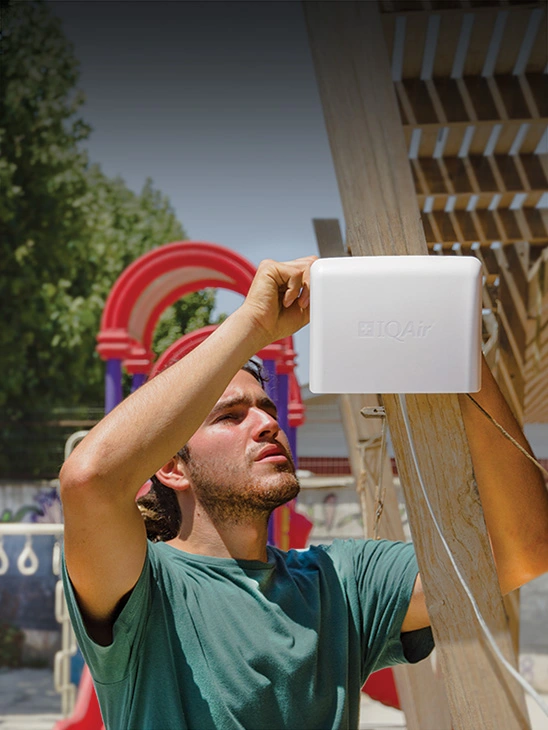
Measure your own air quality
Get a monitor and contribute air quality data in your city.


Learn more about air pollution in Shenyang
What is the current air quality in Shenyang?
The current air quality in Shenyang is considered unhealthy. Everyone may begin to experience adverse health effects, with sensitive groups at greater risk.
What is the air quality index of Shenyang?
Shenyang is the capital of Liaoning Province, which is situated in the central- north of China. It can be classified as a megapolis with a metropolitan population of over 23 million people.
Towards the end of 2020, Shenyang was experiencing “Moderate” levels of polluted air, according to suggested figures by the World Health Organisation (WHO). Concentrations of the other airborne pollutants were as follows: PM2.5 - 13 µg/m³, PM10 - 28 µg/m³, ozone (O3) - 52 µg/m³, nitrogen dioxide (NO2) - 23.5 µg/m³, sulphur dioxide (SO2) - 18.5 µg/m³ and carbon monoxide (CO) - 18.5 µg/m³.
The advice given under these conditions is that doors and windows are closed so as to stop the ingress of dirty air into the home. Those groups who are sensitive to poor air quality should avoid outdoor exercise until the situation improves.
What are the main sources of Shenyang’s polluted air?
According to the latest statistics, from April to October in Shenyang last year, the total amount of coal burned during the non-heating season was about 8 million tons. During the heating period, this figure doubles and Shenyang burned about 16 million tons of coal. There are three main pollutants from coal-burning which are sulphur dioxide (SO2), soot or black carbon (BC) and nitrogen oxides (NOx). The annual emission of sulphur dioxide in Shenyang is 130,000 tons, of which about 100,000 tons is produced during winter plus the annual emission of smoke and dust is 150,000 tons, and the annual emission of nitrogen oxides (NOx) is about 110,000 tons with about 50,000 tons produced in winter.
Environmental protection experts said that a large amount of coal burning in the relatively short period of time in winter is a major cause of air pollution in Shenyang. For this reason, during the heating period, the Municipal Environmental Protection Bureau carried out special law enforcement actions for air pollution companies to ensure that all coal-burning companies met emission standards.
The internal cause of the formation of haze and smog is the large number of pollutants discharged from industrial production and personnel activities. According to environmental protection experts, the formation of haze and smog is mainly due to three factors: low wind speed in the horizontal direction; temperature inversion in the vertical direction and atmospheric pollutants. Under these conditions, the concentration level increases.
In addition to meteorological factors, the current composition of air pollutant emissions in Shenyang mainly comes from coal-burning, construction site dust, urban vehicle exhausts, industrial production exhaust gas and foreign dust. Among them, coal combustion accounted for about 30 per cent, construction site dust accounted for about 20 per cent, motor vehicle exhaust accounted for about 20 per cent (especially large trucks, yellow label vehicles), industrial waste gas accounted for about 10 per cent and foreign dust accounted for about 20 per cent. Foreign dust can be blown in from 1000’s of kilometres away, depending on the strength of the prevailing winds.
Is air pollution in Shenyang getting better or worse?
For as long as Shenyang uses coal to provide winter heat for its citizens, the quality of air is very unlikely to improve quickly. The local government is constantly monitoring the situation and issuing a warning to its citizens about the quality of the air.
The number of excellent days in the first week of heating this year (2018) increased by 1 day compared to the same period last year.
According to the monitoring data of the Shenyang Environmental Monitoring Centre, in the first week of heating in 2018, the number of very good days in Shenyang was 6 days, of which 1 day was excellent and 5 days were good. The number of good days remained the same year-on-year, and the number of excellent days increased by 1 day; light pollution was 1 day, the same year-on-year; there was no moderate or above pollution. In the ambient air, the concentration of fine particulate matter PM2.5, inhalable particulate matter PM10, and sulphur dioxide (SO2) decreased year-on-year by 17.9 per cent, 16.5 per cent, and 3.0 per cent respectively.
What can be done to improve the air quality in Shenyang?
In order to cope with the polluted weather during winter and reduce the impact of atmospheric environmental pollution on people’s daily production and life, Shenyang adjusted the energy structure and heat source layout, strictly controlled the total discharge of major pollutants and the amount of coal used, implemented coordinated control of multiple pollutants, and strengthened comprehensive management of multiple pollution sources, focused on promoting regional air pollution prevention and control, and effectively improved the quality of the air environment.
In terms of continuing to phase out small coal-fired boilers, Shenyang plans to phase out 365 small coal-fired boilers throughout the year, until all of which have been eliminated.
Regarding the upgrading and transformation of coal-fired boilers, Shenyang plans to implement a 5,000-ton coal-fired boiler denitrification project this year. Currently, 55 coal-fired boilers have been upgraded.
What are the effects on health through breathing in Shenyang’s polluted air?
The impact of air pollution on health depends on many factors. In addition to the concentration and chemical characteristics of pollutants in the air, the age and general health of the person concerned, the length of time they have been exposed to the pollutant, the climate, and the distance between the emission source and the contact, will all have different effects on health. People who need to work or play outdoors frequently have increased exposure to air pollutants. In general, the health risks of short-term exposure to pollutants are usually lower.
Air pollution has many potential health effects, ranging from slight physical changes in the body to obvious symptoms such as itchy nose and throat, wheezing, coughing, chest pains or chest tightness. The condition of those who suffer from asthma or chronic respiratory disease patients who are exposed to air pollutants will get worse. Although the degree to which different people are affected by air pollution depends on different factors, people of different ages are all affected by poor air quality, and air pollution has a greater impact on children and the elderly.