


 Add
AddAir quality in Modena
Air quality index (AQI⁺) and PM2.5 air pollution in Modena • 12.5K Followers • 21:00, Aug 13 Local time
37
US AQI⁺Good

Main pollutant:
PM2.5
6.7 µg/m³

30°

10 km/h

45 %
Hourly forecast
Modena air quality index (AQI⁺) forecast


Daily forecast
Modena air quality index (AQI⁺) forecast
| Today | 40 |  | 35° 23° |  11 km/h | 48% |
| Fri | 57 | | 35° 22° | 11 km/h | 44% |
| Sat | 59 | | 36° 20° | 10 km/h | 41% |
Air pollutants
What is the current air quality in Modena?

PM2.5 concentration is currently 1.3 times the World Health Organization annual PM2.5 guideline value.
Health recommendations
 Enjoy outdoor activities |
 Open your windows to bring clean, fresh air indoors Get a monitor |
Pollen
What is the pollen count in Modena today?
Index

Moderate
 Tree None | 0% |
 Grass Moderate | 50% |
 Weed Low | 25% |
Source:
Open-Meteo.comHealth recommendations
Enjoy outdoor activities |
Open your windows to bring clean, fresh air indoors Get a monitor |
Pollen
What is the pollen count in Modena today?
Index
Moderate
Tree None | 0% |
Grass Moderate | 50% |
Weed Low | 25% |
Source:
Open-Meteo.comMost polluted locations near Modena
Worldwide AQI⁺ ranking
Station ranking
Real-time AQI⁺ station ranking for stations in Modena

Historic air quality near Modena
History
Historic air quality graph for Modena
Historic air quality near Modena
History
Historic air quality graph for Modena
Most polluted locations near Modena
Worldwide AQI⁺ rankingStation ranking
Real-time AQI⁺ station ranking for stations in Modena



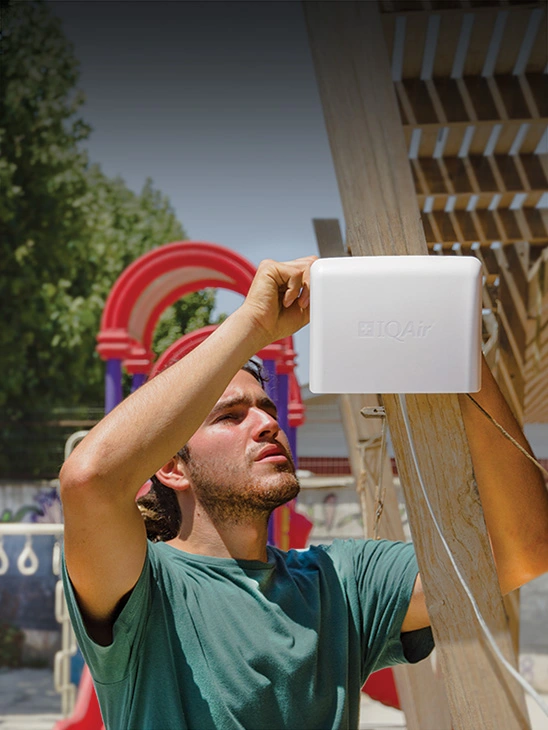
Measure your own air quality
Get a monitor and contribute air quality data in your city.


Learn more about air pollution in Modena
What is the current air quality in Modena?
The current air quality in Modena is considered good. Air pollution levels are low and there are no expected health risks, making it a good time to enjoy normal outdoor activities.
What is the current level of air pollution in Modena?
Modena is a city and commune on the south side of the Po Valley, in the Province of Modena in the Emilia-Romagna region of northern Italy. It is or was home to several classic Italian sports car manufacturers. According to a survey conducted in 2015 the population was estimated to be approximately 185,000 people.
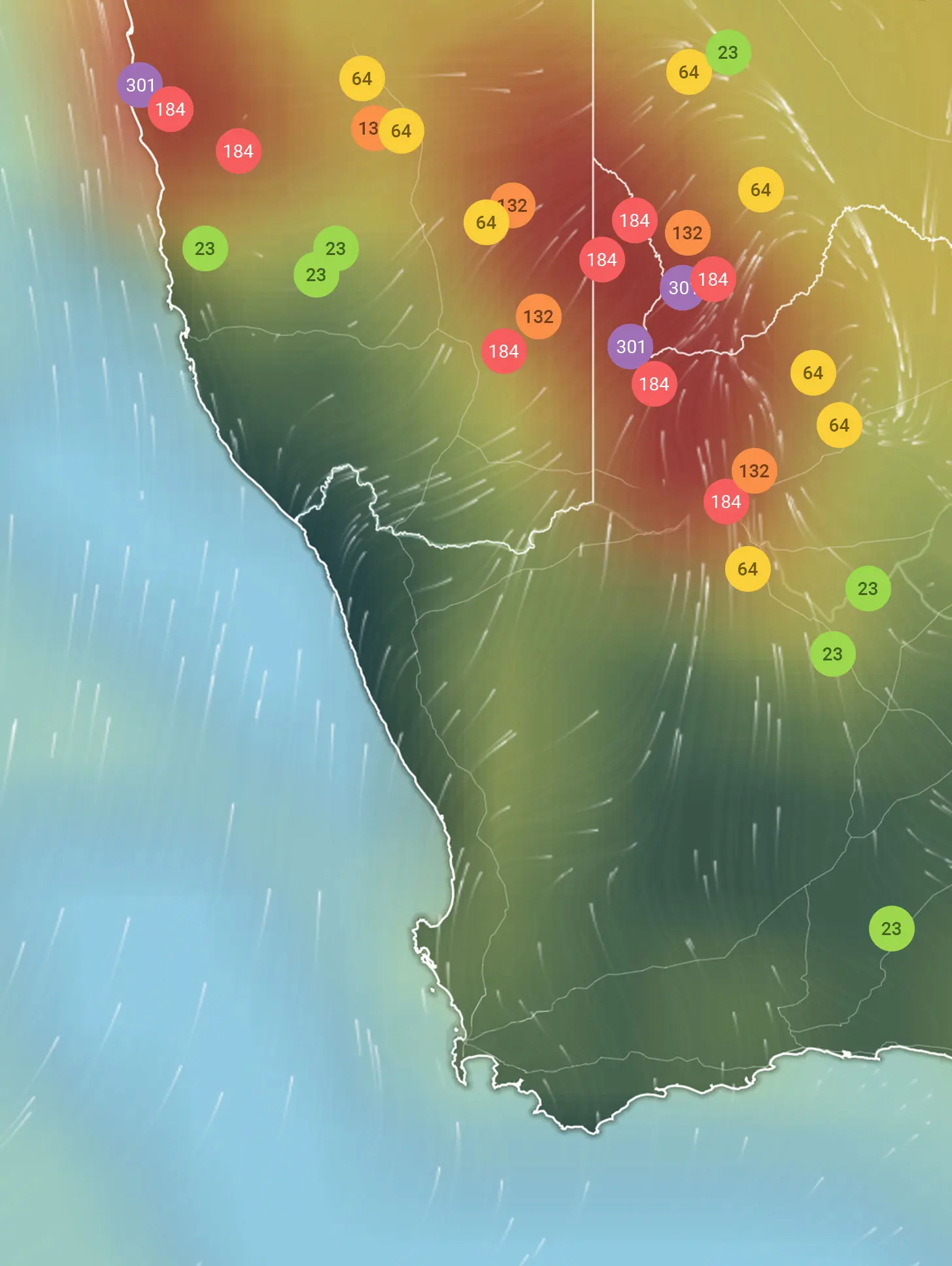
Towards the end of 2021, Modena was experiencing a period of air quality that was classified as being “Unhealthy for sensitive groups” with a US AQI reading of 126. This reading is often used as a reference point when comparing air quality in other cities around the world. Data is collected with regards to the six most prolific air pollutants commonly found and this figure is calculated from there. If information is not available for all six, then a figure can be deduced using the information that is available. In the case of Modena, only PM2.5 was measured which was 45.5 µg/m³.
This PM2.5 level can be seen to be over four and a half times higher than the suggested level of 10 µg/m³. This level has been determined by the World Health Organisation (WHO) as being an acceptable level of air pollution, although no level is to be considered as being safe.
When air pollution is in this “Unhealthy for sensitive groups” bracket, the offered advice is to remain indoors as much as possible, closing all doors and windows to prevent the ingress of more polluted air. The operation of an air purifier would be beneficial if one is available, but make sure the airflow is set to recirculate and not import more dirty air from outside. Those of a sensitive disposition should try to avoid venturing outside until the quality improves. If this is unavoidable, then a good quality mask should be worn at all times. All groups of people are dissuaded from partaking in vigorous outdoor exercise.
There is a mobile app available from AirVisual.com for most operating systems. This free app informs you of the state of the air in real-time and thus will help you decide what to do or where to go.
Is the air quality constant throughout the year in Modena?
When looking back at the figures released by IQAir.com in 2020, Modena achieved the WHO target figure of being less than 10 µg/m³. This happened during the months of May through until the end of August. The months at either side of this period March and April and September and October returned readings from the “Moderate” category with figures between 12.1 and 35.4 µg/m³. February, November and December saw the air quality in the “Unhealthy for sensitive groups” with readings between 35.5 and 55.4 µg/m³, but the worst month of the entire year was January when the quality of air was classed as being “Unhealthy” with a reading of 60.7 µg/m³.
In 2020, the air was "Good" or "Acceptable" for 243 days, corresponding to approximately 58 per cent of the year. For the remaining period, 153 days (41 per cent), the air quality was “Mediocre”, “Poor” or “Bad”.
Historically, records have been kept since 2017 when a figure of 22.1 µg/m³ was noted. A slight decline the following year to 25.5 µg/m³, before getting better again in 2019 with a 23.4 µg/m³ reading. In 2020, the recorded figure was 24.3 µg/m³ which is surprising because of the measure put in place to stop the spread of the COVID-19 virus. Many motorists were no longer required to commute to their offices each day which reduced air pollution in the city centres dramatically. There were also some factories and similar production units which were told to close on a temporary basis. Many cities throughout the world noted how much cleaner their city air was because of these measures.
Is there a main source of air pollution in Modena?
Among the meteorological factors that influence the concentrations of pollutants, thermal inversions are certainly a relevant phenomenon, also due to their high frequency in the Modena area. These situations occur mainly during the winter period, with high values of fine particles (PM10) and nitrogen oxides (NOx). The most critical hours are therefore the evening ones, when the increase in commuting vehicle traffic is added to the meteorological factor.
In the summer period, the increase in solar radiation leads to a greater mixing of the air masses, therefore in general the levels of pollution relative to dust and nitrogen oxides are more contained. However, in this season, due to the intense solar radiation, "photochemical smog" is formed, the main tracer of which is ozone.
The pressure factors that mainly affect air quality are the sources of atmospheric pollution of anthropogenic origin, attributable to the following categories: vehicular traffic, industrial emissions and thermal plants.
What can be done to improve air quality in Modena?
Policies to control climate change and air pollution need to be coordinated. Measures to combat global warming and incentives for the use of renewable energy sources must also be evaluated in terms of the consequences they can have on the quality of the air we breathe.
By changing our model of trips in the city: it is not based on self-owned, but on sharing mobility services, understood both as a traditional public transport service, as well as new forms of car-sharing, carpooling and bike sharing.
It is necessary to incentivize the use of electric, hybrid and gas cars and to take measures to discourage or regulate the circulation of petrol and diesel cars.
Contrary to what one might expect, the use of wood biomass for heating is what causes such a massive presence of particulate matter in the air. National guidelines must therefore be adopted on the use of biomass for domestic heating and the technology to be adopted, favouring the spread of technologies with high efficiency and low (or zero) emissions.
What are the detrimental effects to human health through polluted air?
Most people know that air pollution causes lung problems, but exposure to smog has also been linked to many other diseases, such as heart attacks, strokes, dementias., kidney disease and diabetes, as well as having harmful effects in pregnancy.
Air pollution is linked to premature deaths, most of which are due to cardiovascular disease. Fine particles can damage the cardiovascular system in many ways, causing inflammation, promoting blood clotting, narrowing the arteries and putting the heart under stress, because it has to work much harder.