

 Add
AddAir quality in Malacca
Air quality index (AQI⁺) and PM2.5 air pollution in Malacca • 22.1K Followers • 11:00, Jun 16 Local time
38*
US AQI⁺Good

Main pollutant:
PM2.5
7 µg/m³

25°

13 km/h

89 %
Hourly forecast
Malacca air quality index (AQI⁺) forecast


Daily forecast
Malacca air quality index (AQI⁺) forecast
| Today | 36 | | 26° 25° |  15 km/h | 85% |
| Wed | 40 |  | 29° 26° | 13 km/h | 72% |
| Thu | 39 |  | 29° 25° | 12 km/h | 75% |
Air pollutants
What is the current air quality in Malacca?

PM2.5 concentration is currently 1.4 times the World Health Organization annual PM2.5 guideline value.
Health recommendations
 Enjoy outdoor activities |
 Open your windows to bring clean, fresh air indoors Get a monitor |
Health recommendations
Enjoy outdoor activities |
Open your windows to bring clean, fresh air indoors Get a monitor |
Most polluted locations near Malacca
Worldwide AQI⁺ ranking

Historic air quality near Malacca
History
Historic air quality graph for Malacca
Historic air quality near Malacca
History
Historic air quality graph for Malacca
Most polluted locations near Malacca
Worldwide AQI⁺ ranking


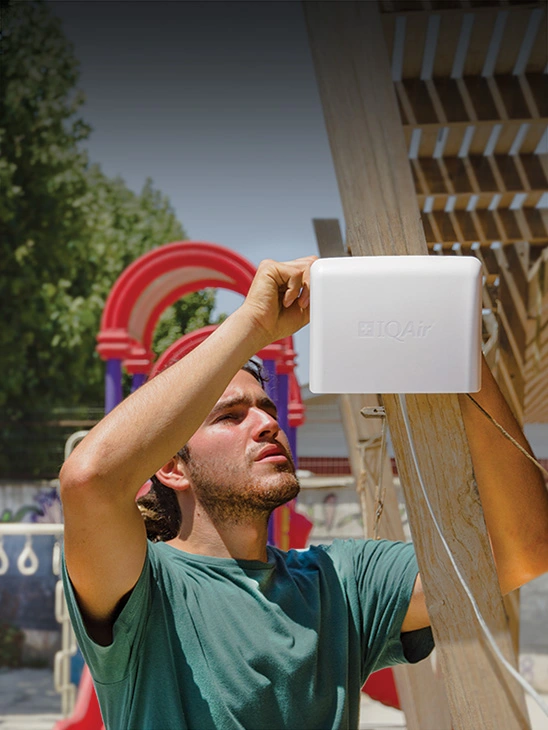
Be the first to measure and contribute air quality data to your community


Learn more about air pollution in Malacca
What is the current air quality in Malacca?
The current air quality in Malacca is considered good. Air pollution levels are low and there are no expected health risks, making it a good time to enjoy normal outdoor activities.
Does Malacca have a good quality of air?
Malacca, or Melaka as it is spelt locally, is a city located in the Malaysian state of the same name, being home to some 579 thousand people and holding the title of the oldest city along the Straits of Malacca, a vital trade route that acts as the main shipping channel between the Indian and Pacific Ocean. Nowadays the city sees itself having an economy that is largely based around tourism, with many historic attractions that bring in people from both abroad and locally. Besides the tourist industry, there are efforts to bring about a presence in higher education centers, trade districts, as well as further development in the hospitality industry. These are all further factors that will see the quality of living improve even further in Malacca, although as with all further development in any city, it often brings with it further polluting issues, to compound preexisting ones that were already present.
In early 2021, Malacca came in with various PM2.5 readings, some of which rose quite high, indicating that the city may be subject to some less than perfect levels of air quality. In the beginning of March, PM2.5 readings as high as 44.2 μg/m³ were recorded, which would put the city into the ‘unhealthy for sensitive groups’ bracket, which requires a PM2.5 reading anywhere between 35.5 to 55.4 μg/m³ to be classified as such. Whilst there were lower readings at 31.2 μg/m³ taken around the same time, this still represents a poorer quality of air, with 31.2 μg/m³ still being a high reading by any means. This indicates that Malacca could do much to improve the quality of its air.
What causes pollution in Malacca?
Along with other sources of pollution related concern in Malacca, such as the contamination of rivers and other bodies of water due to industrial effluence as well as the illegal dumping of waste materials, causing widespread damage to the soil and water, there is also the issue of air pollution, which is prominent, as can be seen from the PM2.5 readings previously mentioned. One of the main causes would be that of vehicle exhaust fumes, with numerous cars and motorbikes inhabiting the roads and putting out vast amounts of chemical compounds and dangerous particulate matter. Many of these vehicles would still be using diesel fuels, and to compound the situation further, the use of heavy duty vehicles (namely, trucks and lorries and any large vehicle above a certain size and weight) would also contribute further to instances of vehicle related pollution.
Other causes would be smoke blown over from Indonesia typically around the month of September, sometimes also causing the PM2.5 count to go higher in adjacent months, as well as occurrences of local fires, oftentimes happening outside of the inner city in more rural areas, where trash and refuse are set alight. Factories and power plants would also be highly responsible for putting out large amounts of pollution, and with a growing population and increasing amounts of tourists, also comes a higher energy demand placed on these coal powered plants. Other minor causes include ones such as construction sites, road repairs, and even fire crackers or incense sticks used during religious ceremonies all adding to the amount of smoke and particulate matter in the air.
What are some health issues associated with polluted air in Malacca?
With PM2.5 numbers going as high 44.2 μg/m³ being taken early in the year, there would be a considerable amount of ill health effects occurring. Whilst any reading above the World Health Organizations target goal of 10 μg/m³ or less has the chance to cause adverse health effects (with certain individuals even being affected by even lower readings, depending on circumstances and the pollutants involved), it stands to reason that as the quantity of pollution goes higher, so too does the chance of adverse effects occurring, as well as the severity of them.
Some health issues would be ones such as cases of ischemic heart disease, along with other cardiac events such as heart attacks, arrythmias and angina. Exposure to chemical irritants can cause inflammation of the airways as well as rapid aging or scarring of the lung tissue. This can cause affected individuals to lose full lung function, as well as making them more predisposed towards developing other respiratory issues such as pneumonia, bronchitis, emphysema and asthma.
What are some of the main types of pollution in Malacca?
With much of its pollution arising from various different types of combustion sources, with vehicles, factories, industrial areas and forest fires all contributing, Malacca would have a large amount of related chemical pollutants and fine particulate matter in the air.
Some of these would include ones largely emitted from vehicle fumes and exhaust, which include chemicals such as nitrogen dioxide (NO2) and sulfur dioxide (SO2), both of which can contribute to acid rain, as well as causing irritation to the airways and lung tissue. Others would be carbon monoxide (CO), as well as ozone (O3), which is formed when the various oxides of nitrogen (NOx) get exposed to large amounts of solar radiation via the sun, converting them into a deadly ground pollutant, with large accumulations of ozone typically referred to as smog.
Other pollutants include ones such as black carbon, which is the main component of soot and a potent carcinogen when inhaled, as well as having climate changing properties due to its ability to convert solar radiation directly to heat. Other pollutants from various sources include lead, mercury, finely ground silica dust particles as well as dioxins and furans, typically found around industrial sites or areas that have the open burning of synthetic materials occurring.
Who is most vulnerable to air pollution in Malacca?
Whilst air pollution has the ability to cause devastating effects to even healthy young adults with no history of health problems (due to the pervasive nature of many of the chemical pollutants found in the air), there are certain groups that are even more at risk due to their age or physical background. These include groups such as the young, the elderly, those with compromised immune systems or preexisting health conditions, as well as pregnant mothers also being extremely vulnerable to overexposure to polluted air.