Add
AddAir quality in Patzcuaro
Air quality index (AQI⁺) and PM2.5 air pollution in Patzcuaro • 471 Followers • 16:00, Jun 02 Local time
52*
US AQI⁺Moderate

Main pollutant:
PM2.5
9.7 µg/m³

20°

0 km/h

70 %
Hourly forecast
Patzcuaro air quality index (AQI⁺) forecast


Daily forecast
Patzcuaro air quality index (AQI⁺) forecast
| Today | 52 |  | 26° 14° |  11 km/h | 68% |
| Tue | 53 |  90% | 23° 15° | 9 km/h | 81% |
| Wed | 57 | | 23° 15° | 12 km/h | 79% |
Air pollutants
What is the current air quality in Patzcuaro?

PM2.5 concentration is currently 1.9 times the World Health Organization annual PM2.5 guideline value.
Health recommendations
 Sensitive groups should reduce outdoor exercise |
 Close your windows to avoid dirty outdoor air Get a monitor |
 Sensitive groups should wear a mask outdoors Get a mask |
 Sensitive groups should run an air purifier Get an air purifier |
Health recommendations
Sensitive groups should reduce outdoor exercise |
Close your windows to avoid dirty outdoor air Get a monitor |
Sensitive groups should wear a mask outdoors Get a mask |
Sensitive groups should run an air purifier Get an air purifier |
Most polluted locations near Patzcuaro
Worldwide AQI⁺ ranking
City ranking
Real-time Mexico AQI⁺ city ranking

Historic air quality near Patzcuaro
History
Historic air quality graph for Patzcuaro
Historic air quality near Patzcuaro
History
Historic air quality graph for Patzcuaro
Most polluted locations near Patzcuaro
Worldwide AQI⁺ rankingCity ranking
Real-time Mexico AQI⁺ city ranking



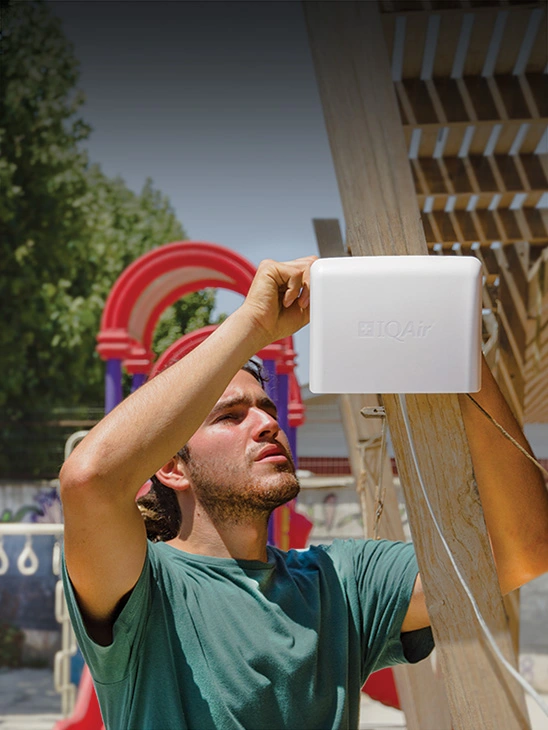
Be the first to measure and contribute air quality data to your community


Learn more about air pollution in Patzcuaro
What is the current air quality in Patzcuaro?
The current air quality in Patzcuaro is considered moderate. Air quality is acceptable for most people, though sensitive individuals may experience mild symptoms such as coughing or shortness of breath.
Is Patzcuaro currently a very polluted city?
Pátzcuaro is a large town and municipality located in the state of Michoacán, Mexico. According to a census conducted in 2005, the population was estimated to be approximately 80,000 people.
At the beginning of 2022, Pátzcuaro was experiencing a period of “Moderate” air quality with a US AQI reading of 91. This United States Air Quality Index number is an internationally used set of metrics supported by the World Health Organisation (WHO) and is used to compare the air quality in different cities throughout the world using comparable standards. It is calculated by using the levels of the six most commonly found pollutants such as nitrogen dioxide, sulphur dioxide, ozone, carbon monoxide and both sizes of particulate matter, which are PM2.5 and PM10. If all six figures are not always available in which case, a level is calculated by using what data there is. In Pátzcuaro only the pollutant PM2.5 was measured which was recorded as being 31.2 µg/m³.
This level of PM2.5 is just over three times the recommended safe level of 10 µg/m³ as suggested by the World Health Organisation (WHO) as being an acceptable level. Although no amount of air pollution is considered to be safe.
When air pollution is classified as being “Moderate” the given advice would be to remain indoors as much as possible, closing doors and windows to prevent the ingress of more polluted air. Those who are more sensitive to poor quality air should avoid venturing outside until it improves. If this is unavoidable, then a good quality face mask should be worn at all times. All types of outdoor exercise should be avoided until the air quality improves. There is a downloadable app from AirVisual.com which is suitable for all operating systems and gives the latest information regarding air quality in real-time.
Does the level of air pollution remain the same throughout the year in Pátzcuaro?
Air quality can be affected by many things, therefore it can and does change rapidly depending on the local conditions. Looking back at the 2020 figures published by IQAir.com, it can be seen that the month of June produced “Good” air quality with a reading of 11.5 µg/m³. The remaining eleven months saw air quality from the “Moderate” category with figures between 12.1 and 35.4 µg/m³. These figures are all expressed in microns per cubic metre.
Records for air quality were first kept in 2019 when the annual average was noted to be 20.8 µg/m³. The following year of 2020 saw an improvement when that figure was 18.0 µg/m³, but this lower figure was almost expected because it would have been affected by the COVID-19 pandemic as many vehicles were no longer in daily use because the offices were closed and the staff encouraged to work from home, in an attempt to halt the spread of the virus. Many factories and non-essential production units were also required to close which removed their emissions from the atmosphere, albeit on a temporary basis. Worldwide, cities reported a much better quality of air due to the general lack of traffic pollution in city centres due to the pandemic.
What is the main source of air pollution in Pátzcuaro?
In Michoacán, the main cause of environmental contamination is in the so-called mobile sources. Transportation, and motor vehicle traffic in general, generates carbon monoxide that is fixed in the atmosphere and that we breathe, which affects our quality of life.
Every day around 2 million vehicles circulate through the streets of the state, mainly in the metropolitan area, where the largest number of vehicles is concentrated, with more than 700 thousand units; this means that it is there where the greatest air pollution in the entity is found.
Can anything be done to improve air quality in Pátzcuaro?
In Michoacán, four out of five people own a motor vehicle; that is, it is a very high standard. For this reason, we need to prioritize the use of urban transport and, precisely, one of our strategies is the renewal of the vehicle fleet, so that citizens have an adequate service and can opt for it.
For example, it is necessary to abandon agricultural burning, forest fires caused to change land use, and use the vehicle in moderation; let's share our private vehicles with family members and, of course, keep them in good condition and properly serviced. Let's not forget to walk or cycle which is also a good option.
In the document of the Management Program to Improve Air Quality in the State of Michoacán 2015-2024, it is read that 17 measures have been established to reduce the emission of pollutants, of which six are institutional strengthening, health and environmental education and communication; and eleven are aimed at emitting sources such as industry, motor vehicles, businesses and services.
What are the detrimental effects of breathing polluted air?
Even if you can't see it, the air you breathe can affect your health. Polluted air can cause shortness of breath, allergy flare-ups, or asthma, and other lung problems. Long-term exposure to air pollution can increase the risk of other diseases, including heart disease and cancer.
Many residents experience some form of air pollution-related symptoms, such as watery eyes, coughing, or wheezing. Even for healthy people, polluted air can cause irritation or breathing difficulties during exercise or outdoor activities. Your actual risk depends on your current health status, the type and concentration of the contaminant, and the length of time you are exposed to contaminated air.
People who are most likely to experience serious health problems from air pollution are:
- People with heart or lung disease
- People with respiratory problems such as asthma or emphysema
- Pregnant women
- Outdoor workers
- Children under the age of 14, whose lungs are still developing
- Elderly residents whose immune systems are weaker
- Athletes exercising outdoors
High levels of air pollution may cause immediate health problems:
- Aggravate cardiovascular and respiratory diseases
- Put more stress on the heart and lungs, which must work harder to deliver oxygen to the body
- Damage the cells of the respiratory system
- Prolonged exposure to polluted air can have permanent health effects
- Accelerated ageing of the lungs and loss of lung capacity
- Lower lung function
- Development of diseases such as asthma, bronchitis, emphysema, and possibly cancer
- Shortening of life