Add
AddAir quality in Kielce
Air quality index (AQI⁺) and PM2.5 air pollution in Kielce • 3.3K Followers • 11:00, Jun 02 Local time
55
US AQI⁺Moderate

Main pollutant:
PM2.5
11.1 µg/m³

19°

4 km/h

49 %
Hourly forecast
Kielce air quality index (AQI⁺) forecast


Daily forecast
Kielce air quality index (AQI⁺) forecast
| Today | 54 | | 22° 11° |  12 km/h | 62% |
| Wed | 55 | | 23° 13° | 14 km/h | 65% |
| Thu | 48 |  90% | 19° 14° | 13 km/h | 78% |
Air pollutants
What is the current air quality in Kielce?

PM2.5 concentration is currently 2.2 times the World Health Organization annual PM2.5 guideline value.
Health recommendations
 Sensitive groups should reduce outdoor exercise |
 Close your windows to avoid dirty outdoor air Get a monitor |
 Sensitive groups should wear a mask outdoors Get a mask |
 Sensitive groups should run an air purifier Get an air purifier |
Pollen
What is the pollen count in Kielce today?
Index

Moderate
 Tree None | 0% |
 Grass Moderate | 50% |
 Weed None | 0% |
Source:
Open-Meteo.comHealth recommendations
Sensitive groups should reduce outdoor exercise |
Close your windows to avoid dirty outdoor air Get a monitor |
Sensitive groups should wear a mask outdoors Get a mask |
Sensitive groups should run an air purifier Get an air purifier |
Pollen
What is the pollen count in Kielce today?
Index
Moderate
Tree None | 0% |
Grass Moderate | 50% |
Weed None | 0% |
Source:
Open-Meteo.comMost polluted locations near Kielce
Worldwide AQI⁺ ranking

Historic air quality near Kielce
History
Historic air quality graph for Kielce
Historic air quality near Kielce
History
Historic air quality graph for Kielce
Most polluted locations near Kielce
Worldwide AQI⁺ ranking


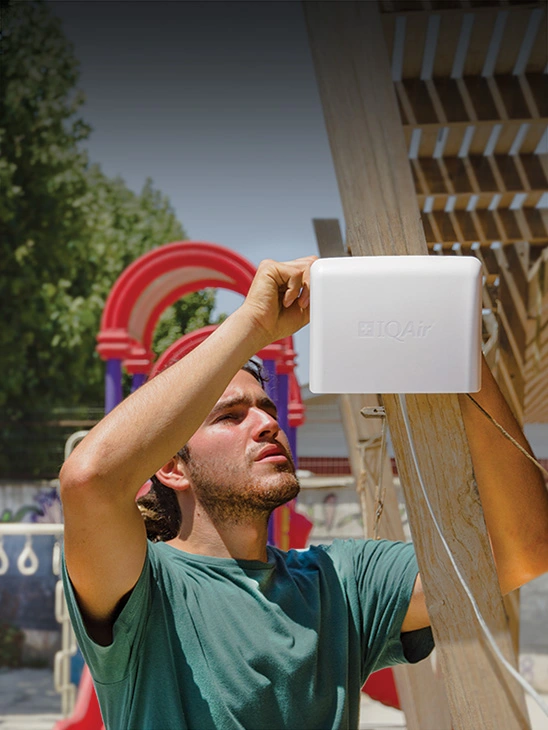
Measure your own air quality
Get a monitor and contribute air quality data in your city.


Learn more about air pollution in Kielce
What is the current air quality in Kielce?
The current air quality in Kielce is considered moderate. Air quality is acceptable for most people, though sensitive individuals may experience mild symptoms such as coughing or shortness of breath.
What is the current level of air pollution in Kielce?
Kielce is a city in the middle of the Świętokrzyskie Mountains, on the banks of the Silnica River, in the northern part of the historical Polish province of Lesser Poland. It was once an important centre of limestone mining and the vicinity is famous for its natural resources such as copper, lead and iron, which, over the centuries, were exploited on a large scale. According to a census conducted recently in December 2020, the estimated population is approximately 200,000 inhabitants.
At the start of the fourth quarter in 2021, Kielce was experiencing a period of air quality that could be classified as being “Unhealthy for sensitive groups” with a US AQI reading of 149. This reading is often used as a reference point when comparing air quality in other cities around the world. Data is collected with regards to the six most prolific air pollutants commonly found and this figure is calculated from there. If information is not available for all six, then a figure can be deduced using the information that is available. For Kielce, there were five pollutants that were recorded. These were; PM2.5 - 55 µg/m³, PM10 - 44.5 µg/m³, ozone (O3) - 2 µg/m³, nitrogen dioxide (NO2) - 42 µg/m³ and sulphur dioxide (SO2) - 8 µg/m³. These levels are quoted in microns per cubic metre. The level of PM2.5 can be seen to be five and a half times higher than the suggested level of 10 µg/m³. This level has been determined by the World Health Organisation (WHO) as being an acceptable level of air pollution, although no level is to be considered as being safe.
With a level such as this, the advice would be to stay indoors and close all doors and windows so as to prevent the ingress of more polluted air from entering the rooms. The use of an air purifier would be beneficial, if one is available, but set it to recirculate the air without importing more from outside. Those who are more sensitive to poorer air quality should try to avoid venturing outside until the air improves. If this is unavoidable, then a good quality mask should be worn at all times. All groups are dissuaded from partaking in vigorous outdoor exercise.
There is a mobile app available from AirVisual.com for most mobile devices which gives information regarding air quality in real-time. This information will assist in your decision as to whether or not to go outside.
Does air quality vary much throughout the year in Kielce?
Air quality can be very volatile and can therefore change very quickly as it is affected by many variables. Looking back at the figures for 2020 released by IQAir.com, it can be seen that the months of May through until the end of August achieved the WHO target figure of being less than 10 µg/m³. September provided the next best quality with “Good” air with a reading of 10.2 µg/m³. For the remaining 7 months, the air was classified as being “Moderate” with figures between 12.1 and 35.4 µg/m³.
Records pertaining to air quality were first kept in 2019 when a figure of 20.1 µg/m³ was recorded. The following year of 2020 showed an improvement with a figure of 16.5 µg/m³. This figure may not be a true reflection of reality because of the COVID-19 pandemic. Many motorists were no longer required to commute to their offices each day in an attempt to halt the spread of the virus. There were also some factories and similar production units which were told to close on a temporary basis. Many cities throughout the world noted how much cleaner their city air was because of these measures.
Is there a main source of air pollution in Kielce?
The main source of air pollution is anthropogenic emission, which consists of emissions from industrial sources: technological and energy, low surface emission from home furnaces and linear emission related to communication.
The emissions from the household sector depend on the number of households that are connected to municipal heating networks. Road emissions have the lowest impact, which, however, continues to increase along with the increase in the number of registered vehicles.
Can anything be done to improve the air quality in Kielce?
Modernisation of the dedusting installation in the largest power plants and the cement-lime industry, the use of fuel with low sulphur content and the operation of desulphurisation installations, and the modernisation of heating plants contributed to the reduction of emissions of most air pollutants.
Commercial power plants use low-sulphur fuels, which has resulted in a significant reduction in SO2 emissions into the air in recent years.
The reduction of low emissions from the household and municipal sector is implemented in the voivodship primarily through the rationalisation of heat management, the use of environmentally friendly fuels in local boiler houses, as well as a more restrictive approach of relevant services to illegal waste incineration in coal furnaces.
The reduction of total transport emissions is undoubtedly influenced by the implementation of investments related to the modernization of roads (e.g., construction of peripheral streets, improving their surface), leading to an increase in the capacity of main communication routes, which results in a reduction of exhaust emissions.
What are the detrimental effects breathing polluted air has on children?
Children are one of the groups most exposed to the negative effects of smog. One of the causes is the immature respiratory system (airways are narrow and short). In addition, our children breathe faster than adults, which means that more harmful substances get into their bodies. In addition, many babies breathe through their mouths, so the natural protection of the nose cilia cannot work. Another problem is the accumulation of pollutants close to the ground, which is very important due to the growth of the youngest. A young child in a pushchair is around the same height as a car’s exhaust pipe!
The substances contained in smog are considered to be the factor causing in the foetal period such problems as deterioration of the following parameters: weight, body length, head circumference and other birth defects.
Once born, babies may develop lower cognitive, linguistic and motor skills than expected, and have poorer intellectual development potential.