Add
AddAir quality in Bor
Air quality index (AQI⁺) and PM2.5 air pollution in Bor • 10.7K Followers • 21:00, Jun 04 Local time
68
US AQI⁺Moderate

Main pollutant:
PM2.5
18.2 µg/m³

16°

4 km/h

86 %
Hourly forecast
Bor air quality index (AQI⁺) forecast


Daily forecast
Bor air quality index (AQI⁺) forecast
| Today | 65 |  | 21° 15° |  15 km/h | 76% |
| Fri | 51 |  | 26° 12° | 10 km/h | 64% |
| Sat | 51 | | 25° 17° | 9 km/h | 72% |
Air pollutants
What is the current air quality in Bor?

PM2.5 concentration is currently 3.6 times the World Health Organization annual PM2.5 guideline value.
Health recommendations
 Sensitive groups should reduce outdoor exercise |
 Close your windows to avoid dirty outdoor air Get a monitor |
 Sensitive groups should wear a mask outdoors Get a mask |
 Sensitive groups should run an air purifier Discover Atem car |
Pollen
What is the pollen count in Bor today?
Index

High
 Tree None | 0% |
 Grass High | 75% |
 Weed None | 0% |
Source:
Open-Meteo.comHealth recommendations
Sensitive groups should reduce outdoor exercise |
Close your windows to avoid dirty outdoor air Get a monitor |
Sensitive groups should wear a mask outdoors Get a mask |
Sensitive groups should run an air purifier Discover Atem car |
Pollen
What is the pollen count in Bor today?
Index
High
Tree None | 0% |
Grass High | 75% |
Weed None | 0% |
Source:
Open-Meteo.comMost polluted locations near Bor
Worldwide AQI⁺ ranking
Station ranking
Real-time AQI⁺ station ranking for stations in Bor

City ranking
Real-time Serbia AQI⁺ city ranking
Historic air quality near Bor
History
Historic air quality graph for Bor
Historic air quality near Bor
History
Historic air quality graph for Bor
Most polluted locations near Bor
Worldwide AQI⁺ rankingStation ranking
Real-time AQI⁺ station ranking for stations in Bor
City ranking
Real-time Serbia AQI⁺ city ranking



Measure your own air quality
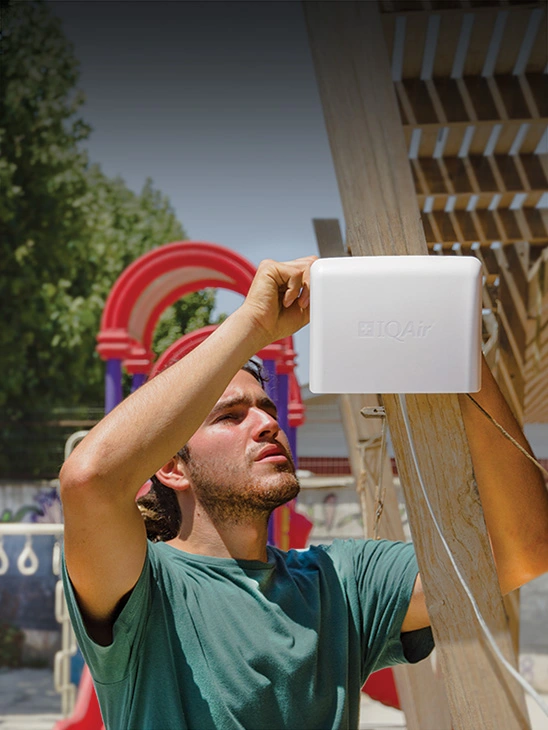
Get a monitor and contribute air quality data in your city.


Learn more about air pollution in Bor
What is the current air quality in Bor?
The current air quality in Bor is considered moderate. Air quality is acceptable for most people, though sensitive individuals may experience mild symptoms such as coughing or shortness of breath.
What is the current level of air pollution in Bor city?
Bor is a city and the administrative centre of the Bor District in eastern Serbia. It is home to one of the largest copper mines in Europe which were first started in 1904 by a French company. According to a census conducted in 2011. Bor has an estimated population of approximately 50,000 residents.
At the beginning of the fourth quarter of 2021, Bor was experiencing a period of “Moderate” air quality with a US AQI reading of 79. This reading can be used as a benchmark when comparing other cities around the world. Data is collected with regards to the six most prolific air pollutants commonly found and this figure is calculated from there. If information is not available for all six, then a figure can be deduced using the information that is available. For Bor, both the PM sizes were recorded which were as follows; PM2.5 - 25.5 µg/m³ and PM10 - 27.9 µg/m³. At this level, the PM2.5 figure is more than twice the recommended target figure suggested by the World Health Organisation (WHO) of 10 µg/m³. However, no amount of air pollution is safe but 10 µg/m³ is regarded as being acceptable.
With levels such as these, the advice would be to stay indoors and close the doors and windows to prevent the ingress of more polluted air. Those who are sensitive to poorer air quality should take extra care and limit their exposure when outdoors. There is an app available from AirVisual which can be found in any app store and is suitable for most mobile devices. This will tell you of the latest levels of pollution which might help decide whether or not to go outside.
Does the quality of air vary much throughout the year in Bor?
Looking back at the 2020 figures released by IQAir.com, it can be seen that for nine months of the year, Bor was experiencing “Moderate” quality air with readings between 12.1 and 35.4 µg/m³. The months of July and September produced “Good” air quality with figures of 11.4 and 11 µg/m³, respectively. The cleanest month was June when Bor recorded a level of 9.0 µg/m³ which is within the target figure of 10.0 µg/m³ or less which is a level suggested by the World Health Organisation (WHO) as being acceptable, although no amount of air pollution is considered to be safe.
Records regarding air pollution were first held in 2019 when the recorded figure was 18.1 µg/m³ with a slight improvement the following year of 16.1 µg/m³ in 2020. However, this figure could well have been affected by the COVID-19 situation and therefore may not be a true reflection of reality. Many vehicles were no longer in daily use as their drivers were encouraged to stay at home to work and not commute to the office, every day. Several small factories and production units were also closed on a temporary basis so their emissions were halted.
Is there a main source of air pollution in Bor?
The citizens of Bor see the cause for the increased concentrations of sulphur dioxide in the emissions coming from the copper smelter.
The number of just individual boiler rooms in Serbia exceeds one million, the pollution is also affected by vehicles older than 10 years, which are unaccountable, and there are more than two hundred industrial plants and livestock farms that emit harmful gases in Serbia.
When compared to the concentration from 2016, today it is much, much worse in terms of carbon dioxide gas. As for PM10 particles, they go above 50 micrograms per cubic meter, up to 300, even up to 500. The amount of arsenic, which is carcinogenic, has increased enormously in these particles.
Bor, which is a mining hub, is one of the most polluted places in Serbia. Air in the city in the country’s east had extreme sulphur dioxide levels on 13 occasions last year even though the official limit was moved significantly higher. Among other parameters, the inhabitants suffered from heavy metal content in particulate matter PM10. Namely, arsenic, cadmium and nickel surpassed the allowed values.
Can the quality of air be improved in Bor?
The citizens of Bor will breathe incomparably better air in August 2022, and by the end of that year, the problem of air pollution will definitely be solved, said a spokesperson for Zidjin Koper (SZC), the main copper smelting works in Bor. The technical reconstruction that the company is performing through the construction of facilities and means for environmental protection will completely remove the presence of sulphur dioxide in the air.
In order to educate citizens and pay attention to the problem of air pollution, high school students from Bor launched the initiative "Youth against air pollution". The group consists of high school students who want to educate citizens about environmental threats. Bor, by the way, is highly positioned when it comes to air pollution, and the problem culminated after the Chinese company "Zi Jin" took over RTB Bor.
What are the detrimental effects breathing polluted air has on the human body?
The causes of the appearance of specific pollutants are: outdated technological processes, worn-out equipment, lack of filters, lack of finances, unfavourable location of industrial facilities, more and more vehicles, accidents, work errors, etc.
Natural sources can come from nature: volcanic eruptions, forest fires, storms, earthquakes, mineral thermal waters, flowering vegetation, microorganisms, etc.
Artificial sources or anthropogenic sources are created by man and can be industrial, traffic and individual fireplaces.
The effect of air pollution on human health can vary depending on the current state of health of the person but could affect the respiratory system (acute irritation and inflammation, chronic inflammation, carcinogenesis, inducing immune response-especially sensitive children and the elderly), the cardiovascular system (hypertension and arrhythmia, blood vessels-tobacco smoke, effect on blood elements, concentration of fibrinogen in the blood) and also the immune system (special cells of the immune system fight against toxic substances and the effects are hypersensitivity-allergies and autoimmune diseases or immunosuppression-reduced immune response). The nervous system can also be affected causing health problems that range from psychological to toxic damage to the nervous system and brain, especially during foetal development-manganese, lead and mercury).