


 Add
AddAir quality in Uzice
Air quality index (AQI⁺) and PM2.5 air pollution in Uzice • 51.8K Followers • 09:00, Jun 13 Local time
17
US AQI⁺Good

Main pollutant:
PM2.5
3 µg/m³

15°

3 km/h

63 %
Hourly forecast
Uzice air quality index (AQI⁺) forecast


Daily forecast
Uzice air quality index (AQI⁺) forecast
| Today | 29 |  | 23° 10° |  12 km/h | 60% |
| Sun | 42 | | 29° 14° | 18 km/h | 47% |
| Mon | 43 |  | 25° 17° | 12 km/h | 76% |
Air pollutants
What is the current air quality in Uzice?

PM2.5 concentration currently meets the WHO annual PM2.5 guideline.
Health recommendations
 Enjoy outdoor activities |
 Open your windows to bring clean, fresh air indoors Get a monitor |
Pollen
What is the pollen count in Uzice today?
Index

High
 Tree None | 0% |
 Grass High | 75% |
 Weed None | 0% |
Source:
Open-Meteo.comHealth recommendations
Enjoy outdoor activities |
Open your windows to bring clean, fresh air indoors Get a monitor |
Pollen
What is the pollen count in Uzice today?
Index
High
Tree None | 0% |
Grass High | 75% |
Weed None | 0% |
Source:
Open-Meteo.comMost polluted locations near Uzice
Worldwide AQI⁺ ranking
Station ranking
Real-time AQI⁺ station ranking for stations in Uzice

City ranking
Real-time Serbia AQI⁺ city ranking
Historic air quality near Uzice
History
Historic air quality graph for Uzice
Historic air quality near Uzice
History
Historic air quality graph for Uzice
Most polluted locations near Uzice
Worldwide AQI⁺ rankingStation ranking
Real-time AQI⁺ station ranking for stations in Uzice
City ranking
Real-time Serbia AQI⁺ city ranking



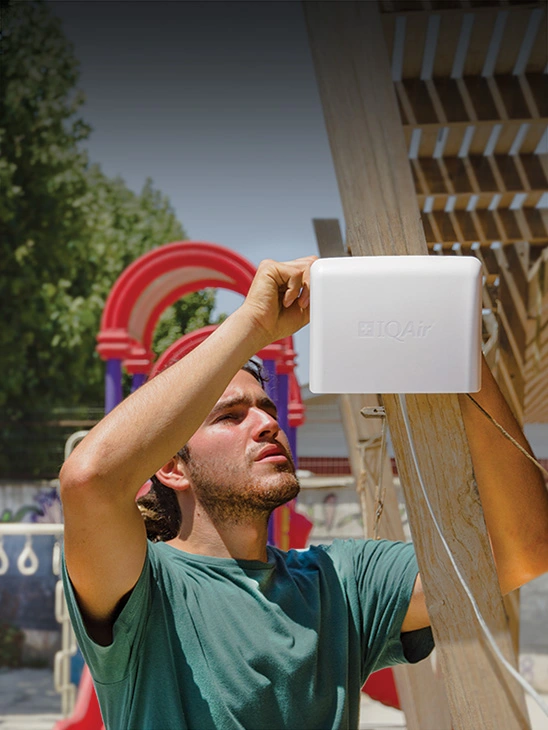
Measure your own air quality
Get a monitor and contribute air quality data in your city.
Learn more about global air quality


Learn more about air pollution in Uzice
What is the current air quality in Uzice?
The current air quality in Uzice is considered good. Air pollution levels are low and there are no expected health risks, making it a good time to enjoy normal outdoor activities.
What is the current level of air pollution in Užice?
Užice is a city and the administrative centre of the Zlatibor District in western Serbia, it can be found on the banks of the river Đetinja. According to the census conducted in 2011, Užice had an estimated population of approximately 60,000 people. When considering the municipality as well, the figure rises to 71,000 people.
At the start of the fourth quarter of 2021, Užice was experiencing a period of “Moderate” air quality with a US AQI reading of 66. This reading is often used as a reference point when comparing air quality in other cities around the world. Data is collected for the six most prolific air pollutants commonly found and this figure is calculated from there. If information is not available for all six, then a figure can be deduced using the information that is available. In the case of Užice, three recordings were taken. These were for PM2.5 - 19.1 µg/m³, PM10 - 19.2 µg/m³ and sulphur dioxide (SO2) - 9.1 µg/m³. These figures are quoted in microns per cubic metre.
It should be noted that the level of PM2.5 is almost twice the recommended target figure of 10 µg/m³, as suggested as being acceptable by the World Health Organisation (WHO).
With a level of pollution such as this, the given advice would be to remain indoors as much as possible and close all doors and windows to prevent the ingress of more polluted air. Those who are more sensitive to poorer air should take extra care when exposing themselves outside. Always wear a good quality mask and limit the length of time outside.
There is a downloadable app available from AirVisual which can be found in the app store and is suitable for most operating systems. This will tell you of the latest levels of pollution which might help decide whether or not it is safe to go outside.
Does the level of air pollution vary much throughout the year in Užice?
The quality of the air which surrounds us is very easily affected by may variables and can change quite quickly. Looking at the 2020 figures published by IQAir.com, it can readily be seen that the winter months were the worst for air quality. The worst being January and December with figures of 87.5 and 58.1 µg/m³ which classified it as being “Unhealthy”. Readings between 55.5 and 150.4 µg/m³ fall into this category. The months of February, March and November returned figures from the “Unhealthy for sensitive groups” category with readings of 45.6, 36.1 and 49.8 µg/m³, respectively. The remaining six months of the year brought “Moderate” air quality with readings between 12.1 and 35.4 µg/m³.
There were no records regarding air pollution before 2020 when a figure was seen to be 31.7 µg/m³. This however, may not be a true reflection of reality due to the ongoing COVID-19 pandemic. Many vehicles were unused as staff were encouraged to work from home and not drive to the office each day. This action alone saw much cleaner air in many cities throughout the world. Several small factories and production units were also temporarily closed and so their emissions were removed from the environment, too.
What is the source of air pollution in Užice?
When it comes to Serbia, the main sources of air pollution are industrial processes, production of electricity and heat and road traffic.
As one of the cities in Serbia with the most polluted air, due to the specific configuration of the terrain and the lack of natural ventilation, Užice is faced with a large number of individual furnaces that use coal and wood instead of environmentally friendly energy sources. There are about 16,000 such fireboxes in the city, and an additional problem is the exhaust gases from motor vehicles, the number of which is constantly increasing.
High concentrations of pollutants in the air are also contributed by the topography of this area, but above all by low-quality solid fuels used in coal-fired power plants, outdated industry and old vehicles.
The contents of pollutants in the atmosphere vary depending on the season, thus the concentrations of soot and sulphur dioxide are increased during the winter.
What can be done to improve air quality in Užice?
Only a few cities in Serbia have adopted a plan for improving air quality and a local action plan for environmental protection (e.g., Kragujevac, Užice, Belgrade).
Some of the strategic recommendations relate to the establishment of national, regional and international frameworks for solving environmental problems, raising awareness of air pollution, encouraging the use of renewable energy sources, and environmental management of chemicals and waste.
Although it was thought that gasification would solve the problem of air pollution, it still exists. The local government has been trying to alleviate it for years by lowering the price of the gas connection but many residents continue to use the old methods of heating. Energy efficiency measures have also been devised, which subsidise the costs of replacing carpentry, installing thermal insulation and purchasing gas and pellet boilers.
What are the detrimental effects to human health caused by polluted air?
According to the World Health Organisation (WHO), air pollution is the biggest single environmental health risk. According to the latest estimate, 9 out of 10 people breathe air that contains high levels of pollutants. There are a large number of air pollutants and countless combinations of them. However, those that cause the greatest damage to human health and the environment are particulate matter (PM2.5 and PM10), ozone, nitrogen dioxide, sulphur dioxide, carbon monoxide and hydrocarbons (methane, ethane, propane, butane).
Epidemiological studies have shown that long-term exposure to air pollution (during years or life) reduces life expectancy, mainly due to cardiovascular and respiratory diseases as well as lung cancer. Short-term exposure (during hours or days) to elevated levels of air pollution can also cause a number of health effects, including effects on lung function, worsening asthma, increased respiratory and cardiovascular hospitalisations, and mortality.
Pregnancy and early childhood are critical periods for the formation and maturation of body systems and it is the period in which the fastest changes occur. Factors that negatively affect human development, including air pollution, can have a direct and long-lasting impact on a person's health. Some of these health effects can only appear later in life.