


 Add
AddAir quality in Grass Valley
Air quality index (AQI⁺) and PM2.5 air pollution in Grass Valley • 42.2K Followers • 12:00, Aug 12

58
US AQI⁺Moderate

Main pollutant:
PM2.5
12.9 µg/m³

29°

9 km/h

29 %
Hourly forecast
Grass Valley air quality index (AQI⁺) forecast


Daily forecast
Grass Valley air quality index (AQI⁺) forecast
| Today | 58 | | 31° 22° |  12 km/h | 27% |
| Thu | 58 |  | 28° 19° | 13 km/h | 36% |
| Fri | 58 | | 27° 16° | 13 km/h | 46% |
Air pollutants
What is the current air quality in Grass Valley?

PM2.5 concentration is currently 2.6 times the World Health Organization annual PM2.5 guideline value.
Health recommendations
 Sensitive groups should reduce outdoor exercise |
 Close your windows to avoid dirty outdoor air Get a monitor |
 Sensitive groups should wear a mask outdoors Get a mask |
 Sensitive groups should run an air purifier Discover Atem car |
Pollen
What is the pollen count in Grass Valley today?
Index

Low
 Tree None | 0% |
 Grass None | 0% |
 Weed Low | 25% |
Source:
wetter.comHealth recommendations
Sensitive groups should reduce outdoor exercise |
Close your windows to avoid dirty outdoor air Get a monitor |
Sensitive groups should wear a mask outdoors Get a mask |
Sensitive groups should run an air purifier Discover Atem car |
Pollen
What is the pollen count in Grass Valley today?
Index
Low
Tree None | 0% |
Grass None | 0% |
Weed Low | 25% |
Source:
wetter.comMost polluted locations near Grass Valley
Worldwide AQI⁺ ranking
Station ranking
Real-time AQI⁺ station ranking for stations in Grass Valley

City ranking
Real-time USA AQI⁺ city ranking
Historic air quality near Grass Valley
History
Historic air quality graph for Grass Valley
Historic air quality near Grass Valley
History
Historic air quality graph for Grass Valley
Most polluted locations near Grass Valley
Worldwide AQI⁺ rankingStation ranking
Real-time AQI⁺ station ranking for stations in Grass Valley
City ranking
Real-time USA AQI⁺ city ranking



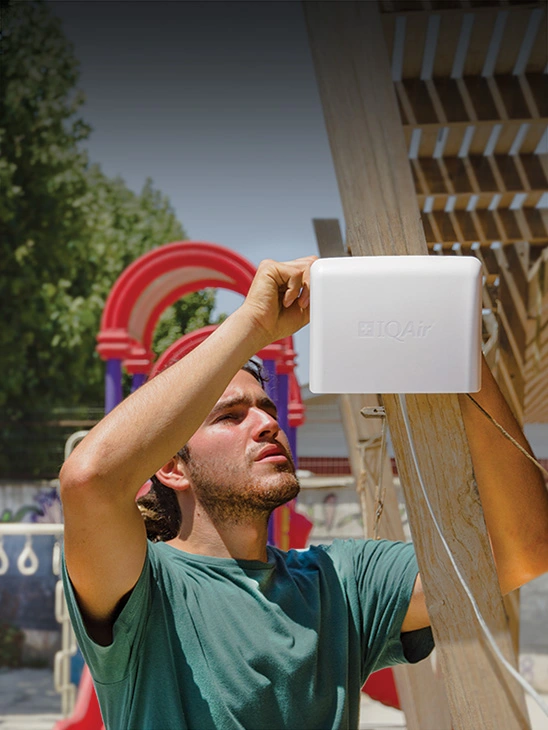
Measure your own air quality
Get a monitor and contribute air quality data in your city.


Learn more about air pollution in Grass Valley
What is the current air quality in Grass Valley?
The current air quality in Grass Valley is considered moderate. Air quality is acceptable for most people, though sensitive individuals may experience mild symptoms such as coughing or shortness of breath.
What is the current level of air pollution in Grass Valley City?
Grass Valley is a city in Nevada County, California. It is situated in the western foothills of the Sierra Nevada mountain range at 760 meters. According to a census conducted in 2010, Grass Valley had an estimated population of approximately 13,000 people.
During the month of August 2021, Grass Valley was experiencing a period of “Very Unhealthy” air quality with a US AQI reading of 219. This United States Air Quality Index number is calculated using the levels of six of the most commonly found air pollutants, such as nitrogen dioxide, sulfur dioxide, ozone, carbon monoxide and both sizes of particulate matter, being PM2.5 and PM10. It can be used as a standard when comparing air quality in other cities around the world. If data is unavailable for all 6 pollutants, a figure can still be calculated by using what figures there are. The only record available in August 2021 in Grass Valley was PM2.5 which was 133.0 µg/m³. The World Health Organization (WHO) has a recommended level of 10 µg/m³, so with this figure, it is at a very extreme level being over thirteen times their recommended limit, although no amount of air pollution is classed as being safe.
With pollution at this extremely elevated level, the given advice would be to stay inside and close all windows and doors to prevent the ingress of more polluted air. An air purifier would be beneficial if one is available, but adjust the settings to recirculate the air and not introduce more from outside. Avoid exercising outside until the quality improves and if venturing outside is unavoidable, then the wearing of a good quality face mask is essential. The table that is published at the top of this page should help with that decision or download the AirVisual app for constant updates as to the state of the air on the move.
Does the level of pollution stay the same throughout the year in Grass Valley?
Air pollution can be very volatile and change very quickly depending on meteorological conditions. Looking at the figures published by IQAir.com for 2020, it can readily be seen that the worst month for air quality was September when the figure was 48.6 µg/m³. This put it in the “Unhealthy for sensitive groups” bracket with any number between 35.5 and 55.4 µg/m³. The preceding month of August provided the next worse quality with a reading of 41.1 µg/m³, again “Unhealthy for sensitive groups”. The following month of October began to show an improvement with a figure of 16.5 µg/m³ which is classified as being “Moderate” with figures of 12.1 to 35.4 µg/m³. For the remaining nine months of the year, Grass Valley achieved the target figure of 10 µg/m³ or less, as recommended by the World Health Organization (WHO). The months offering the optimal air quality were May and June with figures of 4.2 µg/m³ for both months.
Historically, records pertaining to air quality have been held since 2017 when the average figure was just 3.9 µg/m³. A slight decline appeared during the following year with an average annual figure of 6.8 µg/m³. In 2019 the quality improved with a figure of 5.5 µg/m³. The figure for 2020 was quite a surprise at 13.7 µg/m³, which could be classed as being “Moderate”. This decline coincided with the COVID-19 pandemic when many vehicles were no longer in daily use in an attempt to halt the spread of the virus. Many factories and non-essential production units were also required to close which removed their emissions from the atmosphere and therefore, most cities revealed very good figures for air quality. Often much lower than their usual standards.
Where does the air pollution come from in Grass Valley?
Natural phenomena (volcanic eruptions, sand mists, forest fires, etc.) and human activities (industries, transport, agriculture, residential heating, etc.) are the sources of gas and particle emissions in the air. Once emitted into the air, these substances are transported under the effect of winds, rain, temperature gradients in the atmosphere. They may also undergo transformations by chemical reactions, which depend on meteorological conditions (heat, light, humidity, etc.). This results in the appearance of other pollutants and a transfer of pollutants up to thousands of kilometers from the emission source.
Record-breaking wildfires in California are still raging, a month after they were ignited by dry lightning storms across the West. More than 3 million acres have burned and thousands of residents have been displaced and many buildings have been destroyed.
Larger and more intense wildfires are creating the potential for greater smoke production and chronic exposures in the U.S., particularly in the West. Wildfires increase air pollution in surrounding areas and can affect regional air quality.
The effects of smoke from wildfires can range from eye and respiratory tract irritation to more serious disorders, including reduced lung function, bronchitis, exacerbation of asthma and heart failure, and premature death. Children, pregnant women, and the elderly are especially vulnerable to smoke exposure. Emissions from wildfires are known to cause increased visits to hospitals and clinics by those exposed to smoke.
The risk of wildfires increases in extremely dry conditions, such as drought, and during high winds. Wildfires can disrupt transportation, communications, power and gas services, and water supply. They also lead to a deterioration of the air quality, and loss of property, crops, resources, animals and people.
Wildfires release large amounts of carbon dioxide, black carbon, brown carbon, and ozone precursors into the atmosphere. These emissions affect radiation, clouds, and climate on regional and even global scales. Wildfires also emit substantial amounts of volatile and semi-volatile organic materials and nitrogen oxides that form ozone and organic particulate matter. Direct emissions of toxic pollutants can affect first responders and local residents. In addition, the formation of other pollutants as the air is transported can lead to harmful exposures for populations in regions far away from the wildfires.
The combination of a warmer, drier climate with fire-control practices over the last century has produced a situation in which we can expect more frequent fires and fires of larger magnitude in the U.S. West and Canada.
What are some of the effects of wildfires?
Since the 1980s, the size and intensity of wildfires in California have notably increased. Fifteen of the 20 largest wildfires in California history have occurred since 2000, and ten of the most costly and destructive fires to life and property in the state have occurred since 2015.
Wildfires have both immediate and long-term impacts on air quality. As a forest burns, large amounts of smoke are released into the atmosphere. These smoke particles are typically small and made up of gases and water vapor. Air pollution from fires has the potential to travel great distances and oftentimes may pose a threat to human health. These small particles can become lodged deep within the lungs, making it difficult to breathe as well as placing additional stress on the heart. Additionally, wildfires produce an increased amount of carbon monoxide, which too can lead to a variety of health implications.
The particulates that make up the smoke tend to be quite small, generally less than 2.5 micrometers in diameter. The technical term is PM2.5, or particulate matter smaller than 2.5 micrometers. These particles are so small that our bodies have a difficult time filtering them out of our airways. They lodge deep in the lungs, compromise our breathing and stress our hearts. In addition, they can also irritate our eyes and cause runny noses. People with chronic respiratory or cardiovascular issues are at the highest risk of health problems during a wildfire.
Smoke pollution from fires can originate close to the fire or travel from distant blazes. Smaller local fires tend to have less energy pushing the smoke plume into the atmosphere. In these cases, the smoke hangs around the general vicinity of the burn. Massive blazes in places like Northern California and Oregon have a lot of energy. The smoke plumes from these fires are pushed high in the atmosphere and travel along with the prevailing winds.
The incomplete burning of forests produces carbon monoxide. Its levels are highest during the smoldering stages of a fire and can cause various risks to human health.
Can anything be done to reduce air pollution in Grass Valley?
The Environmental Protection Agency (EPA) and our regulatory partners at the State and local level have taken significant steps to dramatically reduce toxic air pollutants and provide important health protections for Americans nationwide. These steps include: reducing toxic emissions from industrial sources; reducing emissions from vehicles and engines through new stringent emission standards and cleaner-burning gasoline and addressing indoor air pollution through voluntary programs.
In the last decade, air quality has improved significantly in Southern California. Some of the efforts that have helped improve our air quality include:
- Cleaner engines,
- Smog checks,
- Vapor recovery nozzles in gasoline pumps,
- Regulations for solvents that are present in paint products,
- State-wide regulation regarding the number of solvents found in consumer products, and
- Regional air quality standards that continually reduce emissions from more than 26,000 businesses.
Approximately 70 per cent of the smog problem in the area is caused by vehicles and other mobile sources with internal combustion engines, including trucks, buses, agricultural equipment, construction equipment and garden equipment and lawnmowers that run on gasoline.
What are the detrimental effects of air pollution in Grass Valley on our health?
The effects of smoke from wildfires can range from eye and respiratory tract irritation to more serious disorders, including reduced lung function, bronchitis, exacerbation of asthma and heart failure, and premature death. Children, pregnant women, and the elderly are especially vulnerable to smoke exposure. Emissions from wildfires are known to cause increased visits to hospitals and clinics by those exposed to smoke.
Many residents experience some type of symptoms related to air pollution, such as watery eyes, coughing or noise when breathing. Even for healthy people, polluted air can cause irritation or breathing difficulties during exercise or outdoor activities. The actual risk depends on your current health status, the type and concentration of the pollutant, and the length of time you have been exposed to the polluted air.
People who are most likely to suffer serious health problems from air pollution are those with pre-existing respiratory problems. People with breathing problems such as asthma and emphysema, pregnant women, senior citizens and children under the age of 14 years as their lungs are still developing, are all more susceptible than others. Those who work outdoors as well as those who exercise outside are also vulnerable.
High levels of pollution can cause immediate problems by aggravating cardiovascular and respiratory diseases. It also puts more stress on the heart and lungs which must work harder in order to supply the required levels of oxygen to the body. Cells in the respiratory system can easily be damaged.
Prolonged exposure can bring different types of problems such as the accelerated aging of the lungs which leads to a lower capacity which decreases their functionality. The development of diseases such as asthma, bronchitis, emphysema, and possibly cancer often occur or are exacerbated by the pollutants in the air.
Particulate Matter is a complex mixture that is produced by wildfires amongst other sources. It may contain soot, smoke, metals, nitrates, sulfates, dust, water and tire rubber. It can be directly emitted, as in smoke from a fire, or it can form in the atmosphere from reactions of gases such as nitrogen oxides.
The size of particles is directly linked to their potential for causing health problems. Small particles (known as PM2.5 or fine particulate matter) pose the greatest problems because they bypass the body’s natural defenses and can get deep into your lungs and potentially your bloodstream. Exposure to such particles can affect both your lungs and your heart.
Short-term exposure to particulate pollution can aggravate lung disease which may cause asthma attacks and provoke bronchitis. It also makes the body more susceptible to respiratory infections due to a reduced immune system. Even a healthy person may experience some temporary symptoms such as coughing, tightness of the chest and shortness of breath.