


 Add
AddAir quality in Fayette
Air quality index (AQI⁺) and PM2.5 air pollution in Fayette • 7.9K Followers • 20:00, Jul 17 Local time

56*
US AQI⁺Moderate

Main pollutant:
PM2.5
11.8 µg/m³

24°

2 km/h

99 %
Hourly forecast
Fayette air quality index (AQI⁺) forecast


Daily forecast
Fayette air quality index (AQI⁺) forecast
| Today | 58 |  | 31° 23° |  23 km/h | 76% |
| Sat | 64 |  | 27° 22° | 19 km/h | 82% |
| Sun | 87 | | 30° 18° | 13 km/h | 70% |
Air pollutants
What is the current air quality in Fayette?

PM2.5 concentration is currently 2.4 times the World Health Organization annual PM2.5 guideline value.
Health recommendations
 Sensitive groups should reduce outdoor exercise |
 Close your windows to avoid dirty outdoor air Get a monitor |
 Sensitive groups should wear a mask outdoors Get a mask |
 Sensitive groups should run an air purifier Discover Atem car |
Pollen
What is the pollen count in Fayette today?
Index

Moderate
 Tree None | 0% |
 Grass Low | 25% |
 Weed Moderate | 50% |
Source:
wetter.comHealth recommendations
Sensitive groups should reduce outdoor exercise |
Close your windows to avoid dirty outdoor air Get a monitor |
Sensitive groups should wear a mask outdoors Get a mask |
Sensitive groups should run an air purifier Discover Atem car |
Pollen
What is the pollen count in Fayette today?
Index
Moderate
Tree None | 0% |
Grass Low | 25% |
Weed Moderate | 50% |
Source:
wetter.comMost polluted locations near Fayette
Worldwide AQI⁺ ranking

Historic air quality near Fayette
History
Historic air quality graph for Fayette
Historic air quality near Fayette
History
Historic air quality graph for Fayette
Most polluted locations near Fayette
Worldwide AQI⁺ ranking


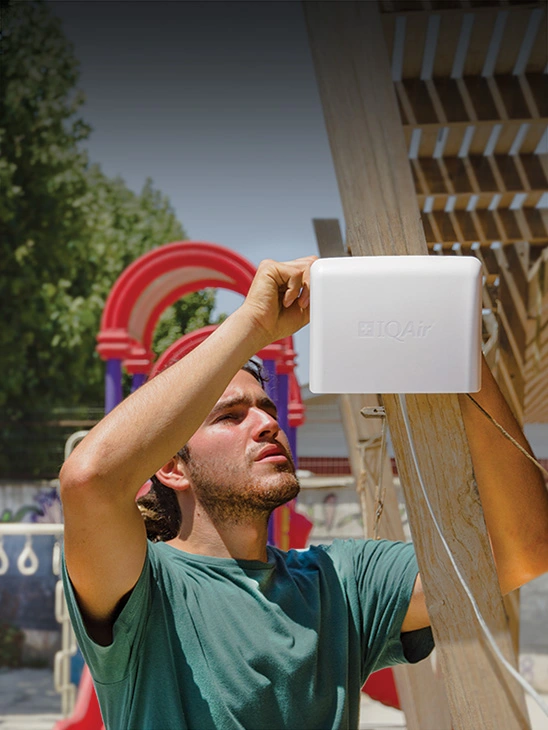
Be the first to measure and contribute air quality data to your community


Learn more about air pollution in Fayette
What is the current air quality in Fayette?
The current air quality in Fayette is considered moderate. Air quality is acceptable for most people, though sensitive individuals may experience mild symptoms such as coughing or shortness of breath.
Does Lexington have an air pollution issue?
Lexington has seen some decent levels of air quality over the last few years, having numbers that have fallen within the best air quality ratings, as well as other certain months where it has shown elevations in its pollution level, indicating that the city maintains a good overall average, coming in year after year within the World Health Organization's (WHO's) target goal for the best quality of air at 10 μg/m³ or less as its yearly average (referring to its PM2.5 reading, one of the most dangerous forms of pollution found in the air).
Throughout 2020, Lexington came in with a PM2.5 reading of 7.9 μg/m³. This placed it in 3693rd place out of all cities ranked worldwide for that year, as well as in 4th place out of all cities currently ranked in Kentucky. Lexington is the second-largest city found in the state and is also the County seat of Fayette County, making it part of the Lexington-Fayette, Kentucky metropolitan statistical area, which is home to 295,000 people, as per a census conducted in 2010 (and thus will have grown since then).
Whilst its worldwide ranking is not overtly bad, air quality readings taken in mid-2021 showed further elevations in its pollution level, along with accompanying higher levels of PM2.5, with early July of 2021 having a PM2.5 concentration that is over three times that of the WHO's recommendation for acceptable or safe exposure. Sustained exposure to such levels can result in many health issues, with irritation of the respiratory tract and inflammation of the lung tissue all being possible, along with a host of other pulmonary and cardiac ailments.
Lexington presented with a US AQI reading of 98 in early July, a reading that placed it into the absolute higher end of the 'moderate' air quality rating bracket. This requires a US AQI reading of anywhere between 51 to 100 to be classified as such. A 'moderate' air quality rating is color-coded as yellow, in use on the graphs, air quality forecasts, and maps both on this page, and throughout the IQAir website, for faster navigation of air quality data. The US AQI reading itself is a number aggregated from the various main pollutants found in the air throughout Lexington, based on their volume. These chemical pollutants include sulfur dioxide (SO2), nitrogen dioxide (NO2), ozone (O3), carbon monoxide (CO), along with the two forms of particle pollution, PM10, and PM2.5, with the latter being the far more harmful of the two.
When the PM2.5 exposure level is shown to be over the WHO's recommendation, preventative measures become of increasing importance. These include ones such as wearing (preferably high quality) particle filtering masks, along with avoiding outdoor activity or strenuous exercise. Staying indoors and sealing doors and windows, along with running air purifiers, is a great aid in reducing indoor air pollution levels.
In closing, Lexington has maintained a good quality of air throughout the years but may be subject to sudden rises in air pollution levels. Those who have a predisposition towards being affected by pollution exposure may wish to partake in the harm reduction methods mentioned above. Staying up to date with air quality levels can also be followed on this page, as well as the AirVisual app, for hourly updates and forecasts.
What causes air pollution in Lexington and Kentucky?
The main causes of air pollution present in Lexington are also common sources throughout the state of Kentucky. A majority of it comes from power plants, factories, and other industrial sites, all of which utilize coal, oil, diesel, and natural gas. The combustion of fossil fuels leads to large-scale emissions and the release of many chemical pollutants and hazardous particles.
This may become more prominent during months that have a lower temperature, particularly during the winter period. The increased demand placed on power plants by various homes and businesses throughout Lexington and Kentucky as a whole forces these plants to go through significantly more fuel, thus creating significantly more polluting elements to enter the atmosphere, with clouds of smoke, haze, and smog all permeating the air. The pollution released from these processes contains several individual hazardous materials, many of which will be discussed in further detail in the following question.
Other sources of air pollution include the ambient year-round rises also caused by vehicle usage. Cars, motorbikes, and all forms of personal vehicles would give out large amounts of pollution once again due to the combustion process taking place within the engine, being indicative of how much of the overall pollution in any given place comes directly from combustion sources. With its population (estimated) at presently being over 320,000, Lexington would thus have a high number of vehicles on the road at any given time, and with increased vehicle ownership constantly on the rise, the amount of pollution given out by cars is a factor that is of persistent concern. Regarding industry and the transportation of goods and produce, many heavier freight vehicles would also be in use. These include ones such as lorries, trucks, and buses, many of which still utilize diesel fuel, which when coupled with their greater size and weight, causes them to put out far more pollution than a single-vehicle of a comparatively smaller size.
Furthermore, the use of all vehicles lends itself to increased rubber particle pollution. The eventual wear and tear of tire treads can release many tons of microscopic particles into the air, as well as nearby bodies of water, causing damage to the environment and various ecosystems, as well as being detrimental to the health of humans, particularly when it is small enough to be counted amongst the PM2.5 collective.
Other sources of air pollution present in Lexington include less consistent ones such as forest fires or other natural or man-made disasters. However, these are not year-round occurrences, although they can cause massive spikes in air pollution levels when one does occur. The smoke given off from forest fires can drift many miles from its source and cause pollution levels to go up massively in distant cities. Further pollution causes include finely ground particles given off from construction sites, road repairs, as well as any activity that causes the mass disturbance of large amounts of earth.
As can be seen, pollution sources are wide and varied in nature, although it is known that a majority of air pollution throughout Kentucky is generated largely by power plants, with toxic emissions from power plants being an ever-present problem, particularly in certain areas that have a large concentration of such sites nearby to residential areas, thus making ill health effects from pollution and smoke exposure far more likely.
What are some of the air pollutants that can be found in Lexington?
Besides the aforementioned air pollutants that go into making up the US AQI aggregate that touched upon in the first question, there would be several other dangerous materials, chemical compounds, and fine particles that can be found in the air in Lexington, with certain areas holding more of certain pollutants than others, depending on the industrial or anthropogenic activity taking place nearby (along with certain meteorological conditions also having a part to play).
Pollutants such as black carbon and volatile organic compounds (VOCs) would be found in the air throughout Lexington, with both of these pollutants being formed from the incomplete combustion of both fossil fuels as well as organic matter. Black carbon is the main component of soot, and has prominent carcinogenic properties as well as affecting the climate. Black carbon, along with other fine particles, can lodge deep in the tissues of the lungs, having the small size required to bypass the body's natural filtration systems. Once inside the lung tissue, it can cause conditions such as chronic obstructive pulmonary disease (COPD) to present itself, with ailments such as pneumonia, bronchitis, asthma, and emphysema all cropping up, as a result, being part of the COPD classification. Black carbon can also absorb solar radiation and release it directly as heat, causing a warming effect on the surrounding environment.
Some examples of VOCs include benzene, formaldehyde, styrene, methylene chloride, and toluene. These all carry with them many health risks upon inhalation and are particularly dangerous due to their ability to maintain a gaseous state even at lower temperatures. VOCs are also one of the main contributors to indoor pollution levels, often emanating heavily from varnished woods and other surfaces, along with certain paints also giving off large quantities of VOCs.
Other pollutants that may be found near power plants or industrial areas can include mercury, lead, and cadmium, along with dioxins, furans, and polycyclic aromatic hydrocarbons.
Areas that see a high volume of traffic often have higher levels of nitrogen dioxide in the atmosphere above, with the two often correlating with each other due to the high quantities released from vehicle exhaust. Another pollutant that is also of particular concern, monitored closely by groups such as the American Lung Association is ozone or smog as it is better known when it coalesces in sometimes visible ground level accumulations.
The various oxides of nitrogen (NOx) released from combustion sources (coal in particular) along with other gases and pollutants in the atmosphere, can undergo a reaction when exposed to enough solar radiation, creating ozone. This can once again cause breathing difficulties, inflammation, nausea, and headaches, along with other more severe conditions when exposure happens over longer sustained periods of time.
When is Lexington at its most polluted?
Observing the pollution levels recorded throughout 2020, it can be seen that whilst Lexington maintained a fairly stable level of air quality (with much of the year falling within the WHO's target goal of 10 μg/m³ or less), it had certain months that came closer to going up into the next pollution rating, as well as having one month move up into the 'good' rating bracket, which requires a PM2.5 reading of anywhere between 10 to 12 μg/m³ to be classified as such, giving it a very fine margin of entry.
The most polluted month that was on record over 2020 was December, which had a reading of 11.8 μg/m³. Other more polluted months (relatively speaking) on record include April, June, July, and November, which had readings of 8 μg/m³, 8 μg/m³, 8.5 μg/m³, and 8.9 μg/m³ respectively. Whilst they are still within the WHO's target, they mark a gradual push towards the higher end of the rating bracket. Based on the readings taken in 2020, the end of the year is when Lexington may see its highest levels of air pollution present.
What are some health issues that arise from pollution exposure in Lexington?
Whilst some of the health problems that come with pollution exposure have been touched on, there are a number more that are pertinent to mention, particularly for those that fall into the vulnerable grouping of people within Lexington. These vulnerable groups of people include young children and babies, along with the elderly, those with damaged or compromised immune systems, as well as those with pre-existing health conditions, or a hypersensitivity towards pollution or certain fine particulate matter.
These health conditions include ones such as increased risks of cancer, ischemic heart disease (whereby due to oxygen deprivation the tissue of the heart starts to become damaged), stroke, arrhythmias as well as death. Pregnant women who are subject to excessive amounts of pollution exposure may have a greater chance of their babies being born prematurely, with low birth weight, as well as increased risk of miscarriage or with the baby being born with physical or cognitive defects, due to the highly damaging nature of pollutants and the effect that they can have on the nervous system.
Have air quality levels improved over time in Lexington?
Looking at the air quality data taken from years past, from 2017 through to 2020, it can be seen that after a two-year run of increasingly poor air quality levels, Lexington saw a better level of air quality present in 2020. This may be due in part to the covid-19 outbreak, which saw massive reductions in movement due to imposed lockdowns, and as such, pollution from sources such as vehicles may have decreased the yearly average, although this was not the case in many cities worldwide.
The PM2.5 readings from 2017 to 2020 were 7.6 μg/m³, 9.9 μg/m³, 8.2 μg/m³, and 7.9 μg/m³. This shows that whilst 2017 maintained a better level of air quality than more present times, 2020 definitively had an improved reading over the two years before it.