


 Add
AddAir quality in Missoula
Air quality index (AQI⁺) and PM2.5 air pollution in Missoula • 52.6K Followers • 00:00, Oct 01 Local time
17
US AQI⁺Good

Main pollutant:
O₃
36 µg/m³

14°

4 km/h

75 %
Hourly forecast
Missoula air quality index (AQI⁺) forecast


Daily forecast
Missoula air quality index (AQI⁺) forecast
| Today | 13 |  | 19° 13° |  7 km/h | 61% |
| Fri | 16 |  | 24° 14° | 18 km/h | 55% |
| Sat | 20 | | 23° 8° | 8 km/h | 50% |
Air pollutants
What is the current air quality in Missoula?

PM2.5 concentration currently meets the WHO annual PM2.5 guideline.
Health recommendations
 Enjoy outdoor activities |
 Open your windows to bring clean, fresh air indoors Get a monitor |
Pollen
What is the pollen count in Missoula today?
Index

Moderate
 Tree None | 0% |
 Grass None | 0% |
 Weed Moderate | 50% |
Source:
wetter.comHealth recommendations
Enjoy outdoor activities |
Open your windows to bring clean, fresh air indoors Get a monitor |
Pollen
What is the pollen count in Missoula today?
Index
Moderate
Tree None | 0% |
Grass None | 0% |
Weed Moderate | 50% |
Source:
wetter.comMost polluted locations near Missoula
Worldwide AQI⁺ ranking
Station ranking
Real-time AQI⁺ station ranking for stations in Missoula

City ranking
Real-time USA AQI⁺ city ranking
Historic air quality near Missoula
History
Historic air quality graph for Missoula
Historic air quality near Missoula
History
Historic air quality graph for Missoula
Most polluted locations near Missoula
Worldwide AQI⁺ rankingStation ranking
Real-time AQI⁺ station ranking for stations in Missoula
City ranking
Real-time USA AQI⁺ city ranking



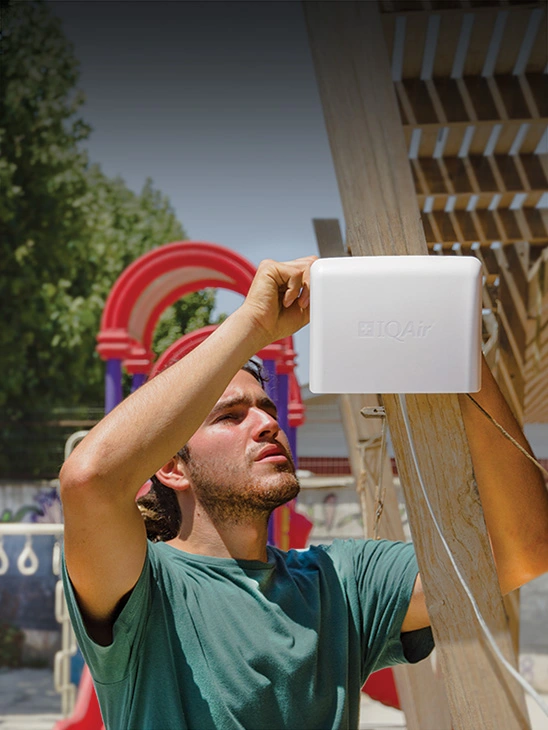
Measure your own air quality
Get a monitor and contribute air quality data in your city.


Learn more about air pollution in Missoula
What is the current air quality in Missoula?
The current air quality in Missoula is considered good. Air pollution levels are low and there are no expected health risks, making it a good time to enjoy normal outdoor activities.
Is there air pollution in Missoula, Montana?
Missoula is a city located in Montana, and is the county seat of Missoula County, the second-largest county within the state of Montana and home to some 109,000 people, as per a census conducted in 2010, with the city of Missoula being home to approximately 75,000 from an estimate taken in 2019.
The city has been subject to many occasions of higher levels of pollution, both in more current times (2021 onwards), as well as years past. The causes of higher pollution readings come from a multitude of sources, with the most prominent ones of late being caused by forest fires continuing to burn throughout the state, causing huge clouds of smoke, haze and dangerous clouds of fine particles (PM10 and PM2.5) to permeate the atmosphere, causing the pollution to go up to hazardous levels. These heightened levels have many detrimental effects on the health of those in proximity to the fires and other such polluting events or areas (such as busy roads or industrial sites).
In mid-July of 2021, Missoula presented with a US AQI reading of 160, a very high figure that placed Missoula within the 'unhealthy' rating bracket, on that day and time in which the reading was taken. 'Unhealthy' ratings are color-coded as red (along with the higher and thus more dangerous readings of air pollution having their own increasingly darker colors, with red, purple and maroon signaling the most damaging levels of air quality). Air quality ratings are color-coded on the various maps, graphs and forecasts for ease of navigation throughout this page and the IQAir website.
Referring back to the US AQI reading taken in July, the 'unhealthy' rating requires a reading of anywhere between 151 to 200 to be classified as such, and as can be seen in the name, the subsequent air pollution level would bring with it many adverse health effects, not only to vulnerable people but to all members of the population in Missoula.
Understanding the US AQI, or United States Air Quality Index reading and how it is formed, it is a figure that is aggregated from the several main pollutants typically found in the air, both in Missoula and throughout the rest of America. The United States tag refers to the rating system in place in America, which is significantly more stringent in regards to air quality standards, being far stricter than other air quality ratings used throughout the world which can allow higher levels of pollution to be classified as somewhat less dangerous, making the US AQI reading a gold standard.
The main pollutants used in the calculation of the overall US AQI level are ozone (O3), carbon monoxide (CO), nitrogen dioxide (NO2) and sulfur dioxide (SO2), all prominent chemical compounds that are emitted from a wide variety of sources. The two main forms of particle pollution, PM10 and PM2.5 are also figured into the US AQI aggregate.
When 'unhealthy' levels of air quality present themselves, as would be common during bouts of wildfires (which can travel many miles from their source, polluting cities great distances away), the general public would experience respiratory distress and the aggravation of existing health issues. There are many groups of people who would be much more vulnerable to the effects of air pollution exposure.
Groups who are most affected would be ones such as babies and children, along with pregnant mothers. Due to the younger portion of the population still undergoing their vital years of development, health problems caused by particle pollution and chemical compounds can cause significant damage, affecting the nervous system as well as many other organ systems throughout.
This can lead to stunted physical growth as well as cognitive impairment, and a whole host of other problems related to development. Pregnant mothers who are subject to elevated air pollution levels are significantly more at risk of their babies being born with low weight, prematurely, or a miscarriage occurring, raising the infant mortality rate.
Children and babies may also develop rashes and further respiratory problems. With enough exposure over prolonged periods, any health problems incurred have a much greater chance of turning into lifelong ailments, impacting their quality of life. Other at-risk groups include the elderly, as well as those with pre-existing health conditions, individuals with hypersensitivity towards pollutants or those with compromised immune systems.
Referring back to the levels of air pollution present in Missoula in July, as discussed there were major issues of wildfires taking place within the state. Other readings of US AQI that came in over the same period include figures such as 155, still within the 'unhealthy' rating bracket. 114 and 132 were also present, which placed Missoula in the 'unhealthy for sensitive groups' bracket, which is color-coded as orange and requires a US AQI reading of 101 to 150.
Before these sudden elevations, more appreciable air quality figures that were on record were 75 and 98, both in the 'moderate' rating bracket (yellow), and even further before this at the end of June were readings that all fell within the 'good' rating bracket, with Missoula coming in with readings of 22, 28 and 30, showing that when wildfires are not occurring, the city has considerably better levels of air cleanliness, as the state of Montana is often known for.
Why are the air pollution levels high in Missoula?
Missoula generally maintains a good level of air quality throughout the year, but there are still many sources of pollution present throughout the city that can contribute to heightened levels of air contamination, affecting both the US AQI and PM2.5 reading. Any level of pollution exposure comes with the possibility to cause adverse and unwanted health effects, and as such during certain periods, poor meteorological conditions such as a lack of rain or continued dry spells (with rain being very helpful in tamping down larger particles in the air) along with lower wind speed all aids in the buildup of many chemical compounds and fine particulate matter. This is particularly prominent in certain areas such as roads that see a high volume of traffic, as well as near industrial sites, power plants or factories.
One of the main culprits in rising air pollution levels during certain months of the year in both Missoula and throughout the state of Montana is that of forest fires, with their sudden presence an ever-encroaching danger, most prominent during hotter or drier months of the year.
The combination of such events, as well as the large spikes in air pollution brought about by fires, can lead to prominent elevations in the air pollution level, with the other main contributing sources besides forest fires (which thankfully do not occur all year round) being fumes and emissions emitted from a wide variety of different vehicles. Many cars, motorbikes and other personal vehicles would be in use on the roads, all of which would give off their respective pollutants based on the combustion process and the fuel in use.
Vehicles can give out many primary pollutants, which can also lead to the creation of secondary pollutants, with ozone being one of the most prominent. Primary pollutants are given out directly from a singular source, whilst secondary pollutants form in the atmosphere as a result of primary pollutants combining or undergoing chemical reactions, which take place under the right meteorological circumstances.
Besides build-ups of ozone appearing on the roads, other contributing factors to road-based air pollutants come from freight vehicles, which include lorries, trucks and buses. These can often utilize diesel as their main fuel source, which when combusted can give out far more fine particles and chemical compounds than a singular vehicle of smaller size, particularly when the fuel source is cleaner.
Adding to the pollution levels given off from vehicles, many tons of microscopic rubber particles can be given off over longer periods, with the wear and tear of tire treads causing this mass dispersal. This can build up significantly in nearby bodies of water, topsoil, as well as lingering in the atmosphere and causing the wide range of health effects that breathing fine particles often entails.
Other prominent causes of pollution are emissions from industrial sites, power plants and factories, with large amounts of pollutants being emitted in such areas. Amongst the pollutants released, there would be the ones included in the US AQI index, along with several others such as volatile organic compounds (VOCs) and black carbon, and others that will be discussed in further detail in short.
Construction and demolition sites, along with road repairs are also significant sources of particle pollution, with poorly maintained ones often being the worst offenders for leaking large amounts of coarse or ultrafine particles into the atmosphere. Any activity that sees the disturbance of large amounts of earth (topsoil, clay, sand, gravel) can be considered as contributing to pollution levels due to the residual dust that will emanate from such activities, although they carry with them far less risk when compared to the pollution given off from wildfires.
When observing the US AQI readings and PM2.5 levels from the past, it can be seen that sudden elevations in air pollution can occur quite frequently throughout the year in Missoula, causing respiratory irritation to those with pollution sensitivity, as well as the general public if the levels rise high enough. As such, pollution levels and forecasts can be monitored via the air quality map and forecast available on this page, as well as with the AirVisual app. Those who wish to keep their exposure levels to a minimum as well as those who belong to vulnerable demographics would benefit the most, avoiding the harsh effects that overexposure can bring.
When does Missoula have the poorest level of air quality?
Observing the PM2.5 levels on record over the year of 2020, it can be seen that the end of the year had the highest levels of PM2.5. Whilst this may not be indicative of how the pollution levels will be every single year, most regions or states tend to follow a general trend in which their PM2.5 levels rise higher, although this can be skewed massively by the advent of forest fires and the like.
The months of September through to December had the highest readings of PM2.5, coming in at 24 μg/m³, 11.5 μg/m³, 11.2 μg/m³ and 14.9 μg/m³ respectively. This made September the most polluted month of the year, coming in well within the 'moderate' pollution rating bracket (12.1 to 35.4 μg/m³ required)
What are some health problems related to air pollution in Missoula?
Some health issues that may occur when exposure to air pollution becomes high enough and over longer periods are ones such as dry coughs and respiratory irritation, as well as aggravation of pre-existing conditions. More serious health issues would include ones such as the increased risk of heart attacks, as well as a higher chance of developing ischemic heart disease. Arrhythmias, strokes, and even death can occur if exposure levels are high enough and sustained. Many people die every year prematurely due to pollution-related health issues.
What are some of the main pollutants found in Missoula’s air?
Besides the main pollutants that are used to calculate the US AQI figure, several other pollutants can be found in the air throughout Missoula, often having higher volumes in certain areas, with locations such as busy roads or intersections (or any road that sees rush hour traffic or many vehicles passing through it) as well as industrial areas or factories often having higher levels of certain pollutants in their direct vicinity.
As mentioned, black carbon and Volatile organic compounds (VOCs) are also found in the air, both of which are formed from the incomplete combustion of fossil fuels and organic matter. Some examples of VOCs include benzene, toluene, xylene, methylene chloride and formaldehyde. Other pollutants that may be found would be ones such as lead, mercury and cadmium, along with dioxins, furans and polycyclic aromatic hydrocarbons.
When does Missoula see improved air quality levels?
Once again referring to the air cleanliness levels on record in 2020, it can be seen that the earlier portion of the year had considerably cleaner air quality. The months of January through to July all came in with the most optimal readings, all of which fell into the World Health Organization's (WHO's) target goal for the best quality of air at 10 μg/m³ or less.
Where is the cleanest air quality in Missoula?
- Siren Rd0
- 9460 Singletree Ln1
- BlueMtn Outside1
- Northside Pedestrian Bridge monitor A1
- Larch Canyon Road3
- 2-98 Elkridge Ct4
- 4999-4993 Marshall Canyon Rd4
- Butler View Lane4
- Upper Rattlesnake5
- Jeffrey Park7
- Skyway Drive7
- Farviews / Pattee Canyon11
- Rose Park, Missoula13
- Missoula Boyd Park14
- University Ave21
- Westside21
- AirVisual Outdoor - 444431