


 Add
AddAir quality in Dong Hoi
Air quality index (AQI⁺) and PM2.5 air pollution in Dong Hoi • 26.9K Followers • 22:00, Jul 10 Local time
56*
US AQI⁺Moderate

Main pollutant:
PM2.5
12 µg/m³

28°

16 km/h

71 %
Hourly forecast
Dong Hoi air quality index (AQI⁺) forecast


Daily forecast
Dong Hoi air quality index (AQI⁺) forecast
| Today | 56 |  | 32° 26° |  24 km/h | 72% |
| Sun | 52 |  | 31° 27° | 29 km/h | 67% |
| Mon | 58 | | 30° 27° | 33 km/h | 72% |
Air pollutants
What is the current air quality in Dong Hoi?

PM2.5 concentration is currently 2.4 times the World Health Organization annual PM2.5 guideline value.
Health recommendations
 Sensitive groups should reduce outdoor exercise |
 Close your windows to avoid dirty outdoor air Get a monitor |
 Sensitive groups should wear a mask outdoors Get a mask |
 Sensitive groups should run an air purifier Discover Atem car |
Health recommendations
Sensitive groups should reduce outdoor exercise |
Close your windows to avoid dirty outdoor air Get a monitor |
Sensitive groups should wear a mask outdoors Get a mask |
Sensitive groups should run an air purifier Discover Atem car |
Most polluted locations near Dong Hoi
Worldwide AQI⁺ ranking

Historic air quality near Dong Hoi
History
Historic air quality graph for Dong Hoi
Historic air quality near Dong Hoi
History
Historic air quality graph for Dong Hoi
Most polluted locations near Dong Hoi
Worldwide AQI⁺ ranking


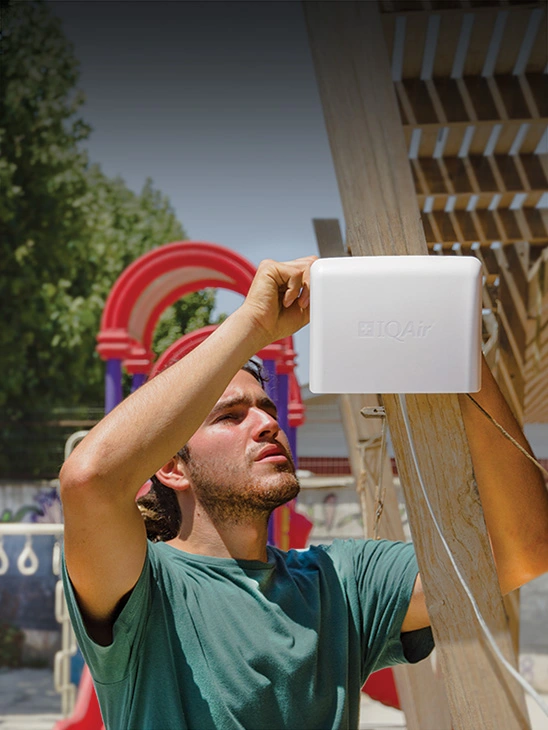
Be the first to measure and contribute air quality data to your community


Learn more about air pollution in Dong Hoi
What is the current air quality in Dong Hoi?
The current air quality in Dong Hoi is considered moderate. Air quality is acceptable for most people, though sensitive individuals may experience mild symptoms such as coughing or shortness of breath.
What is the current level of air pollution in Dong Hoi now?
Đồng Hới is the capital city of Quảng Bình Province on the north central coast of Vietnam. According to a census conducted in 2017, the population of Dong Hoi was estimated to be approximately 120,000 people.
It is located 486 kilometres south of the capital city, Hanoi. It has a 12 kilometre coastline of white sand beaches.
Towards the middle of 2021, Dong Hoi was enjoying a period of “Good” quality air with a US AQI reading of just 42. This United States Air Quality Index number is a globally used set of metrics supported by the World Health Organisation (WHO) and is used to compare the air quality in different cities throughout the world using comparable standards. It is calculated by using the levels of the six most commonly found pollutants. If figures are not all available, the figure is calculated using what information is available. For Dong Hoi, the only figure to be recorded was that of PM2.5 which was 10.1 µg/m³ and slightly over the WHO recommended figure.
Whilst no level of air pollution is safe, a low level such as this should cause no problems to most people. Doors and windows can be left open to encourage a flow of clean air through the house and all forms of outdoor activities and exercise can be enjoyed without fear.
The table found at the top of this page will help you to see what the state of the air is in real-time.
Is the level of air pollution constant throughout the year in Dong Hoi?
Air quality can be very volatile and, as such, can change very quickly depending on many variables, such as wind speed and direction and the strength of sunlight, as well as the seasons of the year.
Looking back at the figures published by the Swiss air monitoring company IQAir.com for 2020 it can be seen that the best quality air was during the month of June. The recorded figure was 10.6 µg/m³ which is classified as being “Good”. From January until the end of October (with the exception of June) Dong Hoi experienced a period of “Moderate” quality air with figures between 12.1 and 35.4 µg/m³.
What is the main source of air pollution in Dong Hoi?
According to the World Health Organisation (WHO), outdoor air pollution originates from natural and man-made sources. In which, natural sources are largely due to forest fires and dust storms. Man-made sources are mainly from traffic, electricity generation, industry, incineration of agricultural waste and waste, construction activities or domestic sources such as cooking, lighting and heating with fuels that pollute.
The density of vehicles on the roads is large, there are many traffic jams, and there are still many old vehicles and vehicles carrying materials and waste that are not covered properly according to regulations.
Most of the pollution in Dong Hoi seems to emanate from local industries and their total disregard for correct procedures.
A local newspaper reported that people complained about a rubber processing factory because it usually discharges exhaust gas at night from 9 pm to 7 am and the worst smell is around 3 to 4 am.
Can anything be done to improve the air quality in Dong Hoi?
In order to reduce the amount of vehicles on the city roads, a more attractive means of transport must be introduced or people will continue as they are now. Vehicles older than 15 years cause considerably more pollution than modern ones that are fitted with the latest technology which filters out most of the pollutants. Modern motorbikes cut off the engines when forward motion is no longer detected which prevents the idling engine from polluting the air whilst waiting in a queue. It is necessary to have urban planning, reasonable traffic planning, change people's travel habits such as using public transport, managing rush hours. Exhaust source control can be done through engine control, fuel conversion and emission control.
Prominent is the completion of the plan to plant one million trees; speed up the construction of traffic works; increase the number of overpasses to avoid congestion; re-paving footpaths/pavements to encourage people to walk; mobilise vehicle owners to replace the use of A92 gasoline with E95 gasoline; strengthen control of vehicle quality in traffic; do not use honeycomb charcoal for cooking and heating purposes, encourage people to limit the burning of straw. Promote investment in construction waste yards, apply modern crushing and recycling technology to limit dust pollution. Speeding up the construction of waste incineration plants with modern and advanced technology to replace the burial method.
What detrimental effects on human health does the air in Dong Hoi have?
Air pollution increases the risk of respiratory infections, heart disease, stroke and lung cancer. Both short-term and long-term exposure to air pollutants causes health effects. Children under the age of 14 years, women, pregnant women, the elderly, people with weak health, people who are sick are those who suffer the most from air pollution. It is especially ad for those with pre-existing respiratory problems.
It is a well-known fact that every year, around 7 million people around the world die from diseases related to air pollution such as heart disease, lung disease and stroke. Every day, about 93 per cent of the world's children under 15 years old (equivalent to 1.8 billion children) breathe polluted air, which seriously affects their health and development.
According to the World Health Organization, the six main air pollutants that affect human health include:
- Nitrogen oxide (NOx);
- Sulphur oxide (SOx);
- Carbon monoxide (CO);
- Lead;
- Ground-level ozone;
- Suspended atmospheric particles
Among them, fine dust particles with a size of less than 2.5 microns (PM2.5) deserve the most attention, because they have the ability to penetrate deeply into the lungs, affecting both the respiratory system and the vascular system. . Whether or not people's health is seriously affected will depend on the extent and duration of exposure to polluted air. Each day we breathe about 10,000 litres of air or more depending on age and physical activity.
Therefore, if the concentration of PM2.5 dust in the air is high, the daily exposure is large and increases the risk of acute and chronic health problems.