


 Add
AddAir quality in Tlalnepantla
Air quality index (AQI⁺) and PM2.5 air pollution in Tlalnepantla • 968 Followers • 22:00, Jun 12 Local time
61*
US AQI⁺Moderate

Main pollutant:
PM2.5
14.7 µg/m³

14°

7 km/h

91 %
Hourly forecast
Tlalnepantla air quality index (AQI⁺) forecast


Daily forecast
Tlalnepantla air quality index (AQI⁺) forecast
| Today | 61 |  | 19° 12° |  12 km/h | 82% |
| Sat | 61 | | 20° 11° | 14 km/h | 79% |
| Sun | 57 | | 17° 13° | 10 km/h | 85% |
Air pollutants
What is the current air quality in Tlalnepantla?

PM2.5 concentration is currently 2.9 times the World Health Organization annual PM2.5 guideline value.
Health recommendations
 Sensitive groups should reduce outdoor exercise |
 Close your windows to avoid dirty outdoor air Get a monitor |
 Sensitive groups should wear a mask outdoors Get a mask |
 Sensitive groups should run an air purifier Get an air purifier |
Health recommendations
Sensitive groups should reduce outdoor exercise |
Close your windows to avoid dirty outdoor air Get a monitor |
Sensitive groups should wear a mask outdoors Get a mask |
Sensitive groups should run an air purifier Get an air purifier |
Most polluted locations near Tlalnepantla
Worldwide AQI⁺ ranking
Station ranking
Real-time AQI⁺ station ranking for stations in Tlalnepantla

City ranking
Real-time Mexico AQI⁺ city ranking
Historic air quality near Tlalnepantla
History
Historic air quality graph for Tlalnepantla
Historic air quality near Tlalnepantla
History
Historic air quality graph for Tlalnepantla
Most polluted locations near Tlalnepantla
Worldwide AQI⁺ rankingStation ranking
Real-time AQI⁺ station ranking for stations in Tlalnepantla
City ranking
Real-time Mexico AQI⁺ city ranking
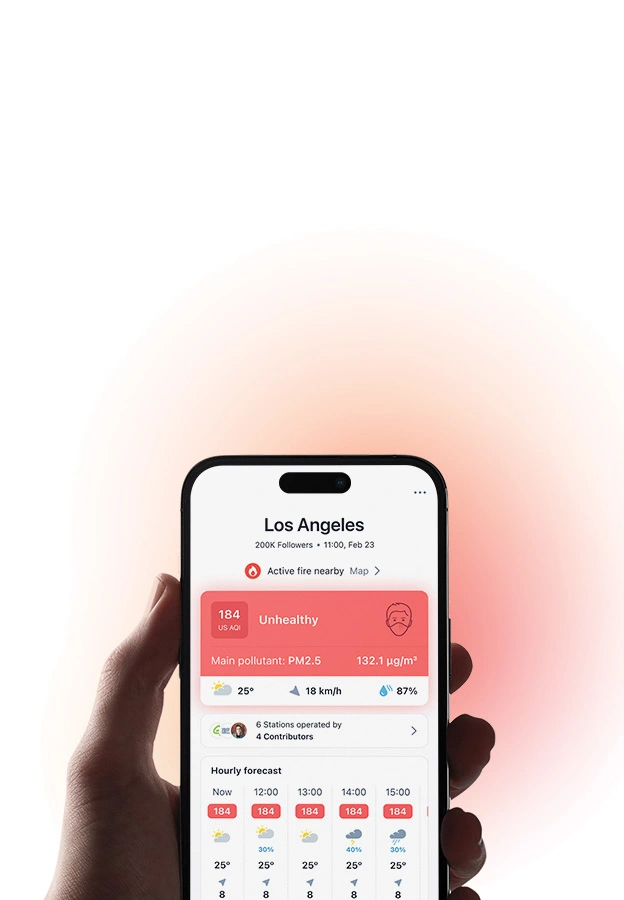


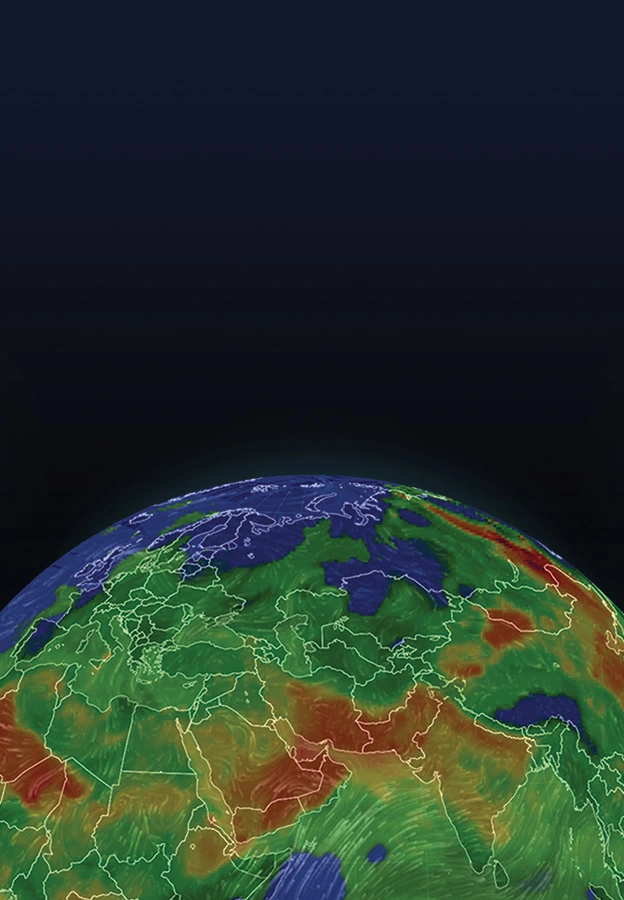
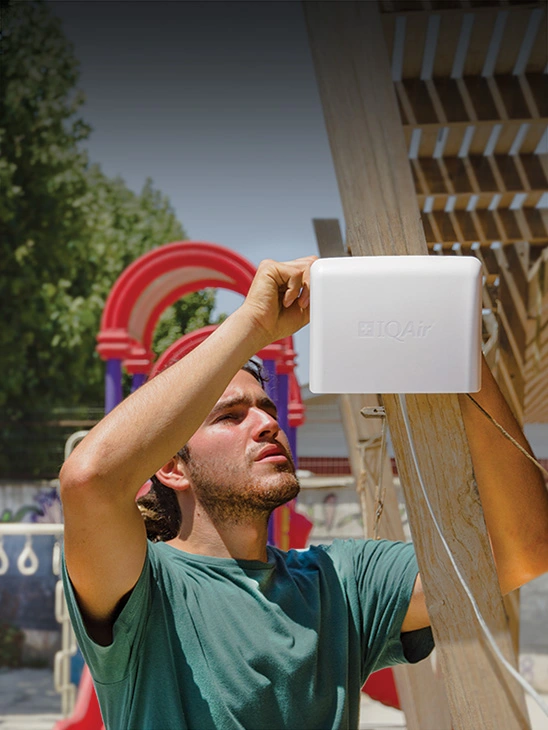
Be the first to measure and contribute air quality data to your community
Learn more about global air quality


Learn more about air pollution in Tlalnepantla
What is the current air quality in Tlalnepantla?
The current air quality in Tlalnepantla is considered moderate. Air quality is acceptable for most people, though sensitive individuals may experience mild symptoms such as coughing or shortness of breath.
What is the current level of air pollution in Tlalnepantla?
Tlalnepantla de Baz is one of 125 municipalities of the state of Mexico, north of Mexico City. According to a census conducted in 2015, the estimated population of Tlalnepantla was approximately 750,000 people.
During the last two months of 2021, Tlalnepantla was experiencing a period of “Moderate” air quality with a US AQI reading of 115. This reading is often used as a reference point when comparing air quality in other cities around the world. Data is collected with regards to the six most prolific air pollutants commonly found and this figure is calculated from there. If information is not available for all six, then a figure can be deduced using the information that is available. For Tlalnepantla, there were three pollutants that were recorded which were; PM2.5 - 41.3 µg/m³, PM10 - 78 µg/m³ and ozone (O3) - 152 µg/m³.
The level of PM2.5 can be seen to be just over four times higher than the suggested level of 10 µg/m³. This level has been determined by the World Health Organisation (WHO) as being an acceptable level of air pollution, although no level is to be considered as being safe.
When the air quality is classified as being “Moderate”, the suggested advice would be to remain indoors as much as possible and close all doors and windows to prevent the ingress of more polluted air. Those who are more sensitive to poor air quality should avoid going outside until the air quality improves. If this is unavoidable, then a good quality mask should be worn at all times. All groups are dissuaded from partaking in vigorous outdoor exercise. There is a downloadable app from AirVisual.com which is available for most operating systems which informs the user of real-time air quality which can be useful information to help decide what to do.
Does the level of air pollution vary much throughout the year in Tlalnepantla?
Looking back at the figures published by IQAir.com for 2020, it can easily be seen that the air quality remained in the “Moderate” bracket for the entire 12 months. The month with the worst air quality was December with a 23.8 µg/m³ reading. The month which provided the cleanest air was August with a reading of 15 µg/m³.
There were no records for air pollution before 2020 when the recorded figure was 21.2 µg/m³ which was “Moderate”. However, this figure might possibly be affected by the COVID-19 pandemic. Many cities throughout the world reported much cleaner air in their centres because of the lack of vehicles using the roads on a daily basis. There were also some factories and small production units which were temporarily closed so their emissions were halted.
Is there a source of air pollution in Tlalnepantla?
The most dangerous of the airborne particles are known as PM2.5 (particulates less than 2.5 thousandths of a millimetre across) which can penetrate deep into the lung. The World Health Organisation (WHO) has set a limit for average outdoor ambient air pollution of 10 micrograms (thousandths of a gram) of PM2.5 per cubic metre of air (10 µg/m³). However, average concentrations in Mexico City are about 25 µg/m³, and in the range 20-36 µg/m³ in Puebla, Toluca and Monterrey.
Over 16 million Mexicans – more than one in every eight – cook primarily with firewood or charcoal and many households use them as secondary fuels. Pollution levels in these rural households can be 6-15 times higher than in urban areas and this can severely damage health. For the person doing the cooking, concentrations of PM2.5 in the air breathed in are 11-26 times higher than the WHO recommendation.
The major air pollutants of Mexico City are ozone (O3), sulphur dioxide (SO2), precursors like nitrogen oxides (NOx), hydrocarbons (HC), and carbon monoxide (CO), that originate from the incomplete combustion of fossil fuels. At these altitudes, the partial pressure of oxygen is far lower than at sea level, thus combustion is far from ideal. Most of the energy consumed in this city is related to urban transportation. A very important source of air pollution is gas exhaust from private vehicles.
What can be done to improve air quality in Tlalnepantla?
Simply replacing open fires and traditional stoves with improved cookstoves with chimneys reduces this exposure by half, but the average remains about 80 µg/m³, still eight times the recommended limit. To make greater improvements, households need to make the transition to the more expensive propane (LPG). The use of gas as the primary fuel is a key reason why urban areas are less polluted. If all rural households used LPG, pollution may decline to 25 µg/m³ or less, but exposure would be perhaps double that if only a fraction of households changed.
Small patches of vegetation, such as parks, ridges or small gardens, contribute to shaping the urban climate, by regulating the temperature and reducing polluting substances, particles and gases in the air, therefore, they facilitate the establishment of different forms of life such as wild plants, birds, and insects that are often beneficial in balancing these urban systems.
It is for these reasons that green spaces, in addition to improving the environment, air quality and providing a place for recreation, allow the protection of local flora and fauna, as well as some migratory species, which even in disturbed environments find a place to settle in the winter.
What are the effects of air pollution on health?
Air pollution affects us both short- and long - term side effects are more likely to suffer them are children, the elderly and people suffering from pre-existing illnesses.
It should not be forgotten that the polluted air is not only external, but also indoor smoke represents a serious health risk, biomass and coal are highly polluting, therefore, those neighbouring communities, private homes or companies Those who use this type of fuel to warm themselves in winter are highly exposed to its secondary effects.
The pollutants in the air are nitrogen dioxide, tropospheric ozone, sulphur dioxide, amongst others. All these agents are originated, among others, by road traffic in our cities, heating systems, industries, power plants, refineries and incinerators.
Although in recent years the different governments have increased the control of polluting factors through more rigid laws, it is true that air quality does not improve as much as it should and that is why we will continue to suffer the secondary effects of air pollution. in our health.