Add
AddAir quality in Valjevo
Air quality index (AQI⁺) and PM2.5 air pollution in Valjevo • 105.3K Followers • 21:00, Jun 04 Local time
47
US AQI⁺Good

Main pollutant:
PM2.5
8.4 µg/m³

16°

5 km/h

89 %
Hourly forecast
Valjevo air quality index (AQI⁺) forecast


Daily forecast
Valjevo air quality index (AQI⁺) forecast
| Today | 45 |  | 21° 15° |  14 km/h | 75% |
| Fri | 52 |  | 27° 14° | 8 km/h | 62% |
| Sat | 52 | | 22° 16° | 10 km/h | 81% |
Air pollutants
What is the current air quality in Valjevo?

PM2.5 concentration is currently 1.7 times the World Health Organization annual PM2.5 guideline value.
Health recommendations
 Enjoy outdoor activities |
 Open your windows to bring clean, fresh air indoors Get a monitor |
Pollen
What is the pollen count in Valjevo today?
Index

High
 Tree None | 0% |
 Grass High | 75% |
 Weed None | 0% |
Source:
Open-Meteo.comHealth recommendations
Enjoy outdoor activities |
Open your windows to bring clean, fresh air indoors Get a monitor |
Pollen
What is the pollen count in Valjevo today?
Index
High
Tree None | 0% |
Grass High | 75% |
Weed None | 0% |
Source:
Open-Meteo.comMost polluted locations near Valjevo
Worldwide AQI⁺ ranking
Station ranking
Real-time AQI⁺ station ranking for stations in Valjevo

City ranking
Real-time Serbia AQI⁺ city ranking
Historic air quality near Valjevo
History
Historic air quality graph for Valjevo
Historic air quality near Valjevo
History
Historic air quality graph for Valjevo
Most polluted locations near Valjevo
Worldwide AQI⁺ rankingStation ranking
Real-time AQI⁺ station ranking for stations in Valjevo
City ranking
Real-time Serbia AQI⁺ city ranking



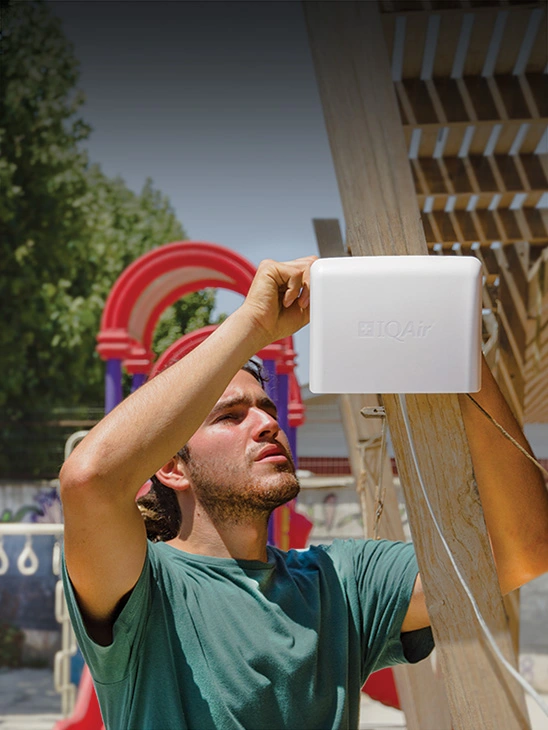
Measure your own air quality
Get a monitor and contribute air quality data in your city.


Learn more about air pollution in Valjevo
What is the current air quality in Valjevo?
The current air quality in Valjevo is considered good. Air pollution levels are low and there are no expected health risks, making it a good time to enjoy normal outdoor activities.
What is the current level of air pollution in Valjevo?
Valjevo is a city and the administrative centre of the Kolubara District in western Serbia. According to a census conducted in 2011, the administrative area of Valjevo had an estimated 90,000 residents, 59,000 of whom were urban dwellers. It is located on the banks of the Kolubara River which is a tributary of the Sava River.
During the fourth quarter of 2021, Valjevo was experiencing a period of air quality that was classified as being “Unhealthy for sensitive groups” with a US AQI reading of 104. This reading is often used as a reference point when comparing air quality in other cities around the world. Data is collected with regards to the six most prolific air pollutants commonly found and this figure is calculated from there. If information is not available for all six, then a figure can be deduced using the information that is available. In the case of Valjevo, only the two diameters of the PM pollutant were measured which were; PM2.5 - 36.7 µg/m³ and PM10 - 39.3 µg/m³. This level of PM2.5 can be seen to be over three and a half times higher than the suggested level of 10 µg/m³. This level has been determined by the World Health Organisation (WHO) as being an acceptable level of air pollution, although no level is to be considered as being safe.
With a level such as this, the advice would be to stay indoors and close all doors and windows so as to prevent the ingress of more polluted air from entering the rooms. The use of an air purifier would be beneficial, if one is available, but set it to recirculate the air without importing more dirty air from outside. Those who are more sensitive to poorer air quality should try to avoid venturing outside until the air improves. If this is unavoidable, then a good quality mask should be worn at all times. All groups are dissuaded from partaking in vigorous outdoor exercise.
There is a mobile app available from AirVisual.com for most mobile devices which gives information regarding air quality in real-time. This information will assist in your decision as to whether or not to go outside.
Does air quality vary much throughout the year in Valjevo?
Air quality can be very volatile and can therefore change very quickly because so many variables can affect it.
Looking back at the figures for 2020, published by IQAir.com, it can be seen that the winter months of November, December and January provided the worst air quality with readings from the “Unhealthy” group. These figures would fall between 55.5 and 150.4 µg/m³ to be in this category. February and March were next with poor air quality with figures classified as being “Unhealthy for sensitive groups” with readings of 54.5 and 37.6 µg/m³. The months of April and then from July until the end of October saw “Moderate” air quality with figures between 12.1 and 35.4 µg/m³. June achieved the target figure of less than 10 µg/m³ as recommended by the World Health Organisation (WHO). The actual reading was 9.2 µg/m³.
Records of air pollution were first kept in 2019 when a figure of 37.9 µg/m³ was recorded. This declined the following year to 41.5 µg/m³ which is surprising because of the COVID-19 pandemic. Most cities throughout the world reported better air quality in 2020 because many vehicles were no longer in daily use as a preventative measure to try and control the spread of the virus.
Is there a main source of air pollution in Valjevo?
The biggest causes of air pollution in Valjevo, as well as in other large cities, are traffic, industry, thermal power plants and local furnaces.
Valjevo is located in a valley, without enough airflow - for which many citizens blame unplanned construction - and when the temperature drops and the humidity increases, a thick yellow-grey cloud appears above the city. Valjevo is officially one of the most polluted cities in Serbia. In Valjevo, as in other places, most pollution comes from individual fireboxes, as well as from traffic, but there are no major fluctuations in the winter. The concentration of soot, sulphur and nitrogen dioxide has been monitored in the Institute for 15 years.
When it comes to PM10 particles - which are the dominant pollutants - their concentration is not officially controlled at the Valjevo Institute.
According to the report of the Environmental Protection Agency in Serbia for 2017, the highest measured concentration of PM10 particles was measured in Valjevo and amounted to 806 micrograms per cubic meter of air. According to EU directives, in order for air to be considered clean, the concentration of these particles should not exceed 40 micrograms per cubic meter, and exceedances must not be longer than 35 days a year.
Suspended particles PM10 and PM2.5 are among the most dangerous pollutants, and the products are precisely individual fireboxes and materials that citizens use for heating.
What can be done to improve the air quality in Valjevo?
PM 2.5 and PM 10 contain toxic compounds that are emitted in fires at landfills where there is a variety of waste - plastic materials, rubber and textiles. Self-ignition of landfills emits large amounts of these gases and no monitoring system registers this in Serbia. Many industries have cancelled natural gas and are burning waste tyres and municipal waste, from which a wide range of toxic compounds is emitted, and that is not measured by a monitoring system such as dioxins.
The Minister of Environmental Protection, visited the works in "Toplana-Valjevo", which will use more environmentally friendly gas as an energy source instead of fuel oil in the upcoming heating season, which will significantly improve the air quality in Valjevo.
What are some of the detrimental effects polluted air has on human health?
Inhalation of polluted air leads to increased mortality, shortened life expectancy and an increase in the number of chronic diseases, while the health costs paid by the citizens of the Western Balkans are increasing. Polluted air also brings us an increase in the number of lost working days, along with an increase in the number of hospital days. Reducing air pollution is a public health measure that would directly affect the increase of the quality of life and health of citizens, and indirectly the reduction of the mortality rate.
The harmful effects of polluted air result in increased mortality from stroke, heart disease, chronic lung disease, lung cancer and acute respiratory infections. The effects of exposure to air pollution are varied, ranging from clinical effects such as lower respiratory tract infection to premature death.