


 Add
AddAir quality in Suncheon
Air quality index (AQI⁺) and PM2.5 air pollution in Suncheon • 14.2K Followers • 21:00, Jun 13 Local time
50
US AQI⁺Good

Main pollutant:
PM2.5
9 µg/m³

22°

2 km/h

89 %
Hourly forecast
Suncheon air quality index (AQI⁺) forecast


Daily forecast
Suncheon air quality index (AQI⁺) forecast
| Today | 56 |  | 28° 17° |  14 km/h | 67% |
| Sun | 67 |  | 27° 19° | 15 km/h | 73% |
| Mon | 65 | | 26° 20° | 21 km/h | 70% |
Air pollutants
What is the current air quality in Suncheon?

PM2.5 concentration is currently 1.8 times the World Health Organization annual PM2.5 guideline value.
Health recommendations
 Enjoy outdoor activities |
 Open your windows to bring clean, fresh air indoors Get a monitor |
Health recommendations
Enjoy outdoor activities |
Open your windows to bring clean, fresh air indoors Get a monitor |
Most polluted locations near Suncheon
Worldwide AQI⁺ ranking
Station ranking
Real-time AQI⁺ station ranking for stations in Suncheon

City ranking
Real-time South Korea AQI⁺ city ranking
Historic air quality near Suncheon
History
Historic air quality graph for Suncheon
Historic air quality near Suncheon
History
Historic air quality graph for Suncheon
Most polluted locations near Suncheon
Worldwide AQI⁺ rankingStation ranking
Real-time AQI⁺ station ranking for stations in Suncheon
City ranking
Real-time South Korea AQI⁺ city ranking


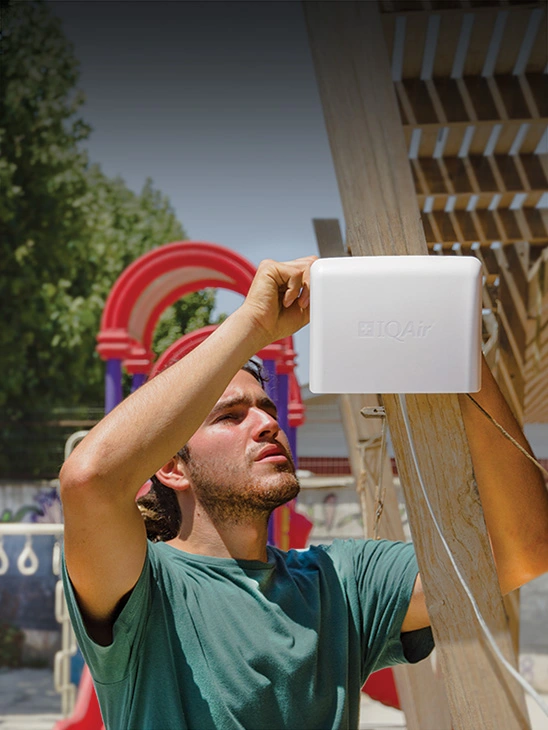
Measure your own air quality
Get a monitor and contribute air quality data in your city.
Learn more about global air quality


Learn more about air pollution in Suncheon
What is the current air quality in Suncheon?
The current air quality in Suncheon is considered good. Air pollution levels are low and there are no expected health risks, making it a good time to enjoy normal outdoor activities.
Is Suncheon a very polluted city now?
Suncheon is a city in South Jeolla Province, South Korea. It is located in the south east and is just over an hour from the Gwangju metropolis. It is basically both an agricultural centre and an industrialised city of some 280,000 people according to a 2016 census. It is currently undergoing rapid development due to the fact it is part of a newly designated Free Economic Zone.
In the third quarter of 2021, Suncheon was experiencing a period of “Moderate” air quality with a US AQI reading of 55. This United States Air Quality Index figure is worked out by collating the recorded levels of six of the most prolific air pollutants. These may include, both sizes of PM (PM10, PM2.5), nitrogen dioxide, sulphur dioxide, ozone and carbon monoxide. If figures are not available for all six, a level can still be calculated by using what information there is. It can then be used as a metric when comparing one city with another, anywhere in the world. In Suncheon, all six pollutants were recorded which were as follows; PM2.5 - 11.5 µg/m³, PM10 - 25 µg/m³, ozone (O3) - 134 µg/m³, nitrogen dioxide (NO2) - 5.6 µg/m³, sulphur dioxide (SO2) - 3.9 µg/m³ and carbon monoxide (CO) - 400.8 µg/m³. These figures are quoted in microns per cubic metre.
At 11.5 µg/m³ the PM2.5 level is slightly above the target figure of 10 µg/m³ as recommended by the World Health Organisation (WHO).
With the air quality being this poor, the advice would be to stay indoors as much as possible and close doors and windows to prevent more polluted air from entering the house. Those of a sensitive disposition should avoid venturing outside until the situation improves. The downloadable app from AirVisual gives up-to-date information about air quality in the local area and is free to download to any mobile device.
Does the air pollution in Suncheon stay the same throughout the year?
According to the data for 2020 published by IQAir.com, it can be seen that there were two months of the year when air quality was classified as being “Good” with figures between 10 and 12 µg/m³. These months were July and September with respective figures of 11.4 and 11.6 µg/m³. The remaining months of the year saw “Moderate” air quality with figures between 12.1 and 35.4 µg/m³. The best of these months was August with a reading of 14.2 µg/m³, the worst being January with a 23.7 µg/m³ figure.
Historically, records regarding air pollution have been kept since 2017 when the average annual figure was 18.9 µg/m³, the following year of 2018 saw a decline in quality when the figure was 21.0 µg/m³. Another improvement was seen in 2019 with an 18.1 µg/m³ reading followed by a further improvement in 2020 with a figure of 15.9 µg/m³. This latest reading may have been affected by the COVID-19 situation as many vehicles were no longer in daily use as staff were encouraged to work from home in an attempt to halt the spread of the virus. Many factories and non-essential production units were also required to close which removed their emissions from the atmosphere.
Where does the air pollution come from in Suncheon?
The largest heavy and chemical industrial zone in Korea is where Yeosu, Suncheon and Gwangyang are located, together they emit many pollutants. Ozone is readily generated due to air pollution and photochemical reaction and complex environmental problems caused by volatile organic compounds (VOC).
Nitrogen oxide (NOx) is mainly emitted when something is burned, and it is less filtered in factory chimneys than sulphur oxide. It meets VOCs to create ozone and secondary fine dust. Sulphur oxide (SOx) is generated in power plants, heating devices, oil refining and industrial processes. It is believed to be the cause of acid rain.
Fine dust (PM10) contains a large amount of heavy metals such as aluminium, copper, cadmium and lead. It lowers the immune function of the human body and is a cause of allergies, conjunctivitis and atopy.
Ultra-fine dust (PM2.5) is a very big threat to childbirth and causes low birth weight and birth defects. It is a representative air pollutant that mainly causes respiratory diseases, lowers immune function, and causes asthma, the so-called 'silent killer'.
Volatile Organic Compounds (VOC) evaporate easily in the atmosphere. When they meet sunlight with nitrogen oxides (NOx), they create ozone through a photochemical reaction. As a carcinogen, they are very harmful to the human body.
Can anything be done to improve the air quality in Suncheon?
The Ministry of Environment and the Korea Environment Corporation announced that they would provide the newly reorganised 'My Neighbourhood Air Information' mobile app (application) to enhance user convenience. The mobile app can check air information such as fine dust and ozone in real time based on the user's location information, as well as fine dust warnings and alerts. Items with the highest measured concentrations of air pollutants such as fine dust, ozone and carbon monoxide are listed in order so that they can be viewed at the top.
Plans to establish a comprehensive odour control room and prepare fundamental comprehensive measures by improving the industrial complex environmental management system, laws and regulations are already being considered.
It is already known that there are some companies operating from the industrial zone that emit far more pollutants than current legislation allows. These companies will be compelled to clean up their emissions or face heavy fines.
What effects does this polluted air have on our health?
All components that cause air pollution are harmful substances that threaten health, but PM is the most toxic. The biological toxicity of PMs depends on the size, structure and composition of the PM. For example, the stronger the acid, the stronger the PM's toxicity is because the toxicity to human tissue varies depending on the components attached to the PM's surface. Toxic hitchhikers that stick to the PM surface include heavy metals such as arsenic, lead, and cadmium, or sulfuric acid or polycyclic aromatic hydrocarbons produced during combustion.
Epidemiologic and controlled human exposure studies of PM have revealed that some groups are particularly vulnerable to the hazards of PM, such as children and the elderly. All diseases are caused by the interaction between environmental risk factors and individual susceptibility, and the incidence rate varies according to life stages. This is because the physiological characteristics of the general population and the paediatric and elderly populations are different.