Add
AddAir quality in Chiang Saen
Air quality index (AQI⁺) and PM2.5 air pollution in Chiang Saen • 88.5K Followers • 04:00, Jun 02 Local time
62
US AQI⁺Moderate

Main pollutant:
PM2.5
15.2 µg/m³

23°

2 km/h

99 %
Hourly forecast
Chiang Saen air quality index (AQI⁺) forecast


Daily forecast
Chiang Saen air quality index (AQI⁺) forecast
| Today | 62 |  | 35° 22° |  9 km/h | 62% |
| Tue | 57 | | 36° 23° | 6 km/h | 63% |
| Wed | 57 | | 36° 23° | 7 km/h | 69% |
Air pollutants
What is the current air quality in Chiang Saen?

PM2.5 concentration is currently 3 times the World Health Organization annual PM2.5 guideline value.
Health recommendations
 Sensitive groups should reduce outdoor exercise |
 Close your windows to avoid dirty outdoor air Get a monitor |
 Sensitive groups should wear a mask outdoors Get a mask |
 Sensitive groups should run an air purifier Discover Atem car |
Health recommendations
Sensitive groups should reduce outdoor exercise |
Close your windows to avoid dirty outdoor air Get a monitor |
Sensitive groups should wear a mask outdoors Get a mask |
Sensitive groups should run an air purifier Discover Atem car |
Most polluted locations near Chiang Saen
Worldwide AQI⁺ ranking
Station ranking
Real-time AQI⁺ station ranking for stations in Chiang Saen

City ranking
Real-time Thailand AQI⁺ city ranking
Historic air quality near Chiang Saen
History
Historic air quality graph for Chiang Saen
Historic air quality near Chiang Saen
History
Historic air quality graph for Chiang Saen
Most polluted locations near Chiang Saen
Worldwide AQI⁺ rankingStation ranking
Real-time AQI⁺ station ranking for stations in Chiang Saen
City ranking
Real-time Thailand AQI⁺ city ranking
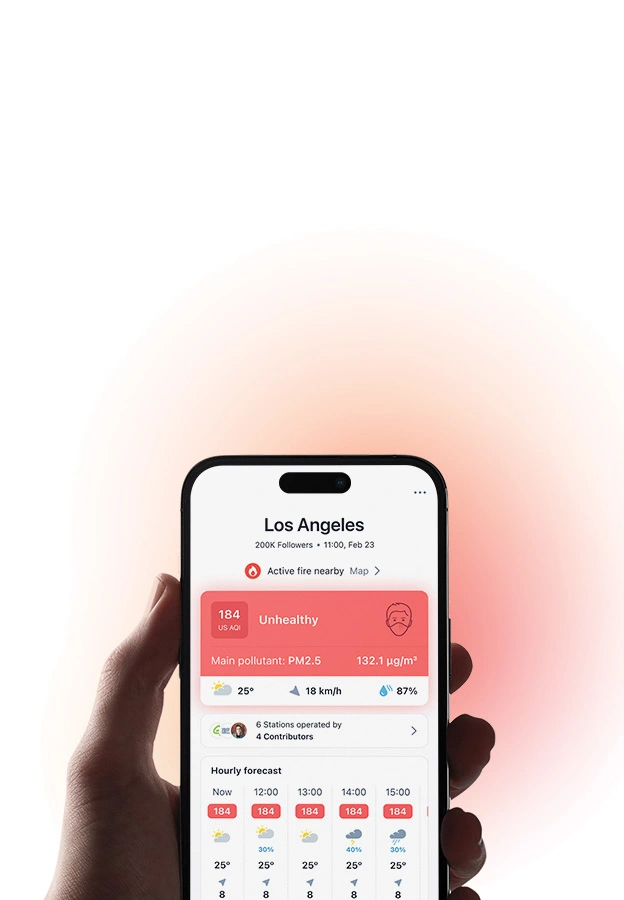


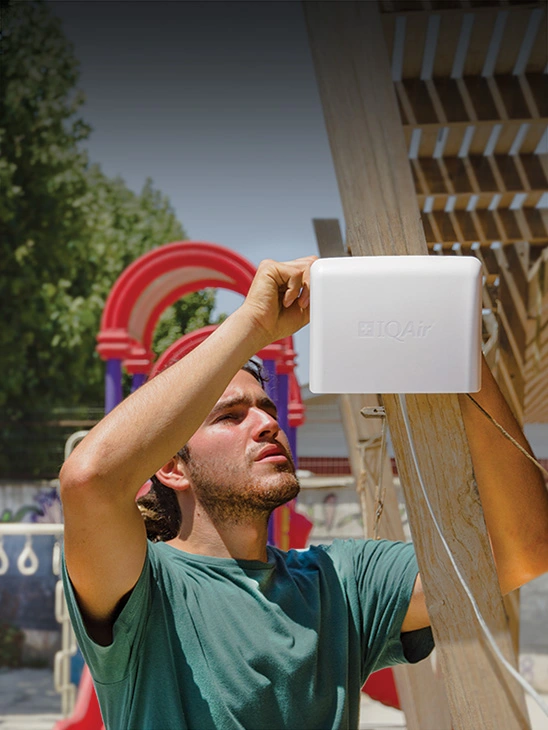
Measure your own air quality
Get a monitor and contribute air quality data in your city.


Learn more about air pollution in Chiang Saen
What is the current air quality in Chiang Saen?
The current air quality in Chiang Saen is considered moderate. Air quality is acceptable for most people, though sensitive individuals may experience mild symptoms such as coughing or shortness of breath.
Does Chiang Saen have a poor level of air quality?
Chiang Saen, located in northern Thailand within Chiang Rai province, is an area that has an important presence in the trade conducted via the Mekong river, mainly on an international level due to its location and close proximity to other South East Asian countries. Looking at the current levels of air quality coming in on record, it can be seen that Chiang Saen is subject to some extreme fluctuations in air quality. This is due to a number of polluting reasons, with the main ones being discussed in the following question.
When reviewing the levels of air pollution on record, Chiang Saen has sporadic readings that can range from extremely clean and representing a great quality of air, all the way over to dangerously polluted. These times of higher pollution would have the atmosphere in Chiang Saen permeated with smoke and haze, along with smog and hazardous clouds of particulate matter, all of which can cause great damage to those that inhabit the area, as well as those just visiting or passing through.
People with pre-existing health conditions, compromised or weak immune systems as well as other vulnerable demographics should take care in order to reduce their exposure to these high levels of pollution. Such elevations in pollution can be followed via air quality maps present on the IQAir website, as well as on the AirVisual app. In order to reduce the inhalation of harmful materials during these bouts of heavy air contamination, individuals can resort to measures such as wearing fine particle filtering masks (preferably of the higher quality variety) as well as avoiding outdoor activity or strenuous exercise.
In May of 2021, Chiang Saen presented with a US AQI reading of 25, an extremely clean reading that fell within the ‘good’ air quality ratings bracket for that particular time in which it was taken. As mentioned previously, the air quality can drop to these very appreciable readings, indicating that the air is free from large amounts of both chemical or particle contamination (with both the fine (PM2.5) and coarse (PM10) varieties of particulate matter being taken into consideration).
However, it can be seen that within a single day, the US AQI levels went up to highs of 53, 68 and 73, all of which would fall into the higher end of the ‘moderate’ air pollution bracket. Whilst these still pale in comparison to some of the readings taken from years past (which will also be discussed in short), they once again show the temperamental nature of the pollution levels within Chiang Saen.
Why does Chiang Saen have polluted air?
Looking back at some of the previous years of air pollution on record, it can be seen that Chiang Saen came in with an extremely poor placing in 2020. Using the PM2.5 count as a way of measuring the pollution levels (with PM2.5 referring to any particles that are 2.5 micrometers or less in diameter, representing a huge danger to the health of anyone who breathes them, due to both the size and the large variety of materials that they are comprised of), one can see that Chiang Saen came in with a yearly PM2.5 average of 43.7 μg/m³ over the course of 2020, based on an average calculated from all the months of the year.
This reading placed Chiang Saen in 2nd place out of all cities ranked in Thailand over that year, as well as in 157th place out of all cities ranked worldwide. This is an extremely high reading, in the upper reaches of the worlds most polluted cities (and significantly worse than the reading taken in 2019, which came in at a still polluted but much better number of 24.4 μg/m³).
In order to garner so much polluted air and accumulations of hazardous materials on the ground level as well as the atmosphere, Chiang Saen is subject to some main sources of pollution. These include ones such as fumes and emissions from vehicles, as well as emissions from factories, power plants and other similar industrial areas, essentially any area or facility that has a form of combustion taking place (particularly when fossil fuels such as diesel or coal are utilized).
However, the most damaging aspect of air contamination within northern Thailand is from fires started both locally as well as from smoke drifting across the borders (typically from neighboring countries such as Myanmar), whereby these huge clouds can sit over a city and cause massive elevations to the PM2.5 count, as well as bringing in numerous other pollutants. Lack of strong prevailing winds to blow these accumulations out are also a strong contributor to the situation, and as such, with these farmland and forested area fires continuing, Chiang Saen and indeed many cities within the region will continue to see extremely poor levels of air pollution as a result.
What are some of the pollutants found in the air within Chiang Saen?
Some of the main pollutants that one would find in the air would be ones such as nitrogen dioxide (NO2) and sulfur dioxide (SO2). Ozone (O3) would also be highly prevalent, particularly during the sunnier months of the year.
Other pollutants would be ones such as black carbon (the main component of soot) and a variety of volatile organic compounds, or VOCs. The burning of organic material can also release polycyclic aromatic hydrocarbons, as well as chemicals that fall under the VOC bracket such as benzene, toluene, acrolein and formaldehyde.
When do air pollution levels reach their highest in Chiang Saen?
Observing the data collected over the course of 2020, one can see clearly the months that had the highest pollution levels. January through to April had the highest readings, coming in at 43.8 μg/m³, 67.9 μg/m³, 204.2 μg/m³ and 105.5 μg/m³ respectively.
This demonstrated that March was the most polluted month of the year by a significant amount, with its reading of 204.2 μg/m³ putting it in the higher end of the ‘very unhealthy’ air quality bracket (150.5 to 250.4 μg/m³ required).
When is the air quality safe to breathe in Chiang Saen?
After the extremes of air pollution seen in the earlier months of the year, Chiang Saen dropped its air pollution levels down to some surprisingly clean readings. This demonstrates that if such fires and other highly destructive practices were to be halted, the air quality would become of exceptional quality very quickly.
The months of June through to October all came in with the best air quality readings, with PM2.5 numbers of 9.3 μg/m³, 7.5 μg/m³, 7.3 μg/m³, 10.5 μg/m³ and 9.2 μg/m³ respectively. This displayed that four months out of the year fell within the WHO's target goal for the best quality of air at 10 μg/m³ or less. August displayed the cleanest and thus safest level of air quality with its reading of 7.3 μg/m³, followed closely by July.