


 Add
AddAir quality in Champaign
Air quality index (AQI⁺) and PM2.5 air pollution in Champaign • 7.2K Followers • 14:00, Aug 12 Local time
22
US AQI⁺Good

Main pollutant:
PM2.5
4.1 µg/m³

22°

6 km/h

82 %
Hourly forecast
Champaign air quality index (AQI⁺) forecast


Daily forecast
Champaign air quality index (AQI⁺) forecast
| Today | 28 |  | 29° 20° |  35 km/h | 85% |
| Thu | 51 | | 27° 21° | 14 km/h | 85% |
| Fri | 61 | | 32° 24° | 18 km/h | 83% |
Air pollutants
What is the current air quality in Champaign?

PM2.5 concentration currently meets the WHO annual PM2.5 guideline.
Health recommendations
 Enjoy outdoor activities |
 Open your windows to bring clean, fresh air indoors Get a monitor |
Pollen
What is the pollen count in Champaign today?
Index

Moderate
 Tree None | 0% |
 Grass Low | 25% |
 Weed Moderate | 50% |
Source:
wetter.comHealth recommendations
Enjoy outdoor activities |
Open your windows to bring clean, fresh air indoors Get a monitor |
Pollen
What is the pollen count in Champaign today?
Index
Moderate
Tree None | 0% |
Grass Low | 25% |
Weed Moderate | 50% |
Source:
wetter.comMost polluted locations near Champaign
Worldwide AQI⁺ ranking
Station ranking
Real-time AQI⁺ station ranking for stations in Champaign

City ranking
Real-time USA AQI⁺ city ranking
Historic air quality near Champaign
History
Historic air quality graph for Champaign
Historic air quality near Champaign
History
Historic air quality graph for Champaign
Most polluted locations near Champaign
Worldwide AQI⁺ rankingStation ranking
Real-time AQI⁺ station ranking for stations in Champaign
City ranking
Real-time USA AQI⁺ city ranking



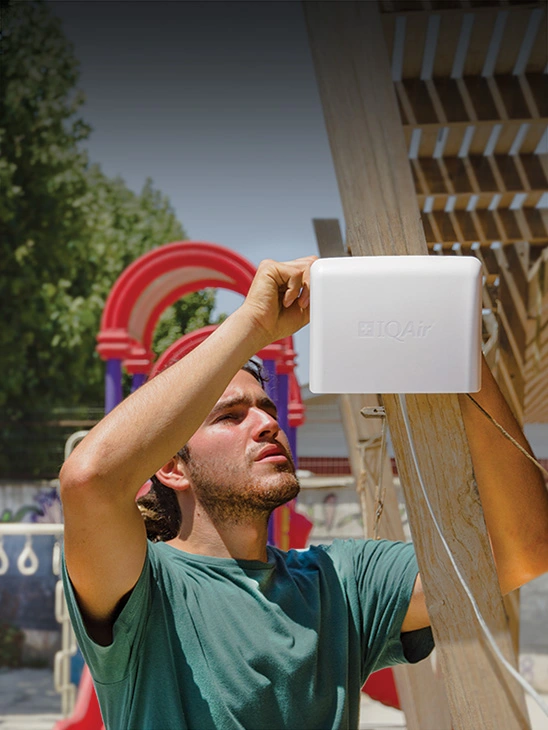
Measure your own air quality
Get a monitor and contribute air quality data in your city.


Learn more about air pollution in Champaign
What is the current air quality in Champaign?
The current air quality in Champaign is considered good. Air pollution levels are low and there are no expected health risks, making it a good time to enjoy normal outdoor activities.
What is the current level of air pollution in Champaign?
Champaign is a city in Champaign County, Illinois, United States. According to the 2019 census, the city had approximately 90,000 residents.
During July 2021, Champaign was experiencing a period of “Moderate” air quality with a US AQI reading of 84. This United States Air Quality Index number is an internationally used set of metrics supported by the World Health Organization (WHO) and is used to compare the quality of air in different cities throughout the world using comparable standards. It is calculated by using the levels of the six most commonly found pollutants. If figures for all six are not available, then a figure is calculated using what data there is. In the case of Champaign, only the pollutant PM2.5 was recorded which was 27.8 µg/m³. This is almost three times higher than the WHO suggested safe level of 10 µg/m³.
When air pollution is classified as “Moderate” the given advice is to close doors and windows to prevent the ingress of more dirty air into the rooms. Those who are sensitive to poor air quality should try to remain indoors as much as possible until the quality improves. The table published at the top of this page should help with that decision. The wearing of a quality face mask will help in the situation when going outdoors is necessary.
Does the quality of air differ throughout the year in Champaign?
Air quality is very volatile as it can be affected by many variables such as wind speed and direction, the seasons of the year.
Looking back at the published figures from IQAir.com for 2020, it can be seen that the poorest air quality was during December when the reading was 14.4 µg/m³ which categorized it as being “Moderate”. Figures between 12.1 and 35.4 µg/m³ qualify for this rating. The months of January and February returned readings of 11.8 µg/m³ and 10.3 µg/m³ respectively which fell into the “Good” category. The remaining nine months of the year saw Champaign achieve the WHO target figure of 10 µg/m³ or less. May had a particularly low reading of just 6.1 µg/m³, making it the best month of the year for good quality air.
Historically, records for air pollution were first kept in 2017 when, again, Champaign achieved the target figure of 9.1 µg/m³. An even lower figure was seen during 2018 when the annual average was 8.6 µg/m³. 2019 returned a slight decline with a recorded figure of 9.9 µg/m³ before a better one for 2020 of 9.4 µg/m³. However, this may not be a true reflection of reality because of the restrictions imposed due to the COVID-19 pandemic. Many vehicles were no longer used as the drivers were furloughed and not required to commute to and from work on a daily basis. There were also many factories and other non-essential production units which were temporarily closed in an attempt to prevent the spread of the virus.
What is the source of air pollution in Champaign?
Cars, trucks, and buses are a significant source of air pollution in Illinois. Exhaust pipe emissions caused by burning gasoline and diesel are a source of climate-changing emissions such as carbon dioxide and also compounds that directly and indirectly lead to airborne particulate matter. In addition, vapors from gasoline refueling and vehicles’ fuel systems add compounds to the atmosphere that are transformed into further particulate matter pollution.
There are many sources of indoor air pollution in any home or office. These include combustion sources such as oil, gas, kerosene, coal, wood, and tobacco products; building materials and furnishings as diverse as deteriorated, asbestos-containing insulation, wet or damp carpet, and furniture made of certain pressed wood products; products for household cleaning and maintenance, personal care, or hobbies; central heating and cooling systems and humidification devices; and outdoor sources such as radon, pesticides, and outdoor air pollution that seep into the home or office.
Some sources, such as building materials, furnishings, and household products such as air fresheners, release pollutants more or less continuously. Other sources, related to activities carried out in the home, release pollutants intermittently. These include smoking, the use of unvented or malfunctioning stoves, furnaces, or space heaters, the use of solvents in cleaning and hobby activities, the use of paint strippers when redecorating, and the use of cleaning products and pesticides in housekeeping. High pollutant concentrations can remain in the air for long periods after some of these activities even though they are almost undetectable to human senses.
Environmental tobacco smoke (ETS) is the mixture of smoke that comes from the burning end of a cigarette, pipe, or cigar, and smoke exhaled by the smoker. It is a complex mixture of over 4,000 compounds, more than 40 of which are known to cause cancer in humans and animals and many of which are strong irritants. ETS is often referred to as "second-hand smoke" and exposure to ETS is often called "passive smoking".
Champaign and the surrounding area host a large number of industrial operations for a relatively small-sized town, and there is a multitude of potential pollution sources. There are five asphalt companies, a coal-fired power plant, three steel plating and metal manufacturing operations, two plastic manufacturers and one polystyrene manufacturer, as well as industrial-scale agribusiness operations surrounding the town that use pesticides.
Can anything be done to reduce the effects of air pollution in Champaign?
For common pollutants, the law requires the Environmental Protection Agency (EPA) to establish health-based national air quality standards to protect people with an "adequate margin of safety." Congress called for EPA to issue national limits for toxic air emissions from each category of major sources, and for certain categories of smaller, area sources. These standards ensure that facilities throughout the nation control their toxic emissions.
The Clean Air Act was introduced throughout the States in 1970 and it has been protecting the residents as much as possible since then. Clean Air Act programs have lowered levels of six common pollutants, which are as follows: particles PM2.5 and PM10, ozone, lead, carbon monoxide, nitrogen dioxide and sulfur dioxide, as well as numerous toxic pollutants.
From 1970 to 2017, aggregate national emissions of the six common pollutants alone dropped an average of 73 percent whilst gross domestic product grew by 324 percent. The emissions reductions have led to dramatic improvements in the quality of the air that we breathe.
These air quality improvements have helped many areas of the country to meet national air quality standards which have been set to protect public health and the environment. For example, all of the 41 areas that had unhealthy levels of carbon monoxide in 1991 now have levels that meet the health-based national air quality standard. A major reason is that the motor vehicle fleet is much cleaner because of Clean Air Act emissions standards for new motor vehicles.
Changing from coal and gas power stations and diesel generators to solar, wind and hydropower will reduce the amount of airborne pollution which is created by the incomplete combustion of fossil fuels.
Local authorities are encouraging walking, cycling and public transport over cars in urban areas and ultimately, a shift to electric vehicles.
Energy efficiency of homes needs to be redressed to reduce heating needs and avoid coal and wood burning in older appliances which are inefficient and often highly polluting due to old technology.
The open burning of organic residue is discouraged as the smoke and other pollutants are very difficult to control and can be carried for many miles by the wind which affects other areas or even other states.
Other policies to reduce air pollution are the retrofitting of buses, heavy goods vehicles and taxis, which is the next most effective option. Municipally owned vehicles should show an example of what should be done.
Scrappage schemes for older, polluting vehicles and subsidies for electric vehicles can also help reduce pollution.
What are the health effects of these combustion products?
Carbon monoxide (CO) is a colorless, odorless gas that interferes with the delivery of oxygen throughout the body. When concentrations are high it can cause unconsciousness, and in extreme cases, death. Lower concentrations can cause a range of symptoms from headaches, dizziness, weakness, nausea, confusion, and disorientation, to fatigue in healthy people and episodes of increased chest pain in people with chronic heart disease. The symptoms of carbon monoxide poisoning are sometimes confused with the flu or food poisoning. Fetuses, infants, elderly people, and people with anemia or with a history of heart or respiratory disease can be especially sensitive to carbon monoxide poisoning.
Nitrogen dioxide (NO2) is a colorless, odorless gas that irritates the mucous membranes in the eyes, nose, and throat and may cause shortness of breath after exposure to high concentrations or prolonged periods. There is evidence that high concentrations or continued exposure to low levels of nitrogen dioxide increases the risk of respiratory infection; there is also evidence from animal studies that repeated exposures to elevated nitrogen dioxide levels may lead, or contribute, to the development of lung disease such as emphysema. People at particular risk from exposure to nitrogen dioxide include children and individuals with asthma and other respiratory diseases.
Particles, released when fuels are incompletely burned, can lodge in the lungs and irritate or damage lung tissue. A number of pollutants, including radon and benzo(a)pyrene, both of which can cause cancer, attach to small particles that are inhaled and then carried deep into the lungs.
Particulate matter is considered the air pollutant of greatest concern to the health of the population. Research has shown that exposure to PM can lead to increased days lost from work or school, visits to the doctor’s surgery, hospital confinement and deaths.
Both short and long-term exposures to PM can lead to the worsening of heart and lung disease. It can also cause premature death, particularly among people who have a higher risk of being affected by particle pollution and those with pre-existing respiratory problems.
What detrimental effects on human health does the air in Champaign have?
The health effects of air pollution are serious because one-third of deaths from stroke, lung cancer and heart disease are due to air pollution. This is having an equivalent effect to that of smoking tobacco, and much higher than, say, the effects of eating too much salt.
Microscopic pollutants in the air such as PM2.5 and PM10 can slip past our body’s defenses, penetrating deep into our respiratory and circulatory system, damaging our lungs, heart and brain. The smaller PM2.5 pollutant is small enough to bypass the body’s defense mechanism and travel deep inside the lungs where they are able to pass into the bloodstream and travel around the body.
Air pollution is closely linked to climate change which is the main driver of climate change is fossil fuel combustion which is also a major contributor to air pollution - and efforts to mitigate one can improve the other.
Long-term exposure to current ambient PM concentrations may lead to a marked reduction in life expectancy. The increase in cardiopulmonary and lung cancer mortality are the main reasons for the reduction in life expectancy. Reduced lung functions in children and adults leading to asthmatic bronchitis and chronic obstructive pulmonary disease (COPD) are also serious diseases that induce lower quality of life and reduced life expectancy.
Ground-level ozone is produced as a result of a chemical reaction between oxides of nitrogen and VOCs emitted from natural sources and/or due to human activities. They increase rapidly under ultraviolet light emitted by the sun. Ozone is believed to have a plausible association with an increased risk of respiratory diseases, particularly asthma. The levels are particularly bad during periods of long, hot sunny weather. The worst time of day being the first few hours of the afternoon when the sunlight is at its strongest.
Sulfur dioxide is a colorless, highly reactive gas, which is considered as an important air pollutant. It is generally emitted from fossil fuel consumption, natural volcanic activities, and industrial processes. Sulfur dioxide is very harmful for plant life, animal, and human health. People with lung disease, children, older people, and those who are more exposed to it are at higher risk of skin and lung diseases. The major health concerns associated with exposure to high concentrations of sulfur dioxide include respiratory irritation and dysfunction, and also aggravation of the existing cardiovascular disease. It is predominantly absorbed in the upper airways. As a sensory irritant, it can cause bronchospasms and mucus secretion in humans.