


 Add
AddAir quality in Minneapolis
Air quality index (AQI⁺) and PM2.5 air pollution in Minneapolis • 94K Followers • 00:00, Oct 03 Local time
52
US AQI⁺Moderate

Main pollutant:
PM2.5
9.8 µg/m³

11°

10 km/h

80 %
Hourly forecast
Minneapolis air quality index (AQI⁺) forecast


Daily forecast
Minneapolis air quality index (AQI⁺) forecast
| Today | 24 |  80% | 15° 11° |  22 km/h | 87% |
| Sun | 14 |  | 15° 9° | 21 km/h | 74% |
| Mon | 12 |  | 19° 10° | 12 km/h | 42% |
Air pollutants
What is the current air quality in Minneapolis?

PM2.5 concentration is currently 2 times the World Health Organization annual PM2.5 guideline value.
Health recommendations
 Sensitive groups should reduce outdoor exercise |
 Close your windows to avoid dirty outdoor air Get a monitor |
 Sensitive groups should wear a mask outdoors Get a mask |
 Sensitive groups should run an air purifier Discover Atem car |
Pollen
What is the pollen count in Minneapolis today?
Index

Low
 Tree None | 0% |
 Grass None | 0% |
 Weed Low | 25% |
Source:
wetter.comHealth recommendations
Sensitive groups should reduce outdoor exercise |
Close your windows to avoid dirty outdoor air Get a monitor |
Sensitive groups should wear a mask outdoors Get a mask |
Sensitive groups should run an air purifier Discover Atem car |
Pollen
What is the pollen count in Minneapolis today?
Index
Low
Tree None | 0% |
Grass None | 0% |
Weed Low | 25% |
Source:
wetter.comMost polluted locations near Minneapolis
Worldwide AQI⁺ ranking
Station ranking
Real-time AQI⁺ station ranking for stations in Minneapolis

City ranking
Real-time USA AQI⁺ city ranking
Historic air quality near Minneapolis
History
Historic air quality graph for Minneapolis
Historic air quality near Minneapolis
History
Historic air quality graph for Minneapolis
Most polluted locations near Minneapolis
Worldwide AQI⁺ rankingStation ranking
Real-time AQI⁺ station ranking for stations in Minneapolis
City ranking
Real-time USA AQI⁺ city ranking



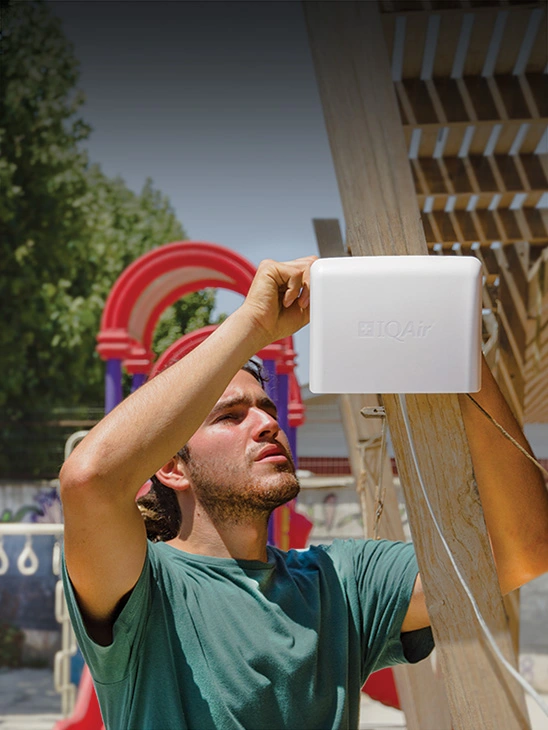
Measure your own air quality
Get a monitor and contribute air quality data in your city.


Learn more about air pollution in Minneapolis
What is the current air quality in Minneapolis?
The current air quality in Minneapolis is considered moderate. Air quality is acceptable for most people, though sensitive individuals may experience mild symptoms such as coughing or shortness of breath.
How polluted is the air in Minneapolis?
Between 2017 and 2019, Minneapolis air quality fared well for the most stringent government air quality measures: daily ozone, daily PM2.5, and annual PM2.5.1 Historical trends further demonstrate that the frequency and severity of ozone and particulate pollution have shown improvements in recent years.
PM2.5 pollution
PM2.5 is suspended particulate matter (PM) measuring less than 2.5 micrometers in diameter. Since size is its defining characteristic, PM2.5 can include chemicals, dust, dirt, smoke, soot, pathogens, and other particles of various compositions.
Often, the substance of particulate matter is localized to the area’s emission sources. As a result, some PM2.5 samples may be more dangerous than others, but all have the potential for far-reaching health consequences – because PM2.5 is so small, it can penetrate into the bloodstream when inhaled and travel to all of the body's organs.
In Minneapolis, PM2.5 pollution is the pollutant of greatest concern. While the city meets government standards for both short-term and annual PM2.5, it is important to note that no level of PM2.5 has been shown to be free of health impact. Moreover, PM2.5 levels in the city can exceed the World Health Organization’s (WHO) more stringent standards. The WHO targets an annual PM2.5 concentration no greater than 10 µg/m3.2 In 2020, both January and December averaged monthly concentration values above this standard at 11.2 µg/m3 and 12.1 µg/m3 respectively.
On an annual basis, Minneapolis averaged a PM2.5 concentration of 8.4 µg/m3, ranked as the 6th most polluted city in the state of Minnesota out of 22 cities. The 5 cities that averaged a higher PM2.5 concentration than Minneapolis included:
- Minnetrista air quality: 9.5 µg/m3 (22 miles away)
- Saint Paul air quality: 9.1 µg/m3 (8.7 miles away)
- Stillwater air quality: 9.1 µg/m3 (22.3 miles away)
- Savage air quality: 8.9 µg/m3 (9.6 miles away)
- Rochester air quality: 8.8 µg/m3 (76.8 miles away)
Ozone
Ozone is a highly reactive gas pollutant with a high potential for harm when inhaled. It’s known as a “secondary air pollutant” because it is primarily formed in the air (rather than by ground-based sources) when primary pollutants, such as nitrogen dioxide (NO2) and volatile organic compounds (VOCs), react in the presence of heat and UV radiation.
Typically, temperatures above 84°F initiate this chemical reaction between precursor pollutants. In Minneapolis, only July and August commonly experience average temperatures around this threshold, so high ozone events are generally rare.3 Between 2017 and 2019, zero days in Minneapolis averaged ozone levels above 70 ppb.
Does the air quality in Minneapolis vary throughout the year?
Air pollution in Minneapolis exhibits seasonal changes. PM2.5 concentrations are roughly two times higher in the winter than in the summer.
To understand this trend, it is important to recognize that measured Minneapolis air quality levels are the result of both local and transported emissions as well as weather conditions that dictate pollution dispersion.
In the winter, the combination of seasonal emissions and weather conditions not ideal for pollution dispersion can elevate PM2.5 concentrations.
Winter-specific emissions in Minneapolis include:
- increased car idling for heating and defrosting
- increased wood burning for heating and atmosphere
- increased energy consumption for heat and light in homes and offices during long winter nights
Weather conditions that are not ideal for pollution dispersion include:
- calmer winds
- less frequent precipitation
- cool air inversions when cold, ground-level air (created by frozen or snow-covered ground) is trapped beneath a denser warm air layer
While 10 months during the year in Minneapolis typically meet WHO PM2.5 standards (< 10 µg/m3), these standards are frequently breached during December and January (as occurred in 2020) when increased emissions and pollution-trapping weather conditions cause PM2.5 to accumulate faster and reach higher concentration levels.
Where does the air pollution in Minneapolis come from?
Minneapolis is the most populous city in the state of Minnesota with a population of 430,000 residents.4 The greater metropolitan area, commonly referred to as the “Twin Cities,” also includes Saint Paul, the state capital located just 9 miles to the west, and spans seven counties: Anoka, Carver, Dakota, Hennepin, Ramsey, Scott, and Washington. A total of 3,099,000 residents live within this Twin Cities region, accounting for 55% of the state’s total population.
As is common in large urban areas, the majority of Minneapolis’s air pollution originates from gas-powered motor vehicles and domestic sources within the great region.
The Minnesota Pollution Control Agency estimates that state-wide emissions can be broken down into the following categories:5
- 24 percent: on-road vehicles, such as gas-powered cars and trucks
- 20 percent: off-road vehicles, such as construction and agricultural equipment
- 35 percent: neighborhood sources, such as dry cleaners, domestic heating, BBQs, and outdoor fires
- 21 percent: industrial facilities, including factories and power plants
Wildfire smoke blown in from Canada and the Pacific Northwest can also deliver dense plumes of PM2.5. These emissions are typically sporadic and temporary but can cause severe short-term spikes in Minneapolis air pollution levels. Of the 26 air quality alerts since 2015, 14 have been attributed to wildfire smoke.6
Is anything being done to improve the air quality in Minneapolis?
In Minnesota, motor vehicles are the leading source of both air pollution emissions and greenhouse gas emissions. Managing this emission source is becoming easier as more “green” transportation options, such as electric vehicles (EVs) and other vehicles powered by alternative fuel like hydrogen, become increasingly affordable and available to the wider public. This represents a major opportunity for Minneapolis and cities around the U.S. to reduce their air pollution levels.
In 2020, Minneapolis made strides towards 100% EV adoption, including:7
- Electric vehicle (EV) infrastructure boost: $15 million for electric vehicles (EVs) and EV infrastructure, including an electric school bus pilot and fast-charging corridors.
- Policy progress to boost EV adoption: Tax incentives, rebates, and $2 million in grants for clean transportation technologies.
These measures intend to achieve the goal of powering 20 percent of light-duty (personal) cars in the state with electricity by 2030.
How is human health affected by the poor air quality in Minneapolis?
Every year, 200,000 Americans die from breathing polluted air.8 Even in cities where air quality is generally deemed safe, air pollution can still cause premature mortality and illness. A 2015 study conducted by the Minnesota Pollution Control Agency (MPCA) found that 6 to 13 percent of Twin Cities deaths were caused by air pollution that meets federal standards.9 Moreover, other health outcomes can still be severe, including:
- asthma attacks
- lung tissue scarring and reduced lung function
- heart arrhythmias
- cancer
- heart attacks
- stroke
In Hennepin County, the number of residents living with sensitivities that predispose them to more acute health impacts from air pollution include:
- Pediatric asthma: 14,143 residents
- Adult asthma: 82,545 residents
- COPD: 41,040 residents
- Cardiovascular disease: 65,666 residents
- Age under 18: 276,136 residents
- Age over 65: 183,653 residents
Sometimes, localized emission sources can fail to be captured by city-wide air quality monitors. Traffic pollution, for example, has been found to cause asthma attacks and a broader range of health impacts. People within 300 to 500 meters of a highway have been found to be most impacted.
In the same vein, numerous studies have observed that the burden of air pollution is not evenly shared. People of color (Hispanics, Asians, American Indians/Alaska Natives and especially African Americans) statistically bear a greater health burden when it comes to air quality because they are 61 percent more likely to live in a county with a failing grade for at least one pollutant.1 This is the result of decades of unjust zoning that has, for example, placed airports, highways, and polluting industrial facilities such as factories closer to lower-income communities that more likely to be composed of a diversity of minority groups.
A study of the East Phillips area has revealed that this trend is consistent in the city of Minneapolis. Decades ago, East Phillips was known as the Arsenic Triangle after a pesticide plant contaminated the area.10 Today, local pollution sources include the Bituminous Roadways asphalt plant, Smith Foundry, and surrounding highways. Between 2019 and 2020 alone, average annual PM2.5 has increased in East Phillips by 25 percent.
Four-fifths of East Phillips residents are people of color – 38.2% are Hispanic or Latino, 26.4% are Black or African American, 9.8% are Native American, and at least 5% are Asian, with White residents only comprising 19.1% of the total area population.11 State legislator Karen Clark has thus deemed the issue an environmental justice issue that must urgently be addressed. She has worked to pass legislation that requires new operations in the neighborhood to account for the health impacts of pollution on residents and is now working to uphold these standards.
+ Article Resources
[1] American Lung Association. (2020). State of the air – 2020.
[2] World Health Organization. (2020). Air quality guidelines – global update 2005.
[3] Current Results. (2020). Minneapolis temperatures: averages by month.
[4] Metropolitan Council. (2019, April 18). Steady growth continues in metro area.
[5] Minnesota Pollution Control Agency (MPCA). (2020). Sources of air pollution.
[6] Minnesota Pollution Control Agency (MPCA). (2020). Smoky summers the new normal?
[7] Bocklund K. (2021). Looking back: progress made toward transportation electrification in Minnesota in 2020. Drive Electric Minnesota.
[8] Chu J, et al. (2013). Study: Air pollution causes 200,000 early deaths each year in the U.S. MIT News Office.
[9] Minnesota Pollution Control Agency (MPCA). (2015). Life and breathe: how air pollution affects the Twin Cities.
[10] Jones J. (2021, April 28). Meet Karen Clark, Minnesota’s trailblazing pollution legislator. Mpls St. Paul.
[11] East Phillips neighborhood data. (2021). Minnesota Compass.
Where is the cleanest air quality in Minneapolis?
- Northeast Minneapolis station2
- City of Minneapolis Community Air Monitoring Project 198
- 12 E 55th St14
- 199-1 Arthur Pl SE14
- Harrison15
- 2193-2197 E 58th St16
- Seward-Franklin16
- Chowen Triangle Station17
- W Minnehaha Pkwy17
- 3501-3507 E 45th St18
- Washington Street NE22
- 36ish & Hiawatha24
- Elliot Park28
- NE 36th Ave31
- City of Minneapolis Community Air Monitoring Project 932
- 1264-1322 23rd Ave NE33
- 1800-1820 Franklin Ave SE34
- 104 E 56th St35
- Logan Park37
- I-35W at Mississippi River39
- Lynnhurst at Creek40
- Minnehaha40
- 2821 W 44th St41
- City of Minneapolis community air monitoring project 3341
- 2199-2183 Douglas Ave42
- 1216-1294 Lakeview Ave S43
- 2399-2305 Irving Ave S44
- East Isles44
- 1699-1601 10th Ave S47
- 241-223 St Albans St N47
- 1500 7th St. S48
- 3100-3198 29th Ave S48
- 550-598 W 27th St48
- 3300-3398 County Rd 15251
- 5399-5301 Pleasant Ave51
- 1299-1251 W 27th St52
- 2522 County Rd 2352
- 26th Ave NE52
- 610 W 29th St52
- Bancroft52
- 12th Avenue53
- 1601-1647 E 51st St53
- 4928 38th Ave S53
- City of Minneapolis Community Air Monitoring Project 2053
- 1299-1251 N 29th Ave54
- 98-70 8th Ave NE54
- Columbia Park (Backyard)54
- Minneapolis - Near R54
- 900-910 N 42nd Ave56
- Minneapolis - Lowry 56
- Minneapolis - Pacifi56
- Ventura Village56
- 3758 Emerson Ave N57
- 462-440 Central Ave W58
- 699-649 W 41st St58
- Minneapolis - Bottin58
- Minneapolis - East P58
- 1801-1809 E 27th St59
- 46th St E & 3rd Ave S59
- 910-900 E 32nd St59
- Minneapolis - Anders59
- Someone Left Me Outside!60
- 3301-3345 E 36th St62
- Linden Hills62
- Lyndale & 36th63
- 5159 N Humboldt Ave64
- City of Minneapolis Community Air Monitoring Project 765
- Lake Harriet United Methodist Church65
- City of Minneapolis Community Air Monitoring Project 7766
- 2600-2698 36th Ave N69
- Hiawatha76
- Minnehaha Creek/Lake Harriet78
- 2301-2343 E 41st St79
- Alie Micka87