


 Add
AddAir quality in Libby
Air quality index (AQI⁺) and PM2.5 air pollution in Libby • 2.9K Followers • 13:00, Aug 12 Local time
121
US AQI⁺Unhealthy for sensitive groups

Main pollutant:
PM2.5
43.8 µg/m³

25°

3 km/h

40 %
Hourly forecast
Libby air quality index (AQI⁺) forecast


Daily forecast
Libby air quality index (AQI⁺) forecast
| Today | 115 | | 26° 18° |  21 km/h | 44% |
| Thu | 73 |  | 22° 16° | 16 km/h | 60% |
| Fri | 75 | | 26° 14° | 7 km/h | 54% |
Air pollutants
What is the current air quality in Libby?

PM2.5 concentration is currently 8.8 times the World Health Organization annual PM2.5 guideline value.
Health recommendations
 Reduce outdoor exercise |
 Close your windows to avoid dirty outdoor air Get a monitor |
 Sensitive groups should wear a mask outdoors Get a mask |
 Run an air purifier Get an air purifier |
Pollen
What is the pollen count in Libby today?
Index

None
 Tree None | 0% |
 Grass None | 0% |
 Weed None | 0% |
Source:
wetter.comHealth recommendations
Reduce outdoor exercise |
Close your windows to avoid dirty outdoor air Get a monitor |
Sensitive groups should wear a mask outdoors Get a mask |
Run an air purifier Get an air purifier |
Pollen
What is the pollen count in Libby today?
Index
None
Tree None | 0% |
Grass None | 0% |
Weed None | 0% |
Source:
wetter.comMost polluted locations near Libby
Worldwide AQI⁺ ranking
Station ranking
Real-time AQI⁺ station ranking for stations in Libby

City ranking
Real-time USA AQI⁺ city ranking
Historic air quality near Libby
History
Historic air quality graph for Libby
Historic air quality near Libby
History
Historic air quality graph for Libby
Most polluted locations near Libby
Worldwide AQI⁺ rankingStation ranking
Real-time AQI⁺ station ranking for stations in Libby
City ranking
Real-time USA AQI⁺ city ranking


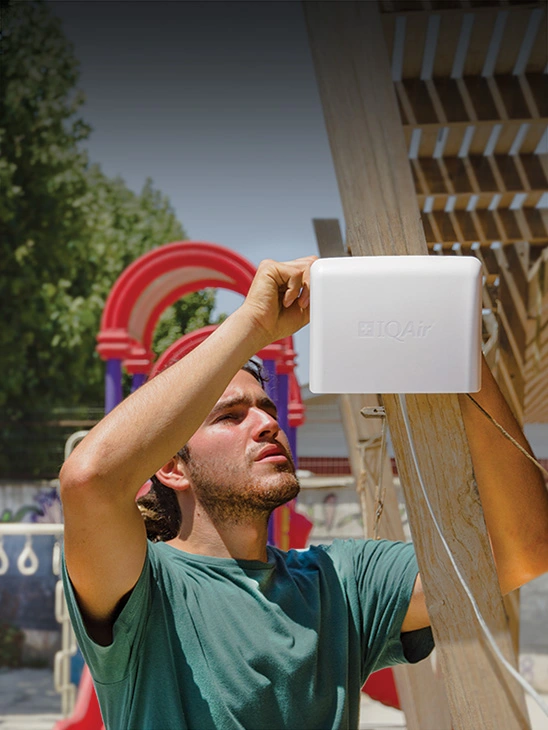
Measure your own air quality
Get a monitor and contribute air quality data in your city.


Learn more about air pollution in Libby
What is the current air quality in Libby?
The current air quality in Libby is considered unhealthy for sensitive groups. Children, older adults, and people with heart or lung conditions may experience health effects, while the general public is less likely to be affected.
What is the level of air pollution in Libby now?
Libby is a city in northwestern Montana, United States and the county seat of Lincoln County. According to a 2010 census, Libby had an estimated population of approximately 2,600 people. It is located at the confluence of the Kootenay River and Libby Creek, between the Cabinet Mountains to the south and the Purcell Mountains to the north.
During the middle of 2021, Libby was experiencing a period of “Moderate” air quality with a US AQI reading of 94. This is an internationally recognized set of metrics used to compare air quality in cities around the world. It is calculated using measurements from six of the most prevalent pollutants, but if data is not available for all six, then a calculation is made using what information there is. The main pollutant which was measured in Libby was that of PM2.5 with a recorded level of 32.7 µg/m³. From this it is clear to see that the level of pollution was over three times that as recommended by the World Health Organisation’s (WHO) target figure of 10 µg/m³ or less.
With a level such as this, the advice is to close doors and windows to prevent more dirty air from entering the room. Those of a sensitive disposition are advised to remain indoors or if travel outside is unavoidable, then a good quality mask is recommended. The table at the top of this page will help with that decision.
Does the air quality vary much throughout the year in Libby?
Looking back at the figures published by the Swiss air monitoring company IQAir.com for 2020 it can be seen that from April until the end of August, Libby attained the target figure of less than 10 µg/m³ as suggested by the World Health Organisation (WHO). The best air quality was seen during June with a figure of 5.1 µg/m³. May was slightly worse with a figure of 5.8 µg/m³, followed by July and August which recorded a figure of 8 µg/m³ each. April showed a figure of 9.6 µg/m³ which was still within the target. The month of March returned a figure of 11.5 µg/m³ which classified it as being “Good”. During the months of January and February and again in October, November and December, Libby recorded air quality classified as being “Moderate” with figures between 12.1 and 35.4 µg/m³. The worst month of the year was September when the level reached the “Unhealthy for sensitive groups” category with a recorded figure of 42.5 µg/m³.
Historically, records have been kept since 2017 when the annual average figure was 15.1 µg/m³, followed by a slight improvement in 2018 with 14.9 µg/m³ recorded. Yet another improvement for 2019 with a 12.2 µg/m³ before a decline was noticed in 2020 with a 14.7 µg/m³ figure. However, this may not be a truly accurate reading because of the restrictions imposed due to the COVID-19 pandemic. Many vehicles were no longer used as the drivers were furloughed and not required to commute to and from work. There were also many factories and other non-essential production units which were temporarily closed in an attempt to prevent the spread of the virus.
What is the main source of air pollution in Libby?
At an elevation of 2062 feet, Libby is located in a high valley in northwestern Montana. Because of this, Libby frequently experiences atmospheric temperature inversions throughout the winter months that contribute to elevated levels of PM2.5. The winter PM2.5 concentrations are often so high that Libby exceeds the annual PM2.5 National Ambient Air Quality Standard (NAAQS) of 15 µg/m³, resulting in Libby being designated as a nonattainment area for fine particulate matter (PM2.5).
Chemical Mass Balancing (CMB) modeling results revealed that emissions from residential wood combustion were the major source of PM 2.5 throughout the winter months in Libby, contributing an average of 82 percent of the recorded PM2.5.
At certain times of the year, Libby is affected by the smoke from wildfires in northwest Montana and northern Idaho. Montana's summers are getting hotter and drier which increases the risk of wildfires. As fires increase in size and severity, and as the wildfire season lengthens, the amount of wildfire smoke increases!
Can anything be done to improve air quality in Libby?
In an effort to lower the ambient PM2.5, a large wood stove exchange program was conducted in Libby from 2005 to 2007 in which nearly 1200 old woodstoves were changed for with cleaner-burning models. Tests conducted after this campaign showed that PM2.5 levels had dropped by as much as 28 percent which proves that other communities that rely heavily on burning wood as a source of fuel in winter could also benefit from such as incentive.
A complete raft of rules and regulations have been introduced to control the burning of waste in the outside environment.
A recreation fire, not over 3ft. x 3ft. x 2ft. in size, is allowed in Lincoln County without a permit.
“Residential Burning” means the outdoor burning of leaves, clippings, prunings and gardening organic refuse originating on lands immediately adjacent to a human dwelling and burned on such lands by the property owner or his or her designee. NOTE: Burning a pile not over 4ft. x 4ft. x 3 ft. is allowed.
Since a lot of air pollution is emitted from vehicles there are several things that can be done to reduce the associated pollution. Walking, cycling, carpooling and the use of public transport are ideal ways of helping. Electric-powered vehicles must be the way forward. Keeping the car well-maintained with the correct tire pressures will also help. Turn off the engine whilst waiting in queues as an idling engine creates a hot spot. This is especially important when close to schools or other places where children gather.
Trees filter pollutants and absorb carbon dioxide. Trees also release oxygen into the atmosphere and help cool our homes. Leaves intercept and hold small particles on their surfaces such as dust, ash, pollen, and smoke and absorb gaseous air pollution. Ground-level ozone formation is reduced because air temperatures in tree-filled areas are cooler. Trees directly sequester carbon dioxide in their stems and leaves while they grow.
Gas-powered engines like those on lawnmowers and leaf or snow blowers often lack pollution control devices. It is surprising to hear that 1 hour’s use of a lawnmower produces as much pollution as a 100-mile car journey.
What is the history of vermiculite and its connection with Libby?
The story can be traced back to 1919 when companies first started mining vermiculite about seven miles from the city. It is known commercially as Zonolite and was used in a variety of construction materials, including insulation for homes and other buildings. Decades of mining the vermiculite exposed workers and residents to toxic asbestos dust.
The mine changed hands in 1963 and it was thought that the new owners knew the vermiculite was contaminated with asbestos and that it caused health complications. Altogether over 400 residents have died due to complications from asbestos exposure and there are over 3000 who are currently receiving medical care due to their related illnesses.
The mine closed down permanently in 1990 but the devastation continued until the U.S. Environmental Protection Agency intervened in 1999.
It was not only the miners who were affected by the asbestos but the city residents too. Vermiculite which was not immediately required was donated by the company to public projects in the city, such as playgrounds, backyards, gardens, roads and several other popular locations in the town. Not only was it airborne in the vicinity of the mine, but it was also now circulating the city.
What followed is the largest, longest-running asbestos clean-up project in American history. Clean-up began slowly at first as EPA workers identified the sources of contamination and began an extensive Superfund investigation. Vermiculite needed to be removed from homes and businesses and the mine site needed to be addressed.
In 2008, the mine’s former owners were ordered to pay $250 million to help cover the clean-up costs. This would continue for a further 10 years. During that period more than 8,200 properties and completed clean-ups at 3,000 sites, including businesses, yards, homes, parks and other contaminated areas. In total, over one million cubic yards of contaminated material was removed and replaced with an additional $600 million coming from federal funds. Once most of the clean-up had been completed, the Environmental Protection Agency (EPA) handed the remaining responsibility over to the Montana Department of Environmental Quality on 1st July 2020.
What detrimental effects on human health does the air in Libby have?
Wildfire smoke is made up of a complex mixture of gases and particles, including fine particulate matter (PM2.5). Unfortunately, these tiny particles easily move deep into the lungs and circulatory system. Once these particles reach the lungs and bloodstream, they can trigger inflammation and other unwanted health responses.
Smoke affects everyone differently, both physically and mentally. Healthy folks may or may not feel any immediate impacts during smoke events. Some of the symptoms which are associated with smoke inhalation are coughing, having trouble breathing, stinging or itchy eyes, a headache, general lack of energy changes to appetite and sleep patterns and sometimes a feeling of irritability and depression.
For some individuals, smoke exposure can increase the risk of respiratory illness and infection such as bronchitis, asthma, pneumonia and Chronic Obstructive Pulmonary Disease. Others may experience cardiovascular issues and even heart attacks.
While all of us are affected by smoke, some disproportionately experience health impacts. Children with developing lungs are at increased risk of health impacts because the particles can affect lung function and growth. Seniors, pregnant women, and people with asthma or other pre-existing conditions are at greater risk as well. Those who need to work outside are particularly vulnerable as they have no choice.
Particulate Matter is a complex mixture that may contain soot, smoke, metals, nitrates, sulfates, dust, water and tire rubber. It can be directly emitted, as in smoke from a fire, or it can form in the atmosphere from reactions of gases such as nitrogen oxides.
The size of particles is directly linked to their potential for causing health problems. Small particles (known as PM2.5 or fine particulate matter) pose the greatest problems because they bypass the body’s natural defenses and can get deep into your lungs and potentially your bloodstream. Exposure to such particles can affect both your lungs and your heart.
Increased respiratory symptoms, such as irritation of the airways, coughing or difficulty breathing as well as decreased lung function are symptoms of exposure to PM2.5. Those who already suffer from asthma will find the number of attacks will increase. You may also notice an irregular heartbeat and experience non-fatal heart attacks.
Long-term exposure to particulate pollution can result in significant health problems such as irritation of the airways, coughing or difficulty breathing and increased respiratory problems. The function of the lungs can decrease which makes them work harder in order to supply the body with all the oxygen it needs. It may also lead to the development of chronic bronchitis or chronic obstructive lung disease, irregular heartbeat, non-fatal heart attacks and the onset of various cancers, with lung cancer being the most prolific.
Ground-level ozone is formed when volatile organic compounds (VOCs) and oxides of nitrogen (NOx) react with the sun's ultraviolet rays. The primary source of VOCs and NOx is mobile sources, including cars, trucks, buses, construction equipment and agricultural equipment. It is at its highest level from the early afternoon through until the early evening. This is when the sun is at its strongest. It is a strong irritant that can cause constriction of the airways, forcing the respiratory system to work harder in order to provide oxygen. It can also cause aggravated respiratory diseases such as emphysema, bronchitis and asthma. The lungs can become permanently damaged even after the coughing has stopped. Wheezing, chest pains, headache, nausea and fatigue are all symptoms of ozone poisoning.