


 Add
AddAir quality in Philadelphia
Air quality index (AQI⁺) and PM2.5 air pollution in Philadelphia • 69.6K Followers • 01:00, Oct 01 Local time
28
US AQI⁺Good

Main pollutant:
PM2.5
5.1 µg/m³

18°

7 km/h

98 %
Hourly forecast
Philadelphia air quality index (AQI⁺) forecast


Daily forecast
Philadelphia air quality index (AQI⁺) forecast
| Today | 48 |  | 27° 18° |  16 km/h | 81% |
| Fri | 60 | | 28° 17° | 17 km/h | 77% |
| Sat | 49 |  | 23° 16° | 14 km/h | 43% |
Air pollutants
What is the current air quality in Philadelphia?

PM2.5 concentration currently meets the WHO annual PM2.5 guideline.
Health recommendations
 Enjoy outdoor activities |
 Open your windows to bring clean, fresh air indoors Get a monitor |
Pollen
What is the pollen count in Philadelphia today?
Index

Moderate
 Tree None | 0% |
 Grass None | 0% |
 Weed Moderate | 50% |
Source:
wetter.comHealth recommendations
Enjoy outdoor activities |
Open your windows to bring clean, fresh air indoors Get a monitor |
Pollen
What is the pollen count in Philadelphia today?
Index
Moderate
Tree None | 0% |
Grass None | 0% |
Weed Moderate | 50% |
Source:
wetter.comMost polluted locations near Philadelphia
Worldwide AQI⁺ ranking
Station ranking
Real-time AQI⁺ station ranking for stations in Philadelphia

City ranking
Real-time USA AQI⁺ city ranking
Historic air quality near Philadelphia
History
Historic air quality graph for Philadelphia
Historic air quality near Philadelphia
History
Historic air quality graph for Philadelphia
Most polluted locations near Philadelphia
Worldwide AQI⁺ rankingStation ranking
Real-time AQI⁺ station ranking for stations in Philadelphia
City ranking
Real-time USA AQI⁺ city ranking


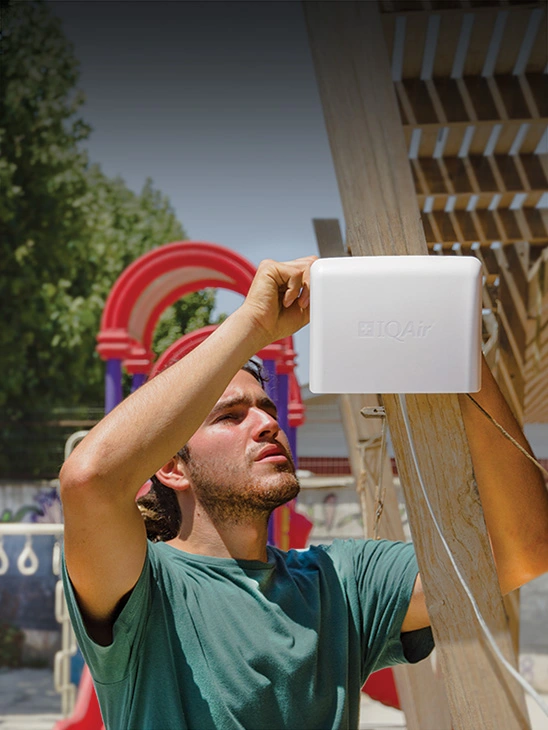
Measure your own air quality
Get a monitor and contribute air quality data in your city.


Learn more about air pollution in Philadelphia
What is the current air quality in Philadelphia?
The current air quality in Philadelphia is considered good. Air pollution levels are low and there are no expected health risks, making it a good time to enjoy normal outdoor activities.
What is the state of air pollution in Philadelphia, now?
Philadelphia, affectionately known as Philly, is the largest city in the US state of Pennsylvania and the sixth-most populous city in the States, with a 2019 estimated population of just over 1.5 million people.
Philadelphia is acknowledged as being the economic and cultural centre of the greater Delaware Valley along the lower Delaware and Schuylkill rivers.
The Delaware Valley's population of 7.2 million makes it the eighth-largest combined statistical area in the US.
Despite seasonal and daily fluctuations into “moderate” and “unhealthy” AQI ratings, Philadelphia has, in recent years, consistently averaged an annual AQI level in the “good” category. These annual pollution averages, however, obscure Philadelphia’s pollution events which give way to unhealthy pollution days (referred to as “action days”).
While the US Environmental Protection Agency (EPA) requires PM2.5 levels not to exceed 12 μg/m3, the World Health Organisation (WHO) targets a more stringent standard of 10 μg/m3.
In 2019, Philadelphia’s average annual PM2.5 level of 10.3 μg/m3 fell between these two standards, meeting the EPA target but exceeding the WHO standard. Importantly, health experts stress that no level of PM2.5 exposure has been shown to be free of health impacts.3
For 7 months out of the year in 2020, Philadelphia achieved the WHO target figure of 10 µg/m³ or less. During the months of February, July, August and December, the air quality was in the “Good” category with figures between 10 and 12 µg/m³. Only for the month of November did Philly see “Moderate” air quality with readings between 12.1 and 35.4 µg/m³.
Looking back at the annual figures on the IQAir website, it can be seen that Philadelphia’s air quality remains fairly stable. In 2017 it was 9.6 µg/m³ followed by 9.3 µg/m³ in 2018. 2019 saw a slightly worse figure of 10.5 µg/m³ before it improved again in 2020 with a 9.5 µg/m³ reading.
Why is the air quality bad in Philadelphia?
In 2019, the American Lung Association’s 2019 “State of the Air” report was made available to the public, as they do every year.
There were mixed reactions to the figures. The concentration level of Particulate Matter of PM2.5 fell for the seventh consecutive year. However, Philly was not so lucky when the levels of ozone were measured. This level worsened for the second year in a row.
It was noticed that the previous three years have been the hottest for quite some time which adds to the ease of ozone production.
Philadelphia’s air quality is primarily afflicted by ozone. Ozone is a gas pollutant formed from precursor pollutants suspended in the atmosphere and reacting in sunlight.
This property of atmospheric formation differs from other frequently monitored pollutants which tend to be emitted directly from ground sources. Since a variety of volatile precursor pollutants can create ozone, it can be more challenging to manage.
Attributing heightened ozone levels to specific emission sources is a near-impossible endeavour.
Further complicating this matter, gas pollutants such as ozone and ozone precursor pollutants do not easily settle and have the ability to travel great distances.1 In the summer months, high ozone levels are frequently spread across several states.
In 2019, the American Lung Association rated Philadelphia an “F” for ozone pollution for the city’s failure to meet federal attainment levels.2 Federal regulations mandate that the number of unhealthy ozone days should not exceed an average of 3.2 across two years.
From 2016 to 2018, Philadelphia experienced an average of 10.8 weighted days of unhealthy ozone, far above the legal limit. In this same report, the Philadelphia-Reading-Camden area was found to rank 23rd for worst ozone pollution nationally out of 229 included metropolitan areas.
Philadelphia annual air quality index (AQI) levels have gradually improved since 1980. A snapshot of these improvements is clearly represented by looking at data on the year of each new decade. In 1980, 156 days were classified in the US AQI “unhealthy” category, dropping to 90 unhealthy days in 1990, 29 unhealthy days in 2000, and 10 unhealthy days in 2018.
Does the air quality differ with the changing seasons?
In the spring, ammonia (NH3) concentrations increase drastically due to agricultural activities. It is released from the fertiliser and manure that is spread on fields before planting, which then reacts with other existing compounds in the atmosphere or earth to create secondary particulate matter (PM2.5). In fact, up to 58 per cent of particulate matter in American cities is from ammonia used in farming.
During the summer months, ground-level ozone (O3) levels periodically peak as it is formed through a combination of heat and sunlight reacting with nitrogen oxides (NOx) and volatile organic compounds (VOCs). This is particularly concerning when it comes to ozone’s effects on health, especially since more than 98 per cent of the American population is exposed to ozone levels higher than those recommended by the World Health Organisation (WHO).
Certain volatile organic compounds such as methanol and acetaldehyde emit from deciduous trees due to falling and decaying leaves. Plants produce VOCs for various purposes, including adapting to environmental stress, communicating to other plants, and defending against insects. VOCs pose a threat to human health through their ability to form ground-level ozone by reacting with nitrogen oxides in the presence of sunlight.
Smog is a significant issue during the winter months due to what is known as temperature inversion. Under normal circumstances, air temperature decreases at higher altitudes. However, in winter, the atmospheric layer closest to the ground can be colder than the air above it. High atmospheric pressure is caused by the presence of cold air. It allows solar radiation to reach the earth, thus warming it up. The accumulated heat is lost at night due to lack of cloud cover, causing it to rise and subsequently trap the cooled air at ground-level. As a result, pollutants such as carbon monoxide (CO), nitrogen oxides, particulate matter, and volatile organic compounds are trapped at the ground level until the temperature changes.
Nitrogen dioxide (NO2) concentrations were found to be higher indoors during the winter than in the summer. This is attributed to fuel-burning (wood, oil, natural gas, coal) heating systems which are required more during winter months. Wood-burning stoves are looked on as being very trendy and fashionable and they are often much cheaper to operate, depending on the source of the wood, of course.
Where does this air pollution come from?
Residents of Philadelphia and the metro area should be aware that they are breathing unhealthy air, exacerbated by local vehicle emissions, upwind sources which often cross the State-Line from other states, and extreme heat as a result of climate change, placing public health and lives at risk.
Particle pollution is made of soot (black carbon) or tiny particles that come from coal-fired power stations, industrial sources, diesel emissions, wildfires and wood-burning devices. These particles are so small that they can lodge deeply in the lungs and trigger asthma attacks, heart attacks and strokes, and can even be responsible for premature deaths in extreme situations.
Other US air quality index criteria pollutants, such as CO, SO2, and NO2 have been in attainment since at least 2000, with overall year-on-year improvements.
Air quality improvements in the city are likely attributable to increasingly tight regulations and the shuttering of Philadelphia's largest stationary emission source, the Philadelphia Energy Solutions refining complex. A gradual shift towards cleaner energy and transportation is likely to be another factor.4
Why is polluted air detrimental to our health?
Breathing ozone can produce adverse health effects, including throat and lung irritation, chest pain, and coughing. Children, the elderly, and those with pre-existing heart or lung diseases, such as bronchitis, emphysema, and asthma are more likely to experience severe complications. In Philadelphia, an estimated 901,380 residents fall into this category.
Ozone (O3) especially harms children, older adults and those with asthma and other lung diseases. It has been likened to experiencing sunburn inside the airways.
Reasonably healthy bodies can repair such damage eventually but people with compromised systems take much longer to return to normal, if at all?
Walking through a smog-filled city centre could lead to more than just a nasty cough, it could also harm your cognitive ability, making it harder to verbalise ideas, work through complicated problems, and more, according to a new study published in the Proceedings of the National Academy of Sciences.
After examining 32,000 people over the age of 10 in China over the last decade, researchers at the International Food Policy Research Institute found that increasing levels of air pollution correlate with lower verbal and maths scores.
The effect was especially noticeable amongst older men, suggesting that long-term exposure to air pollution has a snowballing effect and it could also lead to Alzheimer’s later in life.
As the world gets hotter and more crowded, engines continue to pump out dirty emissions, and half the world has no access to clean fuels or technologies (e.g. stoves, lamps), the very air we breathe is growing dangerously polluted: nine out of ten people now breathe polluted air, which kills 7 million people every year.
Air pollution is hard to escape, no matter which area or country area you live in. It is all around us. Microscopic pollutants in the air can slip past the body’s defences, penetrate deeply into our respiratory and circulatory system, damaging our lungs, heart and brain.
Air pollution is closely linked to climate change and the main driver of climate change is fossil fuel combustion which is also a major contributor to air pollution and efforts to mitigate one can improve the other. This month, the UN Intergovernmental Panel on Climate Change warned that coal-fired electricity must end by 2050 if we are to limit global warming rises to 1.5C. If not, we may see a major climate crisis in just 20 years.
Even strong, healthy people can experience health impacts from polluted air including respiratory irritation or breathing difficulties during exercise or outdoor activities.
The actual risk of adverse effects depends on a person’s current health status, the pollutant type and concentration, and the length of exposure to the polluted air.
Those most susceptible to severe health problems from breathing air pollution are those with heart disease, coronary artery disease or congestive heart failure and individuals with lung diseases such as asthma, emphysema or chronic obstructive pulmonary disease (COPD). Pregnant women, children under the age of 14 years are vulnerable as their organs are not yet fully developed. Older adults and senior citizens must take extra care as must workers who spend long periods of time working outside.
Excessive levels of air pollution can have immediate effects, such as aggravating cardiovascular and respiratory illnesses. Stress is added to the heart and lungs because they must work harder in order to keep the required amount of oxygen flowing through the body. Cells within the respiratory system can soon become damaged. Some of these cells will be repaired by the body, but some will remain damaged forever.
What contributes the most to air pollution in Philadelphia?
Air pollution sources are generally classified into three primary categories: mobile sources (motor vehicles, aeroplanes, and locomotives), stationary sources (power plants, oil refineries, and factories) and area sources (construction, agriculture, and domestic wood burning).
Mobile emission sources are the largest contributor to Philadelphia’s unhealthy air quality.5 This is common in US cities, where stationary sources are comparatively few and far removed from city centres, and ownership of motor vehicles is relatively high.
While mobile sources are the greatest pollution contributors, they also offer the greatest opportunity for improving air quality. Growing the city’s share of electric and hybrid vehicles on the road as well as making public transportation and green transportation (such as walking and cycling) more accessible and attractive could all help significantly alleviate the city of its ozone challenges.
Currently, Pennsylvania lags behind neighbouring states, such as New York, New Jersey, and Maryland, for electric vehicle ownership.6 In the state’s 2019 Climate Action Plan, transitioning more residents to electric vehicles is a stated priority.
The Philadelphia Energy Solutions refining complex has long been the city’s largest stationary emission source. The refinery’s approximate 470,000 pounds of annual emissions are estimated to have contributed to roughly 9 per cent of the city’s PM2.5 emissions and 20 per cent of the city's greenhouse gases.
It is thought that carcinogenic emissions from this refinery have played a role in Philadelphia’s cancer rate, which remains the highest of any large city in the country, as well as in Philadelphia's asthma hospitalisation rate, which is three times the state average.
On 21st June 2019, a catastrophic fire caused irreparable damage to the complex, shuttering the facility permanently. Experts are hopeful that its closure will alleviate Philadelphia of significant levels of smog and unhealthy air pollution.
+ Article Resources
[1] City of Philadelphia Department of Public Health Air Management Services. (2018). Philadelphia’s air quality report 2018.
[2] American Lung Association. (2019). State of the air – 2019.
[3] World Health Organization. (2020). Air quality guidelines – global update 2005.
[4] Maykuth A. (2019, December 26). South Philly refinery, a big polluter, shut down 6 months ago. So, do we have cleaner air?
[5] Clean Air Council. (2020) Philadelphia’s air pollution sources and steps to attaining federal ambient air quality standards.
[6] McDaniel J. (2019, October 1). Electric cars offer ‘guilt-free driving’ and aid the climate. So why doesn’t Pennsylvania have more?
Where is the cleanest air quality in Philadelphia?
- Esperanza academy middle School12
- Somerset Villas13
- 47 Manheim St14
- 4932 Chancellor St15
- 4568-4438 E Stiles St17
- 2766 S 86th St18
- 7612-7600 Limekiln Pk20
- 6300-4 Chelwynde Ave21
- 47th and Regent st22
- 898-862 Pennock St22
- 2324 S 6th St23
- 246 S 46th St23
- 325-383 Delmar St24
- 5001-5099 Pentridge St24
- 5238 Chester Ave24
- 144-100 W Logan St26
- 4321-4331 Germantown Ave26
- 4517 Locust St26
- 48th St & Hazel Av26
- 6812 Rodney St27
- High floor North side27
- 2002 S Opal St28
- 3742-48 Main St28
- Queen Village28
- 1821-1835 Wharton St29
- 8th St & Carpenter St29
- 5615-5699 Belmar St30
- 1962-1950 Dallas St31
- 2198-2100 N Howard St31
- 721 Sears St31
- TOR31
- Woodland Av & 53rd St31
- 1501 S 9th St32
- MON32
- RIT32
- 1998-1900 Waterloo St33
- Philly Community Wireless First Stop Recovery33
- Waverly Walk33
- Lillian Marrerro Library34
- WIS (AMS-LAB Site)34
- 4732 Kingsessing Ave35
- 2223 Richmond St36
- 60 W Chelten Ave36
- FAB36
- 2511 W Girard Ave39
- NEW39
- Frankford Ave40
- 1358 Ridge Ave, Philadelphia, PA 1912342
- 4816 Whitaker Ave42
- 851 Cecil B Moore Ave (2)43
- 1900 W Susquehanna Ave44
- 3934 N 5th St.45
- 511 W. Lehigh Ave.48
- 2736 N Broad St51
- Passyunk Square57
- Pennsport57