

 Add
AddAir quality in Tacoma
Air quality index (AQI⁺) and PM2.5 air pollution in Tacoma • 43.7K Followers • 05:00, Oct 22

61
US AQI⁺Moderate

Main pollutant:
PM2.5
14.5 µg/m³

10°

4 km/h

94 %
Hourly forecast
Tacoma air quality index (AQI⁺) forecast


Daily forecast
Tacoma air quality index (AQI⁺) forecast
| Today | 58 |  | 13° 9° |  14 km/h | 75% |
| Fri | 59 |  | 10° 9° | 8 km/h | 76% |
| Sat | 61 | | 14° 6° | 9 km/h | 60% |
Air pollutants
What is the current air quality in Tacoma?

PM2.5 concentration is currently 2.9 times the World Health Organization annual PM2.5 guideline value.
Health recommendations
 Sensitive groups should reduce outdoor exercise |
 Close your windows to avoid dirty outdoor air Get a monitor |
 Sensitive groups should wear a mask outdoors Get a mask |
 Sensitive groups should run an air purifier Discover Atem car |
Pollen
What is the pollen count in Tacoma today?
Index

Low
 Tree None | 0% |
 Grass None | 0% |
 Weed Low | 25% |
Source:
wetter.comHealth recommendations
Sensitive groups should reduce outdoor exercise |
Close your windows to avoid dirty outdoor air Get a monitor |
Sensitive groups should wear a mask outdoors Get a mask |
Sensitive groups should run an air purifier Discover Atem car |
Pollen
What is the pollen count in Tacoma today?
Index
Low
Tree None | 0% |
Grass None | 0% |
Weed Low | 25% |
Source:
wetter.comMost polluted locations near Tacoma
Worldwide AQI⁺ ranking
Station ranking
Real-time AQI⁺ station ranking for stations in Tacoma

Historic air quality near Tacoma
History
Historic air quality graph for Tacoma
Historic air quality near Tacoma
History
Historic air quality graph for Tacoma
Most polluted locations near Tacoma
Worldwide AQI⁺ rankingStation ranking
Real-time AQI⁺ station ranking for stations in Tacoma
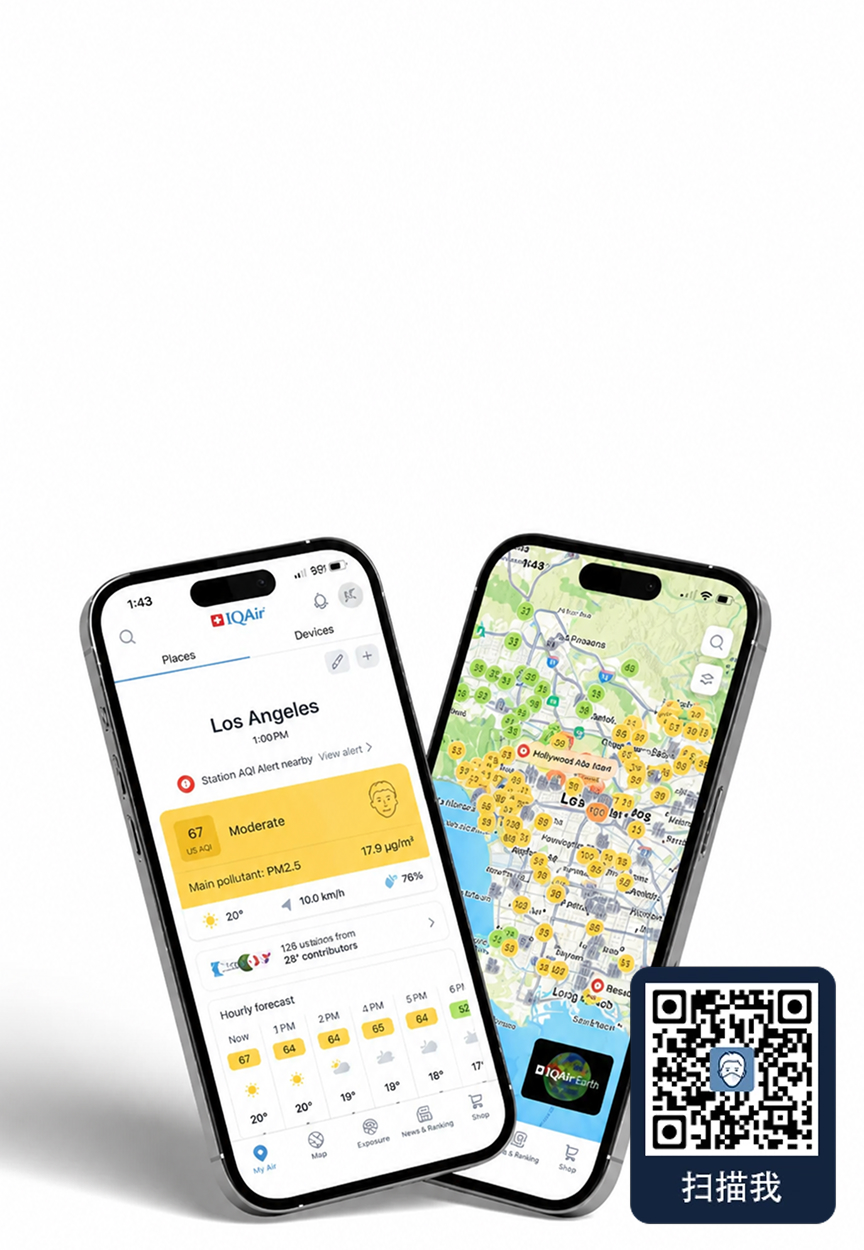


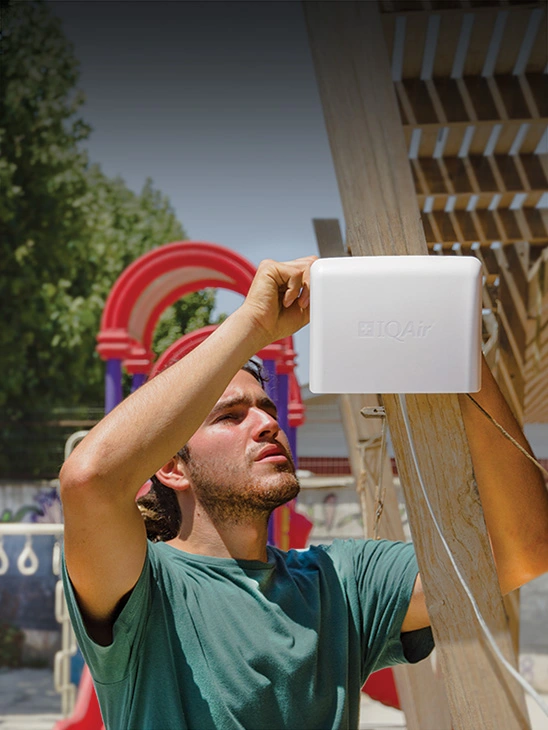
Measure your own air quality
Get a monitor and contribute air quality data in your city.
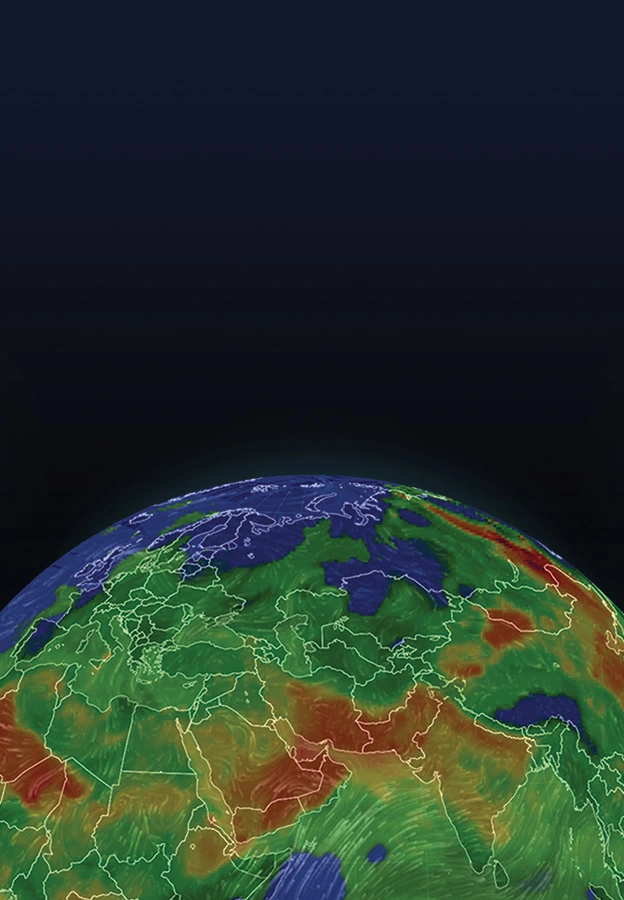
Learn more about global air quality


Learn more about air pollution in Tacoma
What is the current air quality in Tacoma?
The current air quality in Tacoma is considered moderate. Air quality is acceptable for most people, though sensitive individuals may experience mild symptoms such as coughing or shortness of breath.
How is the air quality in Tacoma, Washington?
Air quality in Tacoma, Washington varies based on seasonal and meteorological conditions. While the vast majority of days in the city are deemed healthy and annual averages reflect this generally acceptable status, an average of 9 days a year are classified as “unhealthy” by United States Environmental Protection Agency (EPA) standards. The occurrence of these “unhealthy” days has been on the rise in the last 5 years.1
In the United States, PM2.5 and ozone pollution are two pollutants of primary concern because of their prevalence at dangerous levels.
PM2.5 describes airborne particulate matter (PM) measuring 2.5 micrograms or smaller. These near-microscopic particles, often including dust, soot, ash, and chemicals, are so small that they can penetrate deep into the lungs upon inhalation, often passing into the circulatory system and causing a range of far-reaching health effects, from irritation of the eyes and airways, chest pain, arrhythmias, and bronchitis to heart and lung disease, cancer, and early death.
In 2019, Tacoma air quality averaged an annual PM2.5 concentration of 7.9 μg/m3, thereby meeting both the US EPA and World Health Organization (WHO) standards for annual PM2.5 exposure (set at 12 μg/m3 and 10 μg/m3, respectively). Among neighboring cities, Tacoma had the highest annual PM2.5 average. Washington cities furthest from Tacoma tended to fare best.
- Kent air quality: 2019 average of 6.6 μg/m3 (13.2 miles away)
- Seattle air quality: 2019 average of 7.5 μg/m3 (25 miles away)
- Olympia air quality: 2019 average of 6 μg/m3 (26.1 miles away)
- Redmond, WA air quality: 2019 average of 5.7μg/m3 (43 miles away)
- Bellingham, WA air quality: 2019 average of 5.1 μg/m3 (122 miles away)
Despite achieving attainment for annual PM2.5 concentrations, the WHO states that no level of PM2.5 exposure is safe from health impacts.2 Moreover, a number of days each year breach “unhealthy” air quality thresholds, often as a result of nearby wildfires.
Pierce County, of which Tacoma is a part, averages 7.5 unhealthy PM2.5 days annually, a figure more than double the US EPA allowance of 3.2 unhealthy PM2.5 days annually. This excess has caused Tacoma to be deemed “nonattainment” for short-term PM2.5, the city’s only nonattainment pollution rating.
Pierce County has, in fact, never met PM2.5 attainment levels despite long-term improvements notable in 2014-1016, with just 3.7 unhealthy days (0.5 above the federal allowance). In recent years, these improvements have largely been reversed, as the frequency of unhealthy PM2.5 days rose to 6.7 days in 2016-2017 and 7.5 days in 2017-2019. These increases correlate to increasingly severe wildfire seasons that have caused stretches of unhealthy air quality in Tacoma.
In the most recent monitoring period (2017-2019), Tacoma ranked 14th for short-term particle pollution out of 217 metropolitan areas nationally, according to an annual air quality report published by the American Lung Association (ALA).
Tacoma fares substantially better for ozone pollution, a highly corrosive and irritating gas pollutant.
Ozone is unusual in that rather than being emitted directly, it is formed in the atmosphere when heat (generally temperatures over 84 degrees) forces precursor pollutants to react and transform. Ozone levels in Tacoma are generally low because of Tacoma’s location on the banks of Puget Sound, which keeps temperatures cool and reduces the frequency of ozone-forming conditions.
Between 2017 and 2019, Pierce County averaged 1.3 unhealthy ozone days per year (less than the 3.2-day federal limit). While the relatively low frequency of ozone days meets government attainment levels, it was graded a “C” for ozone pollution, highlighting continued room for improvement. Out of 228 metropolitan areas in the country, Tacoma ranked 36th for high ozone days, thus falling within the 20th percentile for worst ozone.
The frequency of unhealthy ozone days has fallen significantly in the last two decades, dropping from 7 unhealthy ozone days in 1996-1998 to the current level of 1.3 unhealthy ozone days per year. This improvement is attributable largely to improvements in vehicle emission standards that have reduced the prevalence of nitrogen dioxide (NO2), a key ozone precursor pollutant.
Why is Tacoma air quality bad?
Air pollution in Tacoma is commonly attributed to ports (heavy-duty trucks, seafaring ships, trains, and fossil fuel-powered equipment) and industrial facilities. These emission sources have historically contributed substantial amounts of air toxins. Since 2005 and the adoption of the Northwest Ports Clean Air Strategy, port-related emissions have declined substantially, with levels of nitrogen oxides (NOx) and volatile organic compounds (VOCs) falling 20 percent, PM2.5 levels falling 70 percent, and sulfur dioxide (SO2) levels dropping 97 percent by 2016.3
The main pollution source in Tacoma is motor vehicles. Gas-powered engines contribute to as much as 60 percent of Tacoma's air pollution and 73 percent of the city’s greenhouse gases (GHGs).4
Seasonal trends, including wildfires in the late summer and fall as well as wood burning in the winter, contribute substantially to yearly PM2.5 levels. August was Tacoma's most polluted month in 2017 and 2018 as a result of devastating wildfires. In 2019, a year of relatively mild wildfires, November (16.8 μg/m3), December (13.4 μg/m3) and January (12.2 μg/m3) were Tacoma’s most polluted months as a result of domestic winter wood burning for heating. These three months average PM2.5 concentrations 78.5 percent higher than the yearly average.
Use the Tacoma air quality map to discover the location of active fires and whether these are contributing to air pollution levels in the city.
What to do about air quality in Tacoma?
Motor vehicles represent both the largest emissions source in Tacoma and largest opportunity for improving Tacoma air quality. Normally, vehicles represent an estimated 60 percent of city emissions. Transitioning to zero-emission (electric) vehicles can cut vehicle emissions here almost completely. Electric vehicles are emission free, and 97 percent of Tacoma’s electricity is sourced from carbon-free hydropower – generating the electricity to fuel electric vehicles is also remarkably clean.
In recent years, the increased accessibility of electric vehicles has led to a rise in their market share, partially as a result of city, state, and national tax incentives and rebates as well as availability of charging stations. As these options become increasingly popular and eventually mandated, daily air pollution levels in Tacoma are expected to improve.
In early 2020, Washington’s state congress voted to approve new legislation that vehicles sold in the State must be completely electric by 2030. It’s estimated that by 2045, there will be 4 million electric vehicles on the road in the state of Washington. At the same time, electricity is required to be generated from 100 percent emission-free renewables by that year. Such a shift in transportation and electricity production has the potentially to drastically improve Tacoma’s air quality.
What is causing smoke in Tacoma?
Wildfires are often the cause for smoky skies in Tacoma. Recent decades have trended towards hotter, drier, and longer summers, mostly attributable to anthropogenic (human-caused) climate change. These conditions combine to raise the frequency and severity of wildfires in the Pacific Northwest.5
2020 represented a record-breaking wildfire year in Washington. Fires that erupted across the state on September 8th burned more than 580,000 acres in less than 3 days.6 Prior to 2020, 2015 was Washington’s most destructive wildfire year, with 500,000 acres burned during the entire year. The fires around September 8th, 2020 surpassed this record in 72 hours.
The ponderosa pine forests located on the eastern side of the Cascades are particularly volatile and represent the greatest risk for wildfires.7 Even the sodden rainforests in Western Washington have been subjected to increased fire activity in recent years.
Wildfires emit a range of hazardous air pollutants, including particulate matter (PM2.5 and PM10), carbon monoxide, and nitrogen dioxide. Fine particulate matter, or PM2.5, is the visibility-reducing pollutant most often attributed to “smoke” and also represents the pollutant that tends to exist at the riskiest levels to health.
When Tacoma air is smoky, take care to follow live air quality updates and health recommendations in order to reduce your exposure. Use the IQAir air quality map of Tacoma to discover the location of active fires and examine the impact of resulting emissions on air quality.
How long will Tacoma have smoky air?
Emissions from wildfires are among the most difficult to model and predict as a result of uncertainty in wildfire size and location as well as geographic variability of individual fires.8
In addition to estimating emission output, meteorological factors like weather, wind, and temperature conditions play the most important role in determining how long smoke will linger. These factors explain variations in Tacoma air quality changes day to day and hour to hour when wildfires are burning nearby and emitting smoke steadily.
Wind and rain help disperse and tamp down pollution; without these weather conditions, smoke in Tacoma can linger and increase in concentration. Similarly, high pressure cells and marine inversions play a significant role. These events can create a pollution-trapping effect in which air pollution is held in the lower atmosphere.
Recent large and damaging wildfires that impacted Tacoma include:
- the Carlton Complex Fire in 2014, the largest wildfire in Washington history
- the Maple Fire in 2018
- the Evans Canyon Fire in 2020, which contributed to “hazardous” air quality levels for days at a time
Use Tacoma forecast air quality data at the top of this page to discover when pollution levels are expected to improve as a result of various weather conditions and estimated wildfire emissions.
+ Article Resources
[1] American Lung Association. (2020). State of the Air – 2020.
[2] World Health Organization. (2020). Air quality guidelines – global update 2005.
[3] Ryan J. (2018, March 22). Our ports are polluting less, but don’t throw a party yet. KUOW.
[4] City of Tacoma. (2020). Electric vehicles.
[5] Conca J. (2020, February 27). Can electric cars rise in time to save us? Washington State says yes. Forbes.
[6] Halofsky JE, et al. (2020). Changing wildfire, changing forests: the effects of climate change on fire regimes and vegetation in the Pacific Northwest, USA. DOI: 10.1186/s42408-019-0062-8
[7] Q13 Fox. (2020, September 9). Washington wildfires: 1,500 firefighters on front lines of 'one of the worst nightmares we can imagine'.
[8] Pouliot G, et al. (2005). Wildfire emission modeling: Integrating BlueSky and SMOKE. U.S. Environmental Protection Agency.
Where is the cleanest air quality in Tacoma?
- Salmon Beach16
- University of Puget Sound Baker Stadium33
- North Whitman Street34
- Seabury Lower School35
- 3010-3000 N Cheyenne St38
- Rustin-O38
- 2501 N Starr St40
- 3998-3920 N 37th St41
- 4601-4799 N 28th St44
- Pointe Woodworth Drive Northeast 148
- Tacoma, WA 9840751
- Stadium District54
- Owl's Roost56
- 6509-6501 E 65th St61
- South 18th Street61
- Tacoma-S Adams St61
- 1335-1157 E 42nd St63
- Tacoma WA USA64
- 4915-4877 E M St66
- 3804-4000 S D St67
- South End67
- Tacoma-S 36th St68
- Eastside GRIT0169
- South End GRIT0371
- Central Tacoma 175
- South Park86
- 8399-8149 S Ainsworth Ave97
- Baker Middle School101
- 811-849 S 88th St115